Black July 1983 changed Sri Lanka forever. Its violence, consequences and enduring lessons continue to shape reconciliation and national unity.
“The pain of the past is not forgotten, but in the hands of forgiveness and unity, it becomes the foundation of our healing.”
By Roy Denish
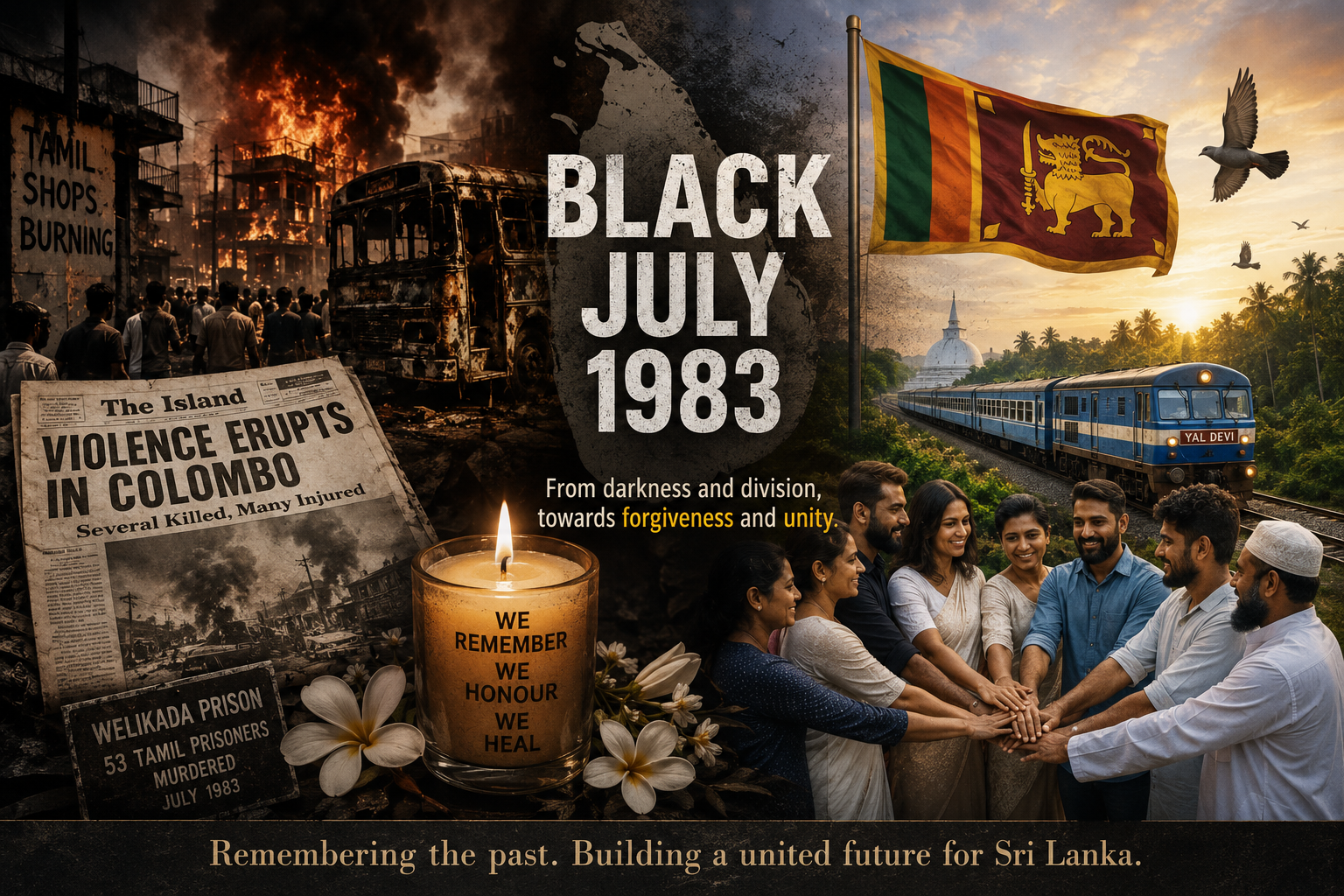
The ashes of Black July 1983 have never fully cooled within Sri Lanka’s collective consciousness. Each year, as July 23 approaches, the country must confront the week of state-enabled violence that transformed its social fabric, destroyed its post-independence promise and helped ignite a devastating 26-year civil war.
What began as a response to a military ambush in the north rapidly became a systematic, island-wide campaign of terror against the Tamil minority. The violence left wounds that have remained painful for more than four decades.
Writing about Black July does not merely involve recording a historical event. It means examining the origins of a modern national tragedy. It requires asking how a state turned against its citizens, how neighbours became perpetrators or silent witnesses, and why the aftermath still echoes across Sri Lanka’s political landscape.

To understand how rapidly the violence spread that Sunday night, one must first reject the claim that the events of 1983 were a spontaneous eruption of ancient ethnic hatred. The conditions had developed over several decades.
After independence from British colonial rule in 1948, Ceylon, later renamed Sri Lanka, struggled to establish a shared national identity. The Sinhalese majority, representing nearly three-quarters of the population, believed the Tamil minority had received disproportionate advantages under colonial administration.
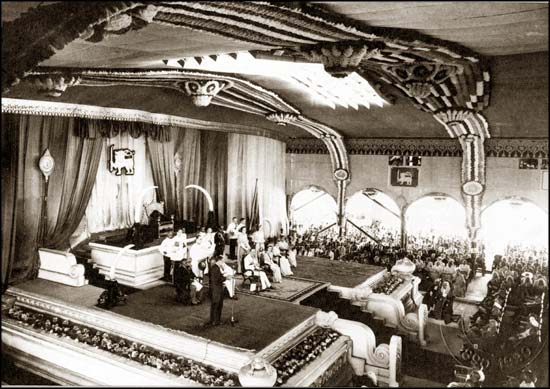
Instead of creating an inclusive and pluralistic nation, successive governments increasingly used majoritarian politics to consolidate power.
Decades of Exclusion Before Black July 1983
The pattern of exclusion began soon after independence. In 1948, the newly established government disenfranchised more than 700,000 Indian Tamil plantation workers. In one sweeping move, it removed their citizenship and political representation.
The Sinhala Only Act followed in 1956. It replaced English with Sinhala as the state’s sole official language. The law effectively reduced the status of Tamil and marginalised Tamil public servants who could not pass Sinhala proficiency examinations.
Tamil political leaders organised peaceful demonstrations and satyagrahas. However, violence frequently met those protests.
Political agreements intended to provide a degree of regional devolution also collapsed under pressure from hardline nationalist movements. These included the Bandaranaike-Chelvanayakam Pact of 1957 and the Dudley-Chelvanayakam Pact of 1965. Political leaders abandoned both agreements before implementation.
By the early 1970s, political alienation among Tamil youth had deepened into despair. A university admissions standardisation policy required Tamil students to obtain higher marks than Sinhalese students to enter sought-after science and engineering faculties.
For a community that placed enormous value on education as a route to economic and social advancement, the policy became another devastating blow.
The Tamil United Liberation Front eventually adopted the Vaddukoddai Resolution in 1976, formally calling for an independent state of Tamil Eelam. At the same time, small underground militant groups emerged in the Northern Province. They increasingly viewed armed resistance as the only remaining answer to systemic discrimination.
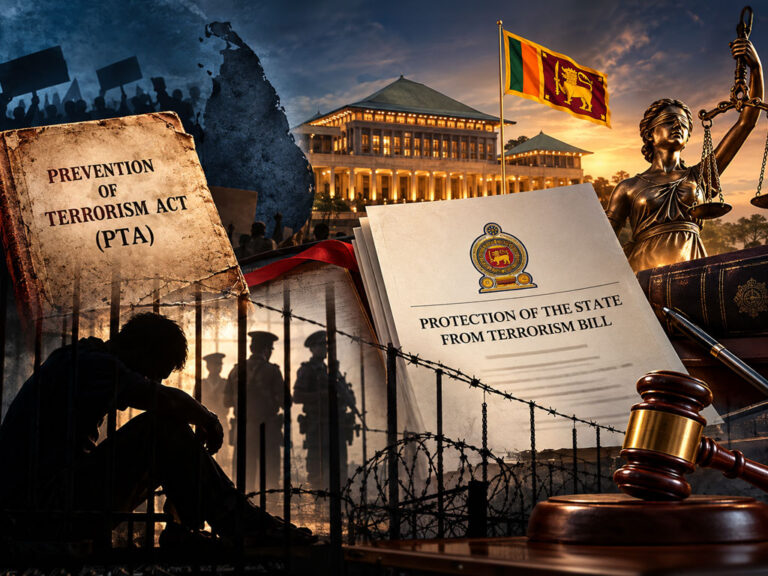
The state responded by expanding militarisation. The Prevention of Terrorism Act of 1979 gave the security forces extensive powers to arrest and detain people without trial. Consequently, many Tamils increasingly viewed the Jaffna peninsula as an occupied territory.
Tensions escalated again in June 1981. Government security personnel and state-sponsored groups rampaged through Jaffna and burned the Jaffna Public Library.
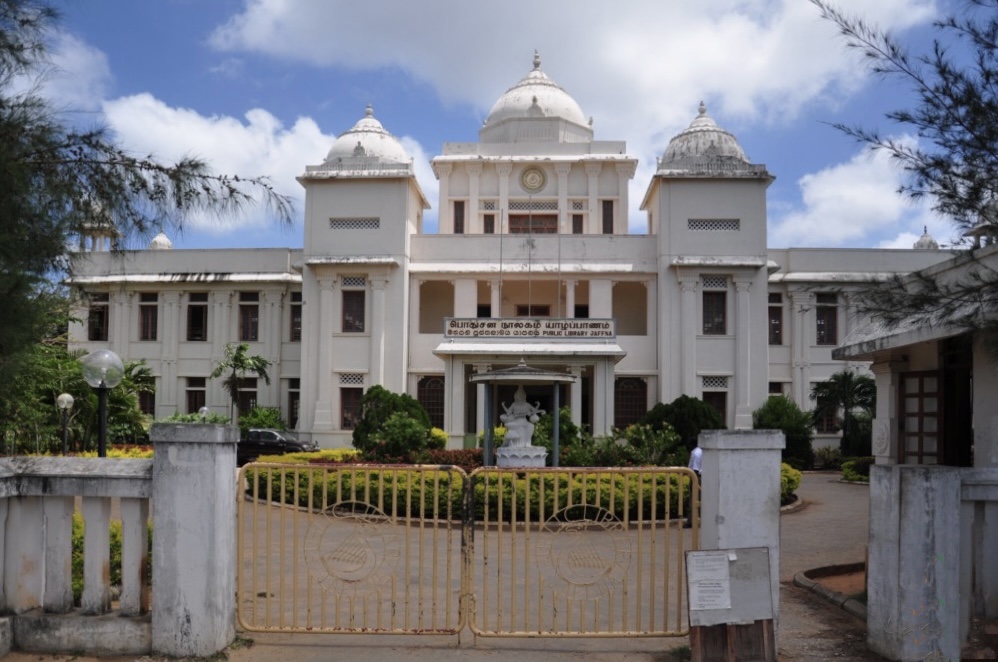
The destruction wiped out more than 97,000 irreplaceable manuscripts, historical documents and ancient palm-leaf records. The loss represented more than the destruction of a building. It caused a deep cultural wound within the Tamil community.
By the middle of 1983, years of ethnic tension, political discrimination and militarisation had created dangerous conditions across the country. Only one spark was required to ignite them.
That spark came on the night of July 23, 1983, at Tinnevely, a coastal village outside Jaffna.
A Sri Lanka Army patrol known as Four Four Bravo travelled through the area when a roadside landmine planted by the Liberation Tigers of Tamil Eelam struck it. Militants then launched an ambush using automatic gunfire.
Thirteen soldiers died, including the patrol’s commanding officer, Second Lieutenant Vas Gunawardene. At that point in the conflict, it was the deadliest attack suffered by the military.
News of the ambush sent shockwaves through the government in Colombo.
Officials could have arranged private funerals in the soldiers’ respective hometowns to reduce the possibility of unrest. Instead, President J.R. Jayewardene’s government decided to bring the bodies to Kanatte General Cemetery in Borella for a mass public funeral.
Many historians and political analysts have described that decision as more than an administrative mistake. They view it as a calculated risk and, possibly, a deliberate provocation.
On Sunday evening, July 24, thousands gathered at the cemetery. Logistical delays repeatedly postponed the arrival of the bodies. As the crowd waited, its mood grew increasingly hostile.
Instigators circulated rumours that Tamil militants were advancing towards Colombo and that Sinhalese residents faced massacres in the north. Grief soon hardened into collective anger.
The government eventually cancelled the public ceremony and decided to return the bodies privately to the families. However, the crowd refused to leave. Groups poured through the cemetery gates and entered the streets of Borella, where they targeted nearby Tamil-owned businesses.
Organised mobs spread terror across Sri Lanka
By the early hours of Monday, July 25, the violence had rapidly expanded. What followed over the next five days was not simply a disorganised riot. It developed into a coordinated and systematic pogrom.
Mobs did not move randomly through neighbourhoods. Groups arrived in commercial vehicles and government-owned buses. They carried iron bars, knives, petrol containers and, most disturbingly, electoral registers and address lists reportedly obtained from municipal offices.
The lists enabled attackers to identify Tamil homes and businesses with precision. In many places, mobs destroyed Tamil-owned properties while leaving adjacent Sinhalese buildings untouched.
Colombo, the country’s commercial centre, suffered catastrophic destruction. Pettah, Fort and Sea Street, where many Tamil traders operated, became landscapes of flames, smoke and ash.
Attackers looted department stores, boutiques, pharmacies, printing businesses, factories and warehouses before setting them on fire.
The brutality extended far beyond property destruction. Mobs dragged Tamils from their homes, buses and vehicles. Attackers assaulted people openly in the streets. In several incidents, victims died after mobs set fire to their homes or vehicles.
The state’s conduct during those days remains among the most disturbing elements of the tragedy.
For the first 48 hours, the government remained noticeably silent. Officials announced curfews late and often enforced them weakly. The authorities’ failure to act created widespread accusations of complicity.
Journalists, foreign diplomats and survivors repeatedly described army vehicles and police jeeps passing burning buildings and active mobs without intervening.
Some accounts alleged that security personnel identified Tamil properties for attackers or protected looters while they carried away goods.
Several influential figures within the governing United National Party faced accusations of supporting the violence.
Cyril Mathew, a senior cabinet minister known for strongly anti-Tamil rhetoric, was widely accused of mobilising workers from his ministry and members of the government-aligned Jathika Sevaka Sangamaya.
The movement of attackers in state-owned buses, together with allegations that fuel came from government petroleum facilities, suggested the involvement of an organised administrative network.
As Colombo burned, violence spread along Sri Lanka’s main transport routes. It reached Kandy, Matale, Nuwara Eliya, Gampola and Trincomalee.
Tamil plantation communities in the central hill country also faced terror. Families abandoned their homes and fled into surrounding hills as mobs looted and attacked estate settlements.
The same pattern repeatedly appeared wherever the violence spread: electoral lists, petrol cans, inactive police officers and the deliberate destruction of Tamil economic life.
The most horrific episode of the week may have occurred behind the walls of Welikada Prison, a high-security institution in Colombo.
On the afternoon of July 25, Sinhalese prisoners broke into the chapel ward, where authorities held Tamil political prisoners and Prevention of Terrorism Act detainees.
Reports alleged that prison officers helped the attackers by supplying keys or weapons.
The prisoners killed 35 Tamil detainees. The victims included prominent militant figures Selvarajah Yogachandran, widely known as Kuttimani, and Nadarajah Thangathurai.
The killing did not end there.
On July 27, only two days after the first massacre, another riot erupted inside Welikada Prison. Despite the earlier deaths, the authorities had not adequately protected the surviving Tamil detainees.
Attackers killed another 18 prisoners, raising the total number of Tamil deaths inside the prison to 53.
The state held those prisoners in its absolute custody. Its failure to protect them remains a permanent stain on Sri Lanka’s judicial and administrative history. It demonstrated the near-total collapse of the rule of law during that week.
Political consequences deepened the national division
President J.R. Jayewardene finally addressed the country through state television on July 28.
His speech offered little comfort to the victims. He did not express regret for the deaths or directly condemn those responsible for the attacks. Instead, he presented the pogrom as an understandable reaction by the Sinhalese population to demands for separation.
He stated that the time had come to satisfy the natural wishes of the Sinhalese people. He also announced plans to outlaw political parties that supported a separate state.
That political response led to the Sixth Amendment to the Constitution in August 1983.
The amendment prohibited support for, advocacy of or promotion of a separate state within Sri Lanka. It also required members of Parliament to swear allegiance to the unitary state.
The measure effectively excluded the democratic Tamil political leadership represented by the Tamil United Liberation Front. Its MPs refused to take the oath and consequently lost their parliamentary seats.
By closing the path towards parliamentary representation and negotiated political reform, the state sent a devastating message to many Tamil youths. They increasingly believed political change could only come through armed struggle.
The economic damage caused by Black July was also enormous. Attackers destroyed decades of Tamil entrepreneurship, investment and commercial infrastructure within a few days.
More than 100,000 people became displaced. Many entered overcrowded refugee centres established in schools and temples throughout Colombo.
The government later arranged ships to transport refugees to the Northern Province. In the short term, this process removed a significant part of Colombo’s Tamil population and changed the capital’s demographic composition.
The longer-term effects were even more profound.
The 1983 violence triggered a major exodus of Tamils from Sri Lanka. Professionals, intellectuals, business owners and entire families crossed the Palk Strait into India. Others sought asylum in Canada, the United Kingdom, Australia and several European countries.
This migration created the foundation for the modern global Tamil diaspora. In later years, that community played an important role in funding and lobbying for the northern insurgency.
For young Tamils who remained in Sri Lanka, the humiliation, fear and destruction of July 1983 became a powerful recruitment tool for armed organisations.
A guerrilla movement that had previously involved only a few hundred fighters eventually developed into a formidable conventional rebel force.
Still, the week also produced acts of extraordinary courage.
Across Colombo and other affected areas, Sinhalese citizens placed their lives, property and families at risk to protect Tamil neighbours.
They hid families in attics, sheltered children in backyards and confronted armed attackers. Some lied about the location or identity of their neighbours to save them from the mobs.
Residents in multi-ethnic communities, including the Bambalapitiya flats, organised neighbourhood watches. They blocked access roads and refused to allow outside mobs to enter.
These accounts of resistance remain essential to understanding Black July. They demonstrate that violence between Sinhalese and Tamil communities was neither natural nor unavoidable.
Instead, extremists engineered the tragedy and a state enabled it through silence, inaction or alleged participation. Meanwhile, many ordinary citizens remained trapped by fear, confusion and uncertainty. Others chose humanity and protected their neighbours.
Black July’s legacy and the road after war
The war that Black July 1983 helped intensify continued for 26 years. It claimed more than 100,000 lives, inflicted severe economic damage and made Sri Lanka internationally associated with ethnic conflict and political violence.
The war ended in May 2009 when government forces militarily defeated the Liberation Tigers of Tamil Eelam.
The government presented that victory as the arrival of peace. However, military victory alone could not automatically produce reconciliation or resolve the underlying causes of the conflict.
Questions involving language rights, land allocation, regional autonomy, political representation and state majoritarianism required years of patient and deliberate attention.
During the post-war years, Sri Lanka began a necessary process of physical reconnection.
Barriers that had once separated the north from the south gradually disappeared. Roads reopened and travel became easier, creating new opportunities for interaction, trade and mutual discovery.
The Yal Devi train once again began travelling from the crowded railway stations of Colombo into Jaffna.
Instead of carrying soldiers or displaced families, it now transports travellers, traders, students and relatives seeking to cross the geographic and emotional distance created by war.
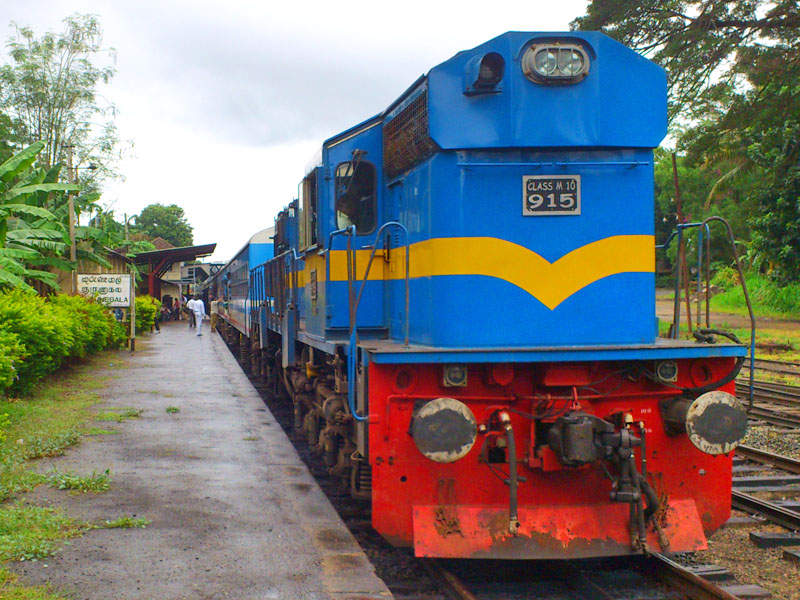
Physical routes have reopened. More importantly, many Sri Lankans have worked to remove the suspicion and mistrust that once blocked communication between communities.
Reconnection has also encouraged a broader cultural exchange. Southern communities have gained greater exposure to the Tamil traditions of the north, while northern communities have welcomed cultural practices from the south.
In Colombo, cross-community artistic projects have become increasingly visible. Traditional Ves dancers may share performance spaces with Bharatanatyam artists. Sinhala and Tamil writers meet at literary festivals and translate each other’s work.
Such collaborations use art and storytelling to challenge inherited prejudice and address historical wounds.
Food has also become an everyday symbol of cultural connection. Jaffna crab curry has found enthusiastic audiences in restaurants across Colombo and Galle. Meanwhile, people share southern sweetmeats in northern homes during national and religious celebrations.
Language, once used as an instrument of exclusion, can also become a bridge.
Many young Sri Lankans communicate across Sinhala, Tamil and English. They increasingly view multilingualism as a source of pride rather than suspicion.
Schools and university exchanges have brought students from Jaffna, Point Pedro, Matara and Hambantota together. These encounters have created friendships capable of challenging prejudices inherited from earlier generations.
Religious and cultural events also cross ethnic boundaries.
During the Sinhala and Tamil New Year in April, people throughout the island celebrate, exchange traditional food and share customs across community lines.
Kataragama remains a powerful representation of shared spirituality. Buddhists, Hindus, Muslims and Christians gather at the sacred site in southern Sri Lanka. Their presence shows that the island’s religious spaces and traditions can belong to all its people.
Remembering the past while protecting national unity
Commemorating Black July today does not require Sri Lanka to remain permanently trapped in the grief of 1983.
Instead, remembrance provides an opportunity to measure the distance the country has travelled and identify the work that remains unfinished.
Sri Lanka must refuse to allow time to soften or sanitise the brutality of the violence. The country must continue listening to those who lost homes, relatives, livelihoods and their sense of belonging.
At the same time, remembrance can recognise the resilience of people who chose reconciliation instead of resentment and unity instead of renewed division.
The lessons of Black July 1983 must remain central to Sri Lanka’s future.
The country’s strength does not come from suppressing its cultural diversity. It comes from accepting that diversity as part of a shared national inheritance.
Every citizen, regardless of ethnicity, religion or language, must have the right to call Sri Lanka home in safety and dignity.
The pain of the past has not disappeared. Nor should the nation pretend that it has.
However, forgiveness, truth and unity can transform that pain into a foundation for healing. Sri Lanka honours the victims not only by remembering what happened, but also by protecting the peace and harmony of the present.
As the country looks towards the future with hope and determination, it must reject the politics that once divided its people.
The most meaningful tribute to those who suffered is a Sri Lanka where no citizen again faces violence because of identity, language, faith or ethnicity.
Only then can the nation move forward as one people, on one island, sharing one future.