US strikes on Iran enter a 13th consecutive night as Houthi tanker attacks widen the conflict and Trump threatens bridges and power plants.
The United States completed thirteen consecutive nights of Air Strikes. The strikes targetted at Iran military only, have also triggered the Houthi forces to attack a Saudi oil tanker in the Red Sea.
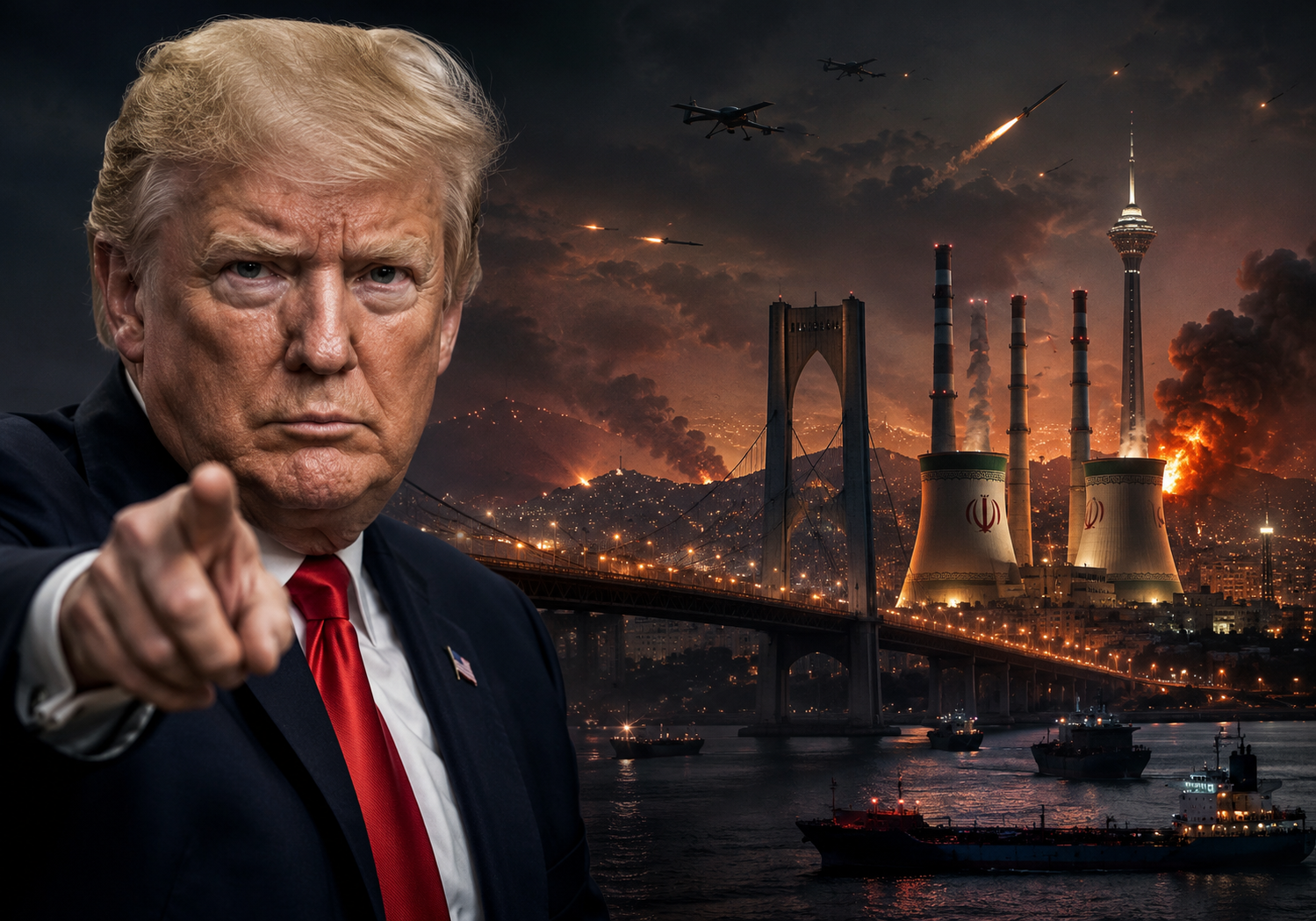
US President Donald Trump previously announced a one-for-one retaliation policy for Iranian attacks on vessels in the Strait of Hormuz. He said Washington would destroy an Iranian bridge or power plant each time Iran fired at a ship using a missile, rocket, drone or another weapon.
“From this point forward, anytime the Islamic Republic of Iran shoots at a ship in the Strait of Hormuz, whether it be by Missile, Rocket, Drone, or any other device or weapon, the United States will bomb and destroy ONE BRIDGE OR POWER PLANT, including those located next to, or in, the Capital City of Tehran,” Trump wrote on Truth Social.
However, there has been no publicly confirmed US strike carrying out that specific bridge-or-power-plant formula.
The latest American attacks have instead continued to focus on military capabilities that Washington says Iran uses to threaten shipping.
US Completes 13th Consecutive Night of Strikes
The US military announced late Thursday that it had completed its 13th consecutive night of attacks against Iran.
US Central Command said the operation targeted Iranian military infrastructure as part of its campaign to reduce Tehran’s ability to threaten civilian mariners and commercial vessels. Recent targets have included drone facilities, surveillance systems, coastal positions and other maritime capabilities.
The campaign initially centred on the Strait of Hormuz, one of the world’s most important energy routes. However, the conflict has now begun spreading towards a second strategic shipping corridor.
Yemen’s Iran-aligned Houthi movement said it attacked two Saudi oil tankers in the Red Sea using missiles and drones. The group presented the strikes as part of a blockade targeting Saudi Arabia.
The attacks have raised fears that disruption around the Strait of Hormuz could be joined by a second crisis near the Bab el-Mandeb Strait. That route connects the Red Sea with the Gulf of Aden and carries significant volumes of international trade.
Several vessels have already changed course following Houthi warnings, while renewed fears over Gulf and Red Sea shipping have helped push international oil prices above $100 a barrel.
Trump Promises ‘Major Military Punishment’
Trump responded to the tanker attacks by promising what he called major military punishment against Iran and the Houthis.
He accused the Yemeni group of acting on Tehran’s behalf and said Iran would be held responsible for attacks threatening Saudi shipping. Trump also suggested that frozen Iranian assets could be used to compensate shipowners and cargo interests for damage caused during the conflict.
Iran supports the Houthis politically and militarily, although the movement maintains its own leadership and decision-making structure.
The widening maritime conflict places additional pressure on Saudi Arabia and other Gulf exporters. Some producers had relied on Red Sea routes as an alternative to shipping through the disrupted Strait of Hormuz.
Attacks near both passages could force tankers to take longer routes around Africa, increasing fuel costs, freight rates and delivery times.
Iran Maintains Its ‘Eye for an Eye’ Warning
Iran has warned that any US attack on its bridges, power stations or other infrastructure would trigger reciprocal retaliation.
Iranian Foreign Minister Abbas Araghchi described Tehran’s position as an “eye for an eye” doctrine. Iran’s military has also warned that regional oil, gas, electricity and economic facilities could face attack if Washington targets similar infrastructure inside Iran.
Tehran has not publicly identified the exact countries or installations it would strike under that policy.
Nevertheless, the warning creates risks for Gulf states hosting American forces, operating major energy facilities or maintaining close security relationships with Washington.
It also increases the danger that a strike intended as retaliation against Iran could cause wider attacks on ports, refineries, electricity networks and other installations throughout the region.
Power Plant Attacks Could Affect Civilian Services
A power station does not automatically become a lawful military target during a war.
Under international humanitarian law, a civilian installation can lose its protection only when its nature, location, purpose or use makes an effective contribution to military action. Its destruction must also offer a definite military advantage.
Commanders must assess whether the expected harm to civilians would be excessive compared with that anticipated advantage.
Electricity networks support hospitals, water pumps, sanitation systems, communications and emergency services. Therefore, even a limited strike on generating or transmission infrastructure could create widespread consequences far beyond the facility itself.
Trump may intend his one-for-one threat to deter further Iranian attacks on ships. However, the continuing US campaign, Iran’s retaliation warnings and the emergence of a Houthi front in the Red Sea suggest that the conflict is moving in the opposite direction.
Instead of containing attacks around the Strait of Hormuz, the confrontation now threatens two critical maritime corridors and the energy infrastructure surrounding them.

This article was written by Dwayne Ferreira, Correspondent for The Morning Telegraph.