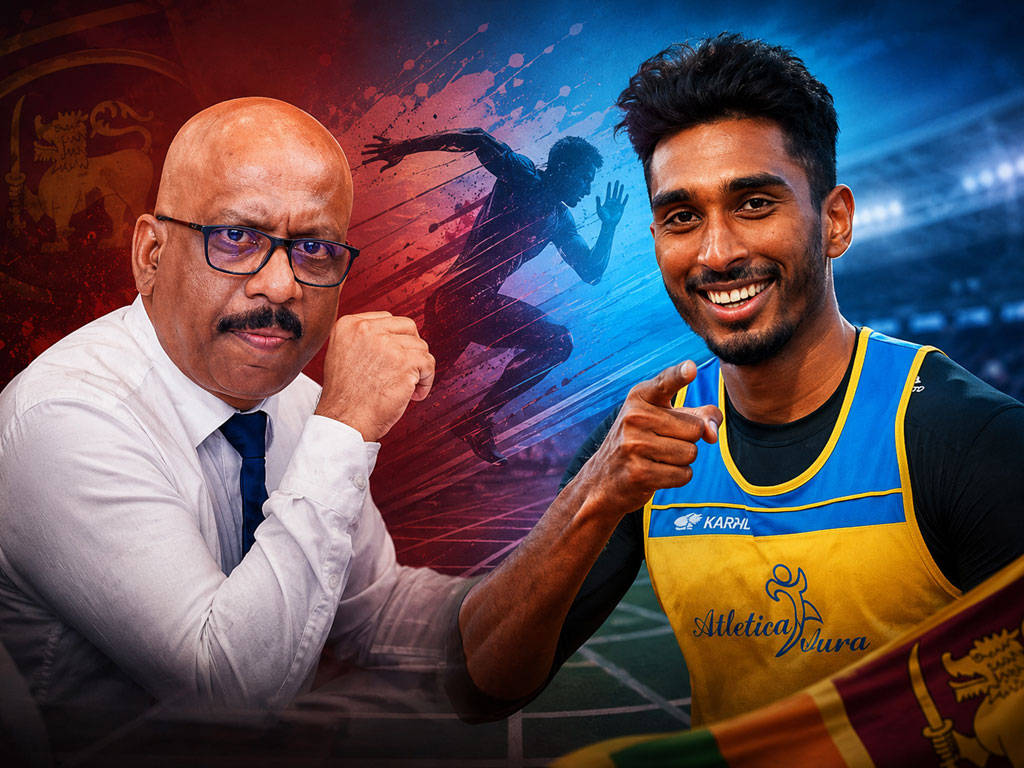
Yupun Abeykoon retirement controversy deepens as the sprinter denies demanding $300,000 and says the sum covers years of unpaid dues.
The Yupun Abeykoon retirement controversy has deepened after the sprinter denied demanding USD 300,000 as a condition for continuing to represent Sri Lanka.
Speaking during a special interview with the BBC Sinhala Service, Abeykoon said the amount represented outstanding payments owed to him and his support team since 2021. He added that it also covered financial commitments made by previous governments.

“I did not demand USD 300,000 as a condition to continue competing. That request was made based on promises given by former ministers and unresolved arrears spanning over four years. I have all the relevant documents. I only asked the Minister to resolve this issue that has been dragging on for four years,” Abeykoon said.
Sports Minister Sunil Kumara Gamage had earlier said the Government could not provide USD 300,000 based on an alleged verbal commitment made by former Sports Minister Harin Fernando. The Minister said athlete funding must follow established procedures and performance-based programmes.
Yupun Abeykoon Retirement Claim “Misleading”
Abeykoon said he felt deeply disappointed by the Minister’s statement. He argued that it had created a false public impression that he represented Sri Lanka only for financial gain.
“That statement unnecessarily drags me into politics. Despite having plenty of opportunities to obtain Italian citizenship, I carried the Sri Lankan flag to the international stage out of deep patriotism. It is regrettable to issue statements that portray such an athlete as a traitor,” he said.
Abeykoon maintained that the USD 300,000 was not a new demand. He said it covered unpaid commitments, coaching costs and expenses incurred by him and his support team over several years.
During the interview, Abeykoon identified instability within Sri Lanka’s sports system as a major reason for his decision to retire.
He proposed introducing a formal sports contract system to protect athletes’ futures. Under such a structure, he said, authorities should support athletes consistently instead of recognising them only after strong performances.
Abeykoon said the absence of a reliable system forced athletes to spend their own money on training, equipment and international preparation.
He described that financial burden as unsustainable for athletes competing at the highest level.
Abeykoon again stressed that he did not retire solely because the Government failed to provide money. Instead, he attributed his decision to years of frustration, unresolved commitments and the absence of a proper national sports policy. His earlier retirement announcement also cited inadequate support and weak sporting infrastructure.