Cockroach Janta Party Sri Lanka expansion reports raise questions over foreign influence, legal status and youth-led political activism.
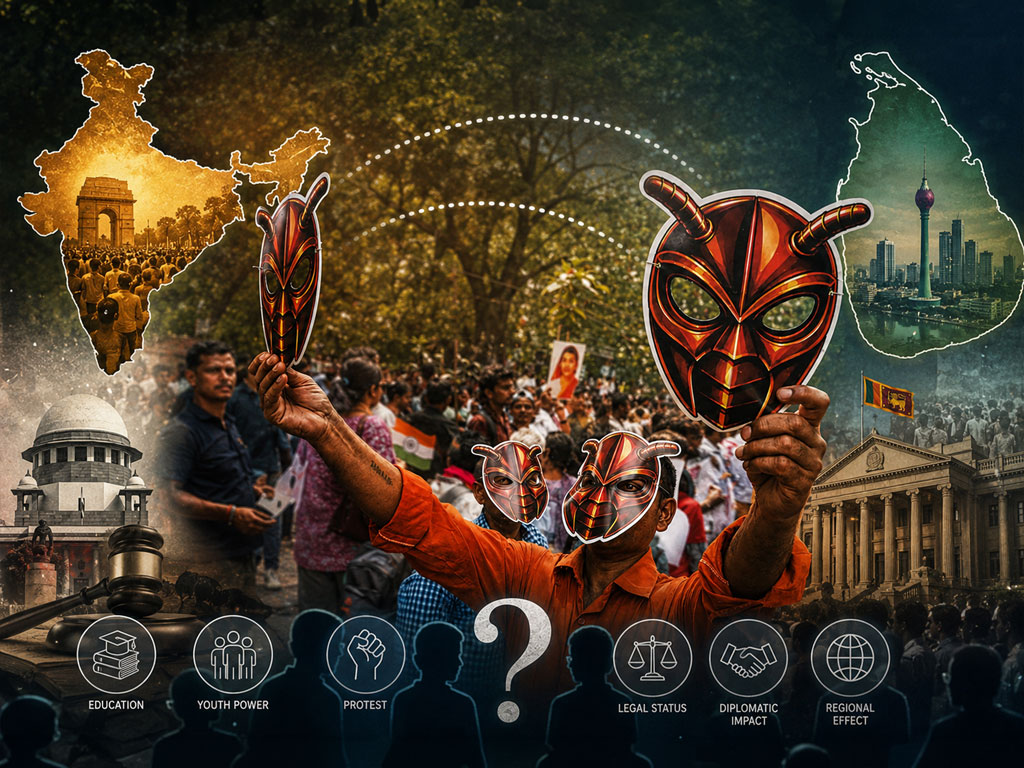
Cockroach Janta Party Sri Lanka expansion illustrated through youth protests, political satire and links between India and Sri Lanka
Reports of a possible Cockroach Janta Party Sri Lanka branch have triggered questions about foreign political influence, legal restrictions and regional diplomacy.
The satirical movement gained widespread support among Indian students and young people during protests over examination irregularities, paper leaks and youth unemployment.
However, neither the organisation nor Sri Lankan authorities have publicly confirmed plans to establish an official branch on the island.
Unverified reports claim that preliminary discussions have taken place over appointing local representatives and creating an organisational structure. Senior members may also visit Sri Lanka, according to those reports.
Until either side confirms the claims, the proposed expansion remains speculation rather than an established political development.

Cockroach Janta Party Sri Lanka Plans Remain Unconfirmed
The Cockroach Janta Party emerged as a satirical Indian youth movement before developing into a major protest campaign.
Its supporters mobilised over problems in the education system, including the NEET medical entrance examination paper leak. The protests later expanded to include wider concerns about unemployment, accountability and opportunities for young people.
The movement gained national prominence and increased pressure on Prime Minister Narendra Modi’s government. Indian Education Minister Dharmendra Pradhan resigned following the protest campaign and negotiations between the government and organisers.
Geographical proximity, online connections between young people and similar social pressures could allow protest ideas to spread across South Asia.
However, creating an organisation in Sri Lanka that originated abroad would raise legal, constitutional and diplomatic questions.
Legal Status Would Determine How It Operates
Sri Lankan authorities would first need to determine what type of organisation the proposed movement intended to become.
It could seek recognition as a political party, civil society organisation, pressure group or non-governmental organisation.
Each category would face different registration, funding, reporting and operational requirements.
Authorities may also examine whether foreign organisers would finance, direct or influence its activities. Such questions would attract attention because Sri Lanka remains sensitive to political involvement linked to regional and global powers.
A foreign political movement attempting to establish a permanent institutional presence would therefore face greater scrutiny than an informal online campaign.
Youth Politics and Diplomatic Concerns
Young people increasingly exchange protest tactics, memes and campaign ideas through digital platforms.
As a result, movements that begin in one country can quickly influence political discussions elsewhere.
A Sri Lankan version of the movement could focus attention on education reform, youth unemployment, governance and political representation.
However, critics may argue that Sri Lanka should develop local responses to its own challenges instead of importing foreign political models.
India would also likely follow any confirmed expansion closely. New Delhi and Colombo maintain important diplomatic, economic and security ties, making the overseas development of an Indian protest organisation a potentially sensitive issue.
Several questions remain unanswered.
It is unclear whether organisers have contacted Sri Lanka’s Election Commission or another regulatory authority. No verified information has identified proposed local representatives, funding arrangements or operational plans.
The Cockroach Janta Party Sri Lanka story should therefore be treated cautiously until official evidence emerges.
For now, it reflects the growing regional influence of youth-led digital activism rather than a confirmed new political organisation operating in Sri Lanka.
BACKGROUND
The Cockroach Janta Party began in India in May 2026 as a satirical response to educational failures and youth unemployment.
The movement later grew after controversy surrounding the NEET examination and became a wider symbol of frustration among students and young professionals. Reuters and other major outlets documented its rapid growth and the role of social media in mobilising supporters.
Its campaign ended its main street agitation after the Indian government accepted key demands and Pradhan left office. Organisers nevertheless said their wider campaign for education reform and accountability would continue.