by Dwayne Ferreira.
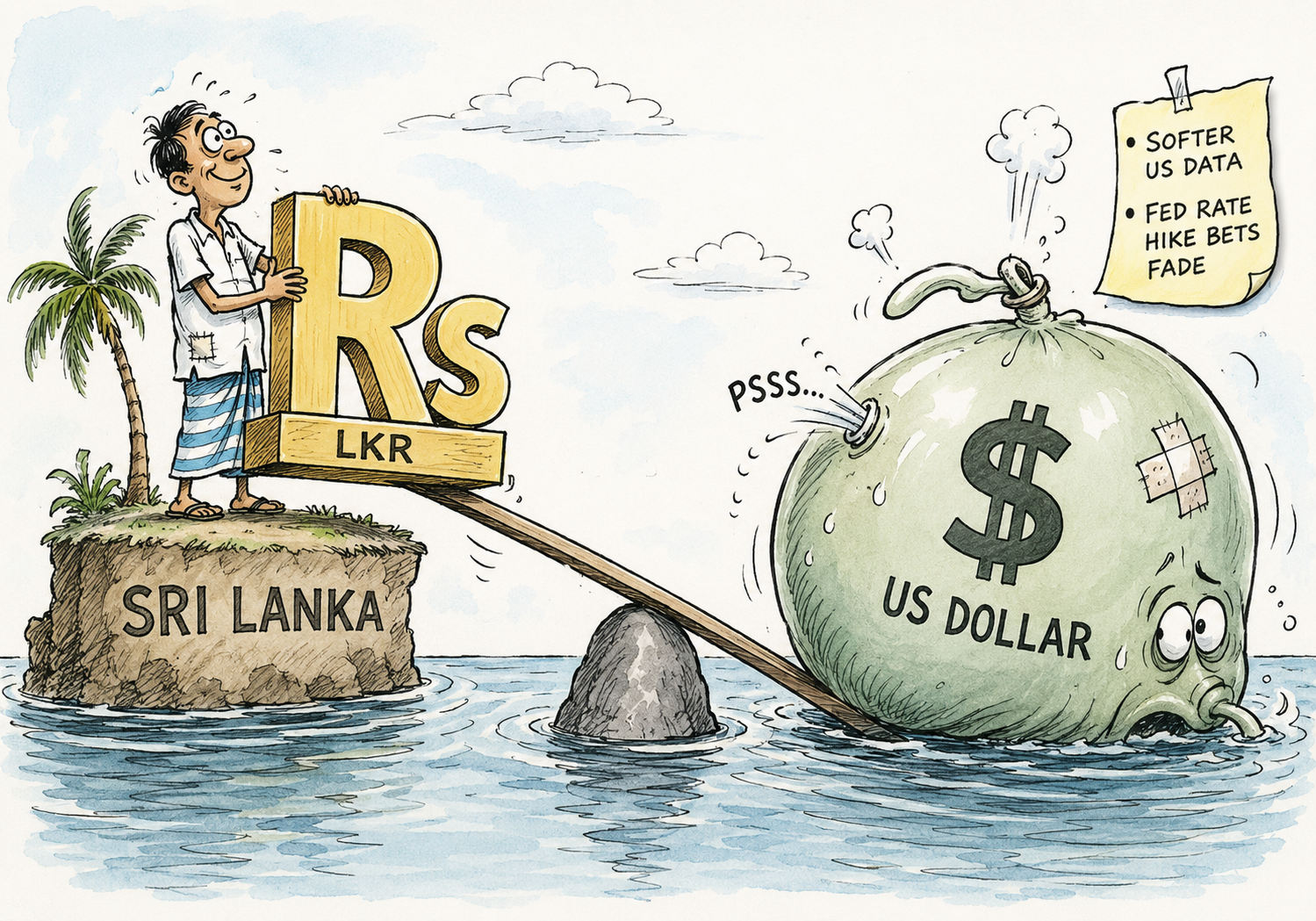
US dollar weakness is giving the Sri Lankan rupee added support as softer US data reduces expectations of another Federal Reserve rate hike.
COLOMBO, Sri Lanka – The Sri Lankan rupee has strengthened against the US dollar recently, but one factor is easy to overlook: US dollar weakness is also helping the local currency.
The dollar came under renewed pressure on August 17, falling to around a two-month low against the euro. Softer American economic data pushed investors to scale back expectations of another Federal Reserve interest-rate increase in the near term.
That shift helps explain movements in the USD/LKR exchange rate.
When fewer rupees are needed to buy one US dollar, the change is usually described as a stronger Sri Lankan currency. However, every exchange rate measures the value of two currencies against each other.
Therefore, USD/LKR can fall because the rupee strengthens, the dollar weakens, or both happen at the same time.
Recent market moves suggest Sri Lanka is benefiting partly from dollar weakness.
Global US Dollar Weakness Follows Softer Data
A series of softer US economic indicators has forced financial markets to reconsider the outlook for Federal Reserve monetary policy.
US retail sales unexpectedly declined, raising concerns about the strength of household consumption in the world’s largest economy. Recent employment figures have also shown signs of weakening. Meanwhile, inflation data have reduced some concerns that the Federal Reserve must raise borrowing costs again immediately.
As a result, traders sharply reduced the probability of another Fed interest-rate increase at its September meeting.

Reuters reported on August 17 that markets were pricing only about a 30% chance of a September increase as traders reacted to the weaker economic numbers.
The dollar consequently lost ground against several major currencies. The euro climbed to its strongest level against the US currency in roughly two months. The broader dollar index also moved toward a roughly 10-week low.
Why Federal Reserve Expectations Matter
Interest rates play a major role in international currency markets.
Higher US rates can make American bonds and other dollar-denominated investments more attractive because investors may earn stronger returns.
International investors buying those assets need dollars. That creates additional demand for the US currency.
However, the reverse can happen when markets believe the Federal Reserve is less likely to raise rates further.
Expectations of lower future US yields can reduce the dollar’s relative appeal compared with other currencies and investment markets.
The Federal Reserve’s target rate currently remains between 3.50% and 3.75%, according to Federal Reserve data.
Therefore, the latest market shift is not mainly about an immediate US interest-rate cut. Instead, investors are increasingly questioning whether the Fed needs to raise rates again.
Changing expectations alone can move currencies before the Federal Reserve changes policy.
Sri Lankan Rupee Gets an Extra Tailwind
For Sri Lanka, US dollar weakness can make the rupee appear stronger even without a dramatic overnight improvement in domestic economic fundamentals.
The relationship is simple.
If USD/LKR falls from Rs.335 to Rs.332, observers may conclude that the rupee has strengthened significantly.
But part of that move could originate in the United States if the dollar is simultaneously weakening against the euro, pound, yen and other currencies.
Sri Lanka also has domestic factors supporting its currency.
Worker remittances provide a steady supply of foreign exchange, while tourism generates additional dollar and other foreign-currency earnings. Investment inflows and tighter domestic monetary conditions can also influence demand for the rupee.
When those Sri Lankan factors coincide with a softer global dollar, the forces can reinforce each other.
That means the recent improvement in USD/LKR should not be viewed only as evidence of stronger domestic fundamentals. Part of the movement can also reflect what is happening thousands of kilometres away in US financial markets.
Stronger Rupee Does Not Tell the Whole Story
The distinction is especially important because Sri Lanka can experience a strengthening currency while facing pressure elsewhere in the economy.
For example, a widening trade deficit would normally increase foreign-currency demand because importers require more dollars to pay for overseas goods.
However, exchange rates respond to much more than imports and exports.
Remittances, tourism receipts, portfolio investment, capital flows, interest-rate differences, central-bank activity and international movements in the US dollar can all affect USD/LKR.
Therefore, a stronger rupee does not automatically mean that every part of Sri Lanka’s economy has improved.
Instead, the exchange rate reflects the combined balance of foreign-currency supply and demand at a particular time.
For now, Sri Lanka appears to have another external factor working in its favour.
The rupee is receiving support from domestic foreign-currency inflows while the currency on the other side of the exchange rate is losing some strength internationally.
Put simply, the rupee may be rising partly because the dollar is falling.
The next major clues will come from further US economic data and Federal Reserve communications. If markets continue reducing expectations of additional US rate increases, the dollar could remain under pressure.
All else being equal, that would provide another supportive external factor for the Sri Lankan rupee.