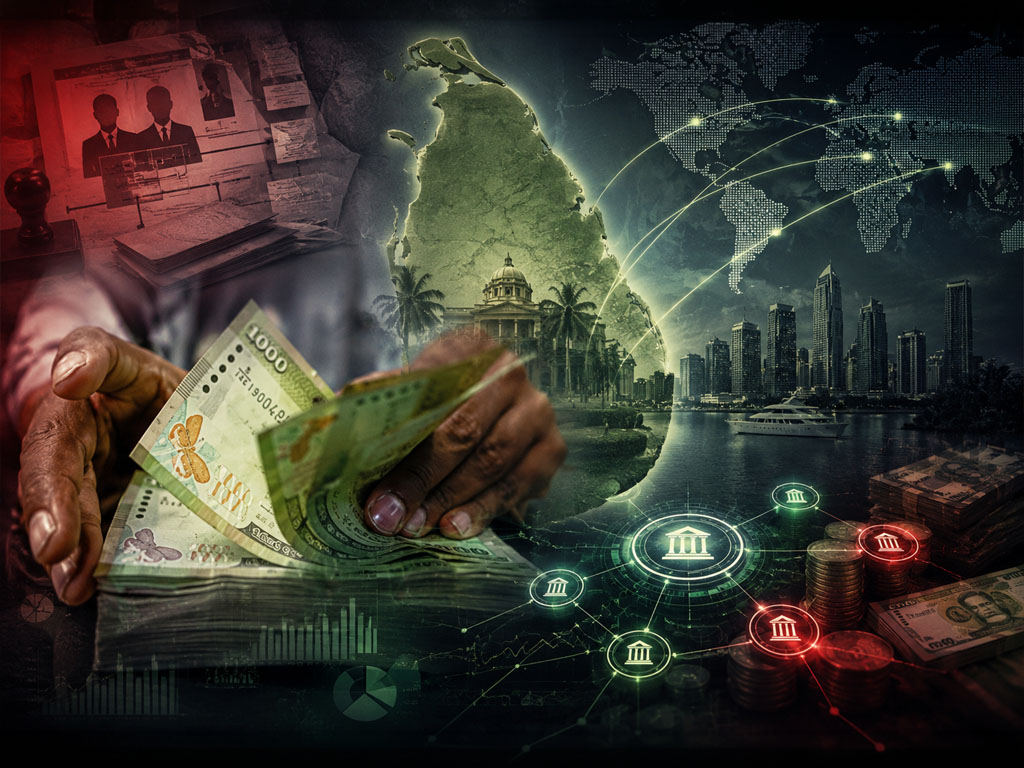
Sri Lanka money laundering investigators are probing Rs. 74 billion sent abroad through 10,151 transactions linked to alleged shell companies and hundi networks.
A Sri Lanka money laundering investigation is examining a vast foreign exchange racket in which Rs. 74 billion was allegedly transferred abroad as ordinary import payments.
The inquiry covers dozens of companies, hundreds of bank accounts and more than 10,000 transactions.
Cabinet Spokesperson Minister Dr. Nalinda Jayatissa said Rs. 74 billion had been sent overseas through 10,151 transactions using 89 bank accounts.
Investigators suspect that an organised hundi or hawala network worth about USD 1 billion operated behind the transfers.

Sri Lanka Money Laundering Probe Began After Customs Complaint
The investigation began in January 2026 after the Additional Director General of Sri Lanka Customs lodged a complaint with the Financial Crimes Investigation Division, or FCID.
Since then, the Criminal Investigation Department has carried out an extensive review of private banks, shell company accounts and overseas payments.
Investigators have identified Jeffrey Mohamed as the main suspect.
They allege that he registered about 36 companies under the guise of import businesses and opened accounts at four private banks.
Money Sent Abroad, but Imports Never Arrived
According to investigators, the money was transferred overseas through Telegraphic Transfers as advance payments for imported goods.
However, they say none of the relevant goods entered Sri Lanka.
This large mismatch between foreign payments and actual imports has become a central element in the Sri Lanka money laundering investigation.
Investigators regard the gap as strong evidence supporting suspicions of an organised foreign exchange and money laundering racket.
Friday Meetings and Alleged Bank Official Involvement
CID records indicate that some private bank officials allegedly helped facilitate the transactions.
Investigators say certain officials met the main suspect almost every Friday.
Allegations have also emerged that bank officials received weekly payments ranging from Rs. 30,000 to Rs. 100,000.
Information gathered during the inquiry further indicates that one official allegedly received Rs. 1 million on a single occasion.
Investigators have also found that mandatory Customer Due Diligence and KYC procedures were not properly completed when opening accounts or processing transactions.
However, lawyers representing arrested bank officials reject the allegations.
They argue that their clients followed standard banking procedures and say junior bank employees were not responsible for determining whether the companies actually imported goods.
Four Bank Managers Arrested as Inquiry Widens
A suspect arrested in the Negombo area on June 19 was questioned under a seven-day detention order before being remanded.
Authorities have also arrested four private bank managers.
They were produced before court under the Prevention of Money Laundering Act and the Penal Code.
The Colombo Chief Magistrate’s Court has now authorised investigators to obtain information relating to 210 bank accounts connected to the case.
The investigation therefore continues to widen across the banking system, shell companies and overseas payment channels.
Meanwhile, the Government is preparing measures to close legal loopholes in Sri Lanka’s financial system.
Information uncovered through the Sri Lanka money laundering probe could become an important basis for strengthening foreign exchange controls and financial regulations in the future.