By Dwayne Ferreira.
Verstappen has chosen Red Bull as the team he wants to finish his F1 career with. The real danger wasn’t Mercedes stealing him. It was Verstappen becoming so unhappy with Formula One’s direction that he quit the sport altogether.
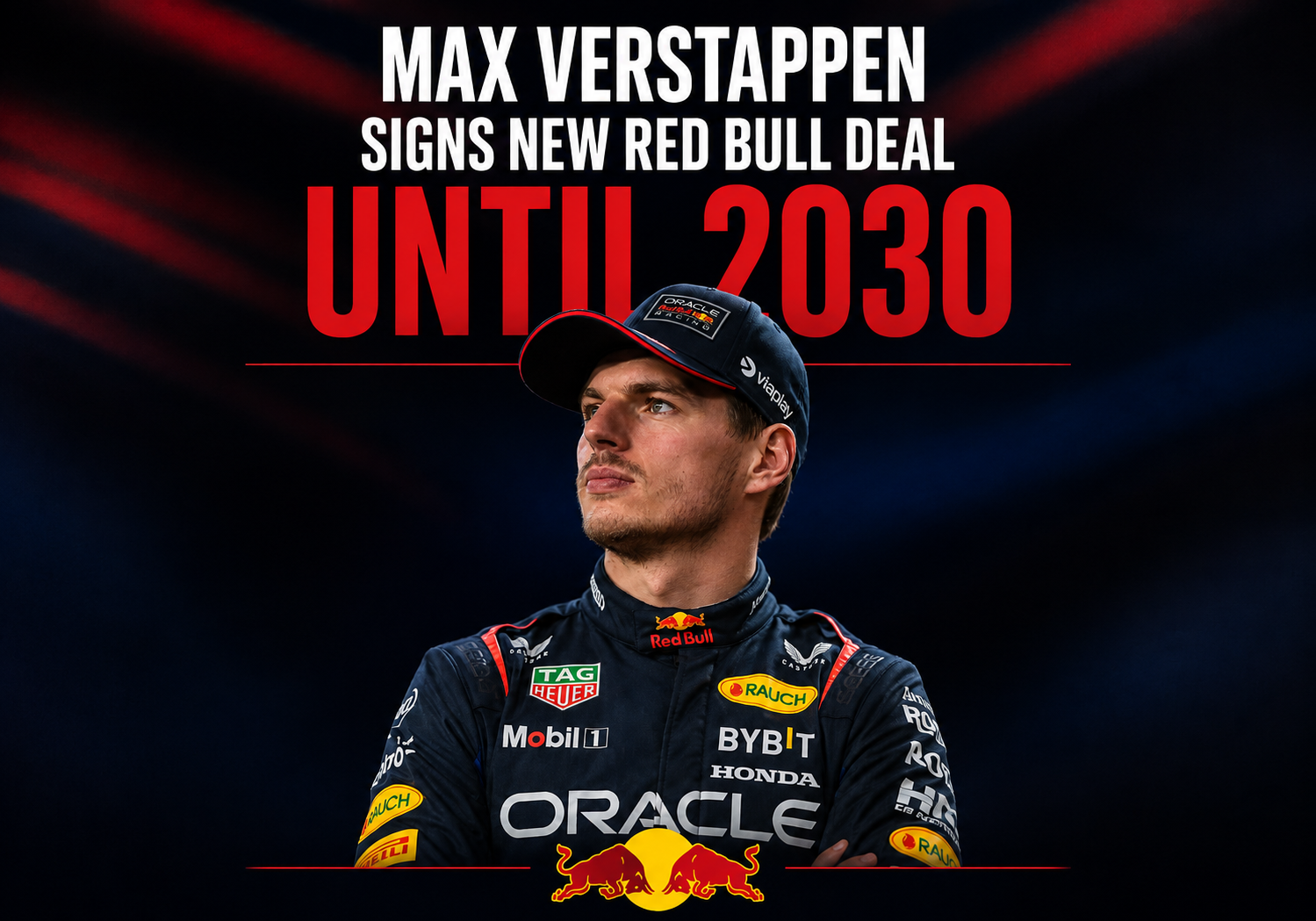
Max Verstappen has ended months of speculation surrounding his Formula One future by signing a new contract with Red Bull Racing that will keep the four-time world champion with the team until the end of 2030.
The agreement extends Verstappen’s previous contract, which had been due to expire at the end of 2028, and effectively shuts down persistent suggestions that the Dutchman could eventually move to Mercedes or McLaren.
But the biggest revelation surrounding the announcement was not which rival team Verstappen had considered joining.
It was that he had seriously considered whether he wanted to remain in Formula One at all.

Speaking ahead of his home Dutch Grand Prix at Zandvoort, the 28-year-old admitted that retirement had at one stage appeared more likely than switching teams.
“I think I was closer to retiring than changing team,” Verstappen said while discussing his decision to remain with Red Bull.
That admission provides important context to a contract extension that secures one of Formula One’s most important driver-team partnerships for another four seasons.
Verstappen Never Felt He Needed Another Team
Verstappen’s future had been the subject of almost continuous speculation as Red Bull’s dominance faded and Formula One moved into its radically different 2026 regulations.
Mercedes team principal Toto Wolff had previously made little secret of his admiration for Verstappen, while McLaren was also mentioned as a possible destination as questions grew over whether the Dutchman would complete his existing Red Bull contract.
However, Verstappen says his concerns were never primarily about needing to prove himself somewhere else.
He explained that he feels comfortable within Red Bull and has never had a strong desire to race in another team’s colours simply to demonstrate that he could win elsewhere.
Red Bull has been central to virtually Verstappen’s entire Formula One career. He entered the company’s junior programme in 2014, made his F1 debut with Toro Rosso in 2015 and was promoted to Red Bull Racing during the 2016 season.
He immediately won the Spanish Grand Prix on his Red Bull debut before eventually building one of the most dominant periods by any driver in modern Formula One, winning four consecutive world championships from 2021 to 2024.
By remaining through 2030, Verstappen would complete 15 seasons racing for Red Bull’s senior Formula One team.
Why Verstappen Considered Leaving Formula One
The greater threat to Red Bull retaining Verstappen was apparently not another constructor.
It was Formula One itself.
Verstappen has been one of the most outspoken critics of the regulations introduced for 2026, particularly the way the new power units dramatically increased the electrical component and forced drivers to manage energy differently during races.
Earlier this season he openly questioned whether continuing under the regulations was something he wanted to do long term.
The 2026 engines initially moved toward an almost equal split between internal combustion and electrical power. Verstappen argued that the resulting energy-management requirements could produce an unnatural style of racing.
His frustration became so significant that he publicly suggested another season under the same conditions could become difficult to accept.
Formula One and the FIA have subsequently discussed adjustments, including a proposed change for 2027 that would increase the contribution from the combustion engine relative to electrical power.
Discussions involving Verstappen, Red Bull, Formula One and the FIA appear to have helped reassure him about the future direction of the championship.
There is also growing discussion over Formula One’s longer-term engine formula, with the possibility of simpler power units and a potential move towards V8 engines with a considerably smaller electrical contribution around 2030. That prospect appears much closer to the type of racing Verstappen has repeatedly said he enjoys.
Red Bull Gives Verstappen Freedom Beyond F1
Another important element behind the agreement is Verstappen’s increasingly serious interest in racing outside Formula One.
Unlike many drivers whose careers are almost exclusively centred around F1, Verstappen has made no secret of his enthusiasm for endurance racing and other forms of motorsport.
Red Bull has given him considerable freedom to explore those interests, something Verstappen values when considering his longer-term future.
His ambitions beyond Formula One could eventually include major endurance races, and the ability to pursue those projects while remaining an F1 driver strengthens Red Bull’s position considerably.
For Verstappen, therefore, remaining with Red Bull offers something beyond the question of which team currently possesses the fastest Formula One car.
It provides familiarity, trust and freedom.
That confidence is particularly significant because Red Bull is currently navigating one of its more challenging periods. Under team principal Laurent Mekies, the team is attempting to recover ground after struggling with the new regulations.
Verstappen currently sits sixth in the Drivers’ Championship and 110 points behind Mercedes driver Kimi Antonelli, a dramatic contrast to the years when he and Red Bull dominated Formula One.
Yet Verstappen insists he still believes the team can return to the front.
He remains hungry for victories and championships, while Red Bull considers him central to rebuilding the operation around the new generation of regulations.
For Formula One, the announcement ends one of the sport’s longest-running transfer stories.
For Red Bull, it guarantees that the driver who defined its most successful modern era will remain at the centre of its attempt to build the next one.
And for Verstappen, the decision suggests that the real question was never whether he would wear Mercedes silver or McLaren orange.
It was whether Formula One could convince him to keep racing at all.