By Roshan Jayasinghe
My previous article came from a motorcycle journey of thousands of miles and the thoughts that travelled with me along the way. The Journeyman continues from there, but this time the journey is not really about the motorcycle, the roads or the places I visited. It is about where those experiences have taken my mind. The more I think about our human journey, the more I question what we know, what we believe, what we inherit from generations before us, and what we should be willing to question and carry forward. This is simply where my own understanding has brought me today, not an answer for anyone else, but another part of my journey as I continue to observe, question and learn.
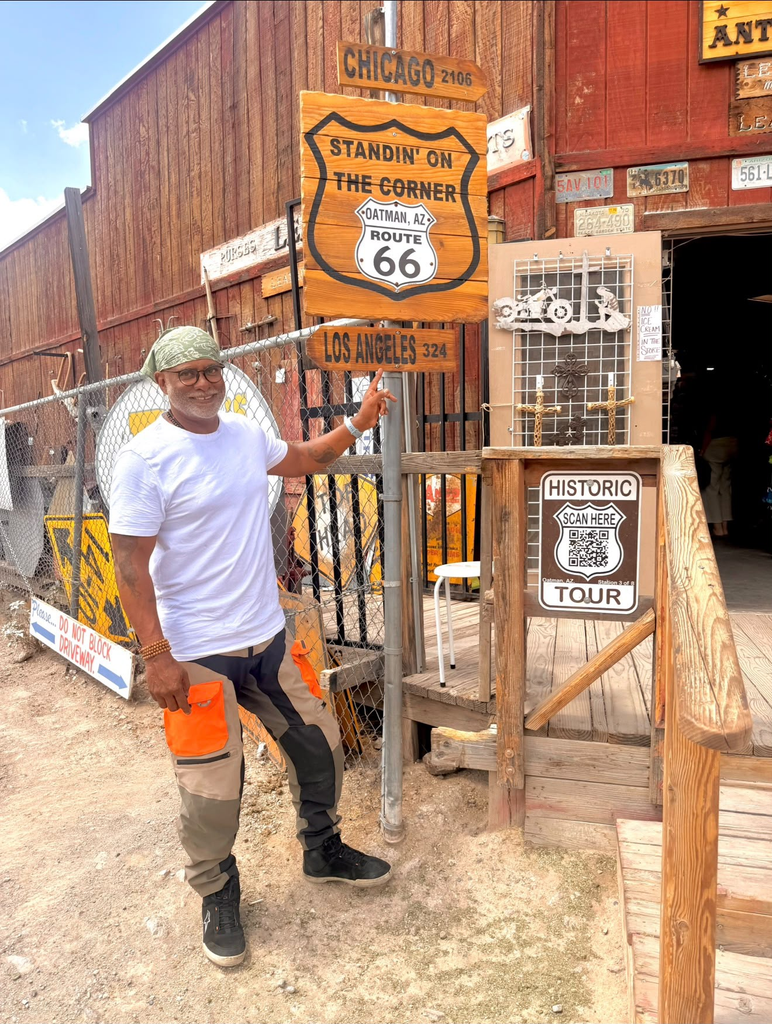
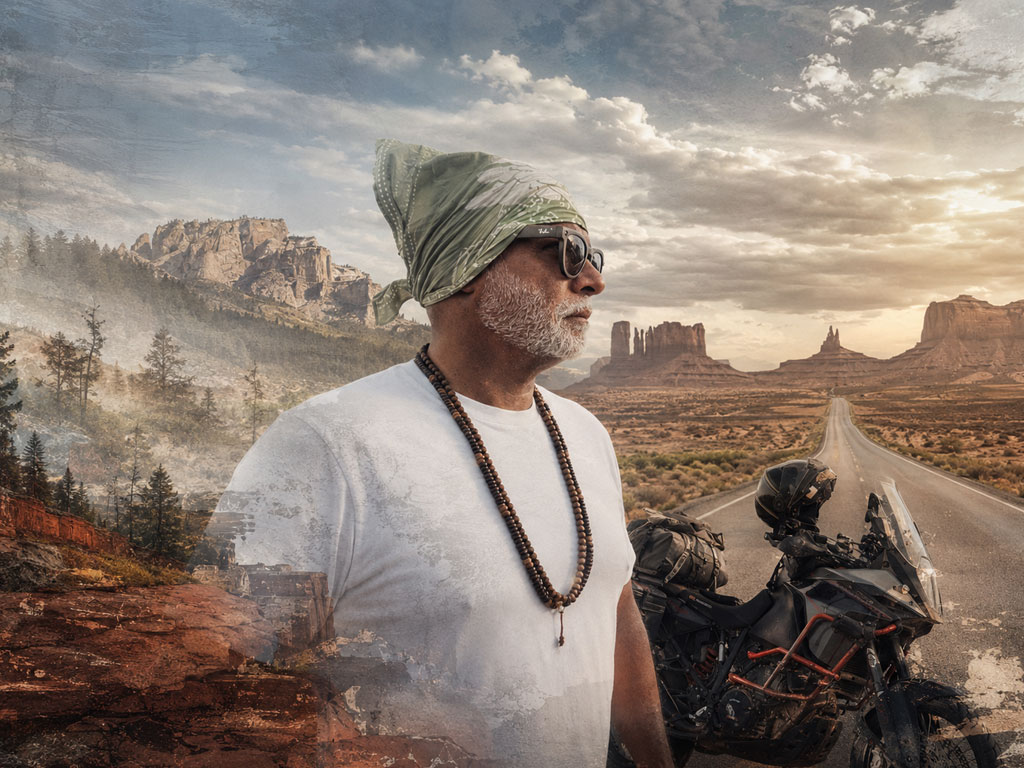
I have been thinking about the word journeyman. Maybe it came to me because I have just returned from another long motorcycle journey, travelling thousands of miles this time, spending many days simply following my friend who was navigating our route. Most mornings I knew where we intended to end up. Beyond that, I was quite happy to follow him, ride for ten or twelve hours if necessary, stop when something interested us, and eventually find somewhere to sleep before darkness took over the day. But this is not another story about my motorcycle journey. Something about all those hours gave me a different understanding of the word journeyman itself. Historically, a journeyman was someone who had completed an apprenticeship and learned his trade, but had not yet become a master. He had knowledge and experience and could practice his craft independently, but importantly, he was still learning. That interested me.
At this stage of my life, I have accumulated plenty of experiences. I have worked, travelled, raised a family, succeeded at things, failed at others, made good decisions and some terrible ones, met people from many different backgrounds and watched the world change enormously during my own lifetime. Yet I don’t feel anywhere close to being a master of life. In fact, the longer I live, the easier it becomes for me to say three very simple words: I don’t know. I no longer hear those words as a weakness. They leave another door open. Every one of us begins life knowing practically nothing. From the moment we arrive, information starts entering us. We learn from our parents, families, schools, communities, religions, cultures, friendships, work, successes, failures and experiences. Later we add books, science, travel, technology and access to almost unlimited information. Today we even have artificial intelligence allowing us to question, compare and explore information in ways that were unavailable only a few years ago. All of this enters that extraordinary place we call the human mind.
But there is something I keep questioning. At what point does what we have learned become what we believe? And at what point does what we believe become something we stop questioning? Those are not the same things. Something being told for a thousand years does not automatically make it factual. Something being written in a book does not by itself make it factual. Something being accepted by millions of people does not necessarily make it factual either. At the same time, something we cannot presently prove should not automatically be declared impossible. There is a very large space between knowing and not knowing.
Religion is one obvious example. It has travelled with human beings for thousands of years, giving people faith, comfort, community, discipline and explanations for questions they could not otherwise answer. I have no desire to tell anyone not to pray, worship, follow a religion or receive whatever goodness they find within it. But I still have my question: What do we actually know? We have learned an extraordinary amount about ourselves, our world and the universe, more than people living thousands of years ago could ever have understood with the knowledge available to them. Yet when it comes to God, heaven, an afterlife or some predetermined divine purpose for our existence, we still don’t possess the kind of factual evidence that allows everyone to examine it and arrive at the same demonstrable conclusion. We have belief, and there is nothing wrong with calling belief belief. I cannot prove there is no God. Someone else cannot scientifically demonstrate to me that there is one. So why should I pretend to know either answer?
That made me think of something much simpler. Imagine a machine created hundreds of years ago, remarkable for its time, something people depended upon. We should respect the people who invented it because their knowledge became part of the journey that eventually produced better machines, but we don’t continue using that machine merely because our ancestors did. Today I use AI to help me communicate, research, question and organize my own thoughts. A person several generations ago could not have imagined me sitting with a small device in my hand having access to this amount of accumulated human knowledge, and I certainly don’t expect people living generations from now to keep using the technology I use today simply out of respect for me. I would rather they used something better, questioned what I knew and corrected what I got wrong. Taking whatever was useful from my generation and improving upon it, that is progress.
There is an important difference with my old machine example, though. The machine actually existed. The proof, as we say, is in the pudding. We can examine it, understand its construction, see what it accomplished and understand why something eventually replaced it. With some of humanity’s oldest beliefs, what we can establish with certainty is that human beings have believed them for generations. That history is real. The cultures are real. The scriptures are real. The temples, churches, mosques and traditions are real. The effect religion has had upon human civilization is unquestionably real. But the existence of a belief is not necessarily proof of what is being believed. Asking that question should not frighten us. If something is true, questioning it should not destroy the truth, and if questioning something improves our understanding, then the question itself has served us.
This is where my idea of the journeyman started moving far beyond travelling on my motorcycle. Maybe all of us are journeymen. The scientist discovering something new is still a journeyman. So is the teacher, the mechanic, the farmer. The religious person and the person without religion are both still travelling through the same unanswered questions of existence. A wealthy person doesn’t graduate from being human, nor does political power turn anyone into a master of humanity. We are all here for a limited period, carrying whatever knowledge was handed to us, adding what we discover ourselves and eventually leaving it behind. The danger may begin when we stop behaving like journeymen and start believing we have become masters. We see it in politics, religion, education, culture and even ordinary conversations. Once I become completely certain that my understanding must also become yours, curiosity begins disappearing. I am no longer listening to discover something. I am listening only for the opportunity to defend what I already believe. What a waste of a human mind.
I would rather continue travelling through knowledge. Some things I believed when I was twenty are not what I believe today. Some things I confidently thought I understood at forty look different to me now. I hope that continues. If I reach eighty and discover that something I wrote at sixty two was wrong, I hope I have enough sense to say so, without embarrassment. That is exactly what I would want from the generations following us. Don’t believe something merely because Roshan wrote it. Read it, question it, compare it with what you know, and find out what I may not have known. If there is something useful in it, carry it forward. If better knowledge shows that I was wrong, correct it and keep going.
That is how I increasingly see our human journey. We inherited an unfinished world from people who themselves inherited an unfinished world. They gave us extraordinary knowledge and they also gave us mistakes. We have done exactly the same, and the next generation will too. Maybe our responsibility is not to give them all the answers, but to leave them comfortable enough to keep asking the questions.
My motorcycle journeys have given me many wonderful places, people and experiences, but I am beginning to understand that the longest journey I have been making has never really been measured in miles. It has been happening inside my own understanding, in the slow work of learning how to live, changing my mind, questioning things I was once told to accept, and enjoying what I know while remaining curious about what I don’t. It is the very short opportunity we have of being alive, and the question of what we can usefully do with it while we are here. So maybe I have finally found a word I am comfortable carrying. Not master. Journeyman. And maybe the journeyman is not the person who has travelled the farthest. It is simply the person who has never decided that he has learned enough.
Author’s Note
The Journeyman is not written to challenge anyone’s right to faith, belief or personal way of life. It is about my own continuing need to understand the difference between what we know, what we believe, and what we have inherited as knowledge. These thoughts are not answers I expect anyone else to accept. They are simply where my understanding stands today, knowing that tomorrow I may learn something that changes it. That, after all, is the whole point of being a journeyman.
About the Author
Roshan Jayasinghe is a writer and observer of human systems. His work explores the gap between man made constructs and lived humanity, with a focus on how economics, trade and everyday choices intersect with questions of fairness, responsibility and inner alignment. Through essays for publications in The Morning Telegraph, he aims to remind readers that they are not passengers in a fixed machine, but active custodians of a shared world.