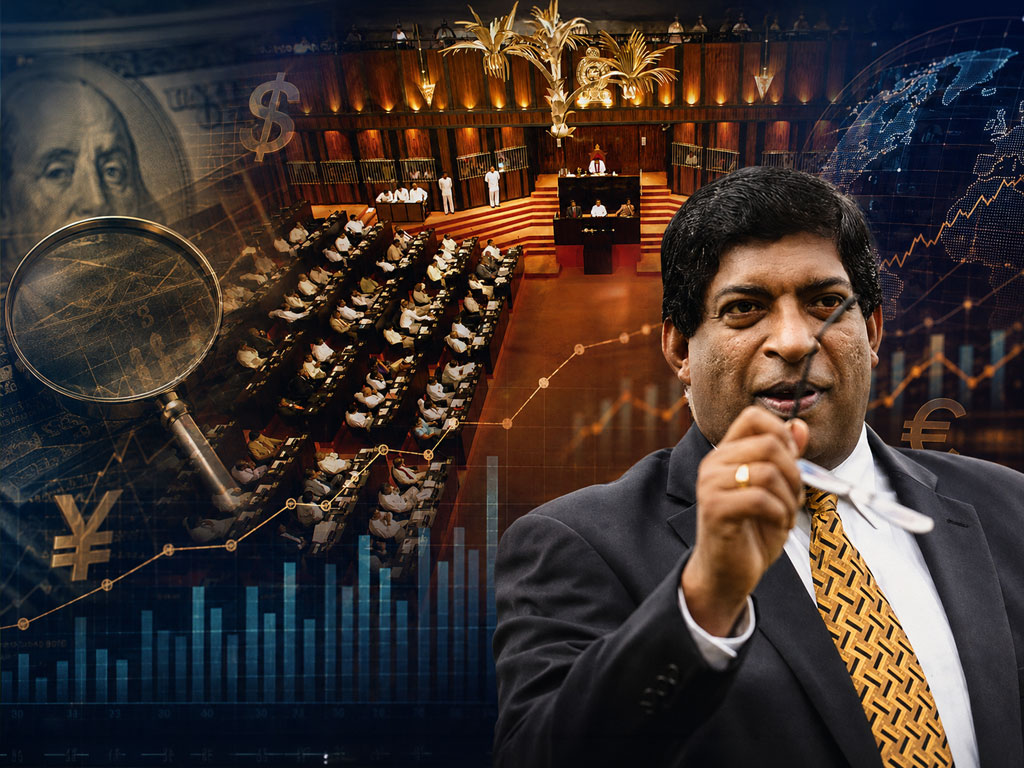
Sri Lanka foreign reserves face scrutiny as Ravi Karunanayake questions gross reserves, negative net reserves, swaps and future debt repayments.
Sri Lanka foreign reserves came under fresh scrutiny in Parliament after former Finance Minister Ravi Karunanayake questioned how many dollars are actually available for immediate use.
Although official figures show that foreign exchange reserves have increased, Karunanayake focused on the distinction between headline reserves and liquid funds available for imports and external payments.
Against the backdrop of the International Monetary Fund’s four-year Extended Fund Facility programme, he called on the Government and Central Bank of Sri Lanka to provide a transparent breakdown.
He sought details on the structure of reserves, short-term swap commitments and the country’s future foreign debt servicing plans.

Sri Lanka Foreign Reserves and the Gross Reserve Figure
Recent official data places Sri Lanka’s gross official reserves at around USD 6.5 billion.
However, Karunanayake argued that the figure requires closer examination because it includes assets that cannot be immediately used, along with short-term foreign exchange swap arrangements.
He specifically referred to the approximately USD 1.4 billion, or CNY 10 billion, swap with the People’s Bank of China.
He also highlighted six-month short-term foreign exchange swaps involving local commercial banks.
Karunanayake argued that including such arrangements can make gross reserves appear stronger than the country’s actual liquid position.
He compared the situation to using a bank overdraft to create the appearance of a larger available balance.
Net International Reserves Remain Negative
According to available reports, Sri Lanka’s Net International Reserves, or NIR, remain negative at USD 1.268 billion.
This measure excludes external commitments and therefore provides another indication of the country’s underlying reserve position.
The Central Bank has attempted to reduce this structural deficit by purchasing dollars from the domestic foreign exchange market.
Economic data indicates that these net dollar purchases from commercial banks have helped keep net reserves around USD 700 million above the IMF’s minimum review-period threshold of negative USD 2.035 billion.
That improvement has provided some additional room, but the negative NIR position remains a key concern in the wider debate over reserve adequacy.
Debt Repayments After 2026 Raise New Risks
Sri Lanka has completed approximately 94% of its foreign public debt restructuring process.
The Government expects gross reserves to reach USD 8 billion by the end of 2026.
Measures supporting that target reportedly include the 50% surcharge on vehicle imports and the mandatory conversion of export proceeds into rupees.
However, Karunanayake questioned what will happen when full principal and interest payments on restructured foreign debt resume.
Sri Lanka is also projected to build reserves to USD 15.1 billion by 2028.
The former Finance Minister therefore asked whether the country has a sufficiently strong foreign exchange management strategy to prevent another balance of payments crisis once debt servicing intensifies.
Monetary Policy and Financial Stability
The Central Bank has used policy interest rates to control inflation and support rupee stability.
However, some views suggest that higher interest rates have restricted credit growth and placed pressure on small and medium-sized enterprises.
Karunanayake argued that monetary policy cannot remain static because exchange rates, foreign capital flows and global market conditions continue to change.
He called for greater flexibility in managing those risks.
He also asked whether the Government is prepared to activate the Active Liability Management Act to reduce future debt servicing costs.
In addition, Karunanayake called for a clear report on Central Bank dividends and the funds transferred to the Treasury.
His questions place renewed focus on whether the improvement in Sri Lanka foreign reserves reflects genuine usable liquidity, or whether headline figures still conceal important short-term commitments and future repayment pressures.