By Roshan Jayasinghe
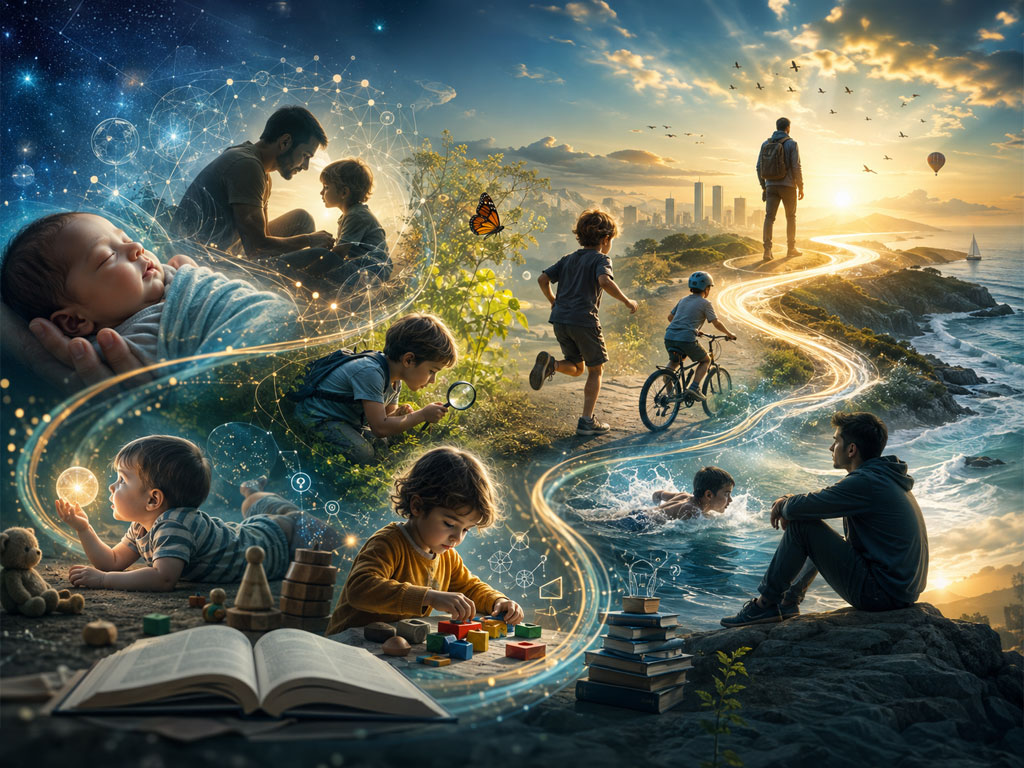
I have been thinking about education from a place much earlier than the classroom, because when I look at a newborn child there is something very simple in front of us before we begin adding everything we have accumulated around that life. A child comes into this world through nature’s process of producing another human being and does not arrive knowing nationality, religion, politics, economics, social status or any of the identities and systems that will eventually become part of life. It simply arrives alive, with senses beginning to receive the world and a body already carrying the natural process of development from infancy through childhood, adolescence, adulthood, ageing and eventually death, if disease, accident or another circumstance does not interrupt that journey. We did not design any of this. We observe it because we ourselves are part of it, and even the faculties with which we observe, question and reason have come from the same nature that produced us. This is why I see nature as the authority. Not because nature tells us how we should live or what is morally right or wrong, but because nature is the reality within which we exist, and we are observers of it while also being part of the very thing we are trying to understand.

Nature shows us both sides of the coin. There is birth and death, growth and decay, cooperation and competition, extraordinary beauty and natural events capable of enormous destruction. We continue learning how these processes work as observation, evidence and science give us better explanations, but I do not think we should claim to know an ultimate reason when that knowledge is simply not available to us. Nature does not change because our explanation changes. Our understanding changes. Human history has enough examples of things confidently accepted at one time and corrected later to remind us that what we know today remains our best understanding within the knowledge presently available to us.
Long before a child enters school, learning has already begun. Hunger produces a response and being fed produces another. Warmth, cold, touch, voice, movement, fear, comfort and safety are entering a developing human mind before anyone opens a textbook. A child attempting to stand is already learning through the effort of getting upright, falling and trying again without needing a technical explanation for what is happening. Faces, voices, affection, frustration, play, animals, trees, rain, sunlight and darkness are becoming part of an education taking place simply through existence. The relationship between the developing human being and reality has already started, which makes me question whether what we later call education is really the beginning of learning at all.
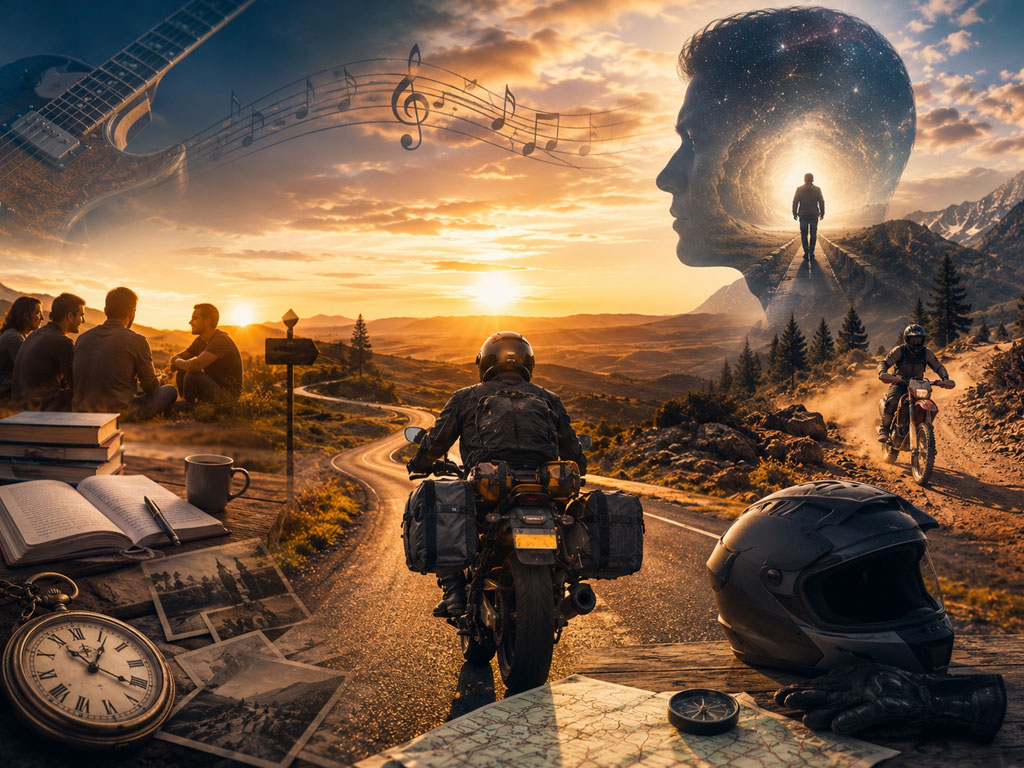
When I look back at my own younger days, I certainly was not thinking about any of this. I was a fun loving boy interested in whatever caught my attention through the senses and abilities I had at the time. I went to school and understood that I was supposed to learn the curriculum, be a good student and somehow prepare myself for the future, and naturally my parents and the adults around me wanted that too. But I cannot say I became interested in something simply because it appeared in a curriculum. I managed to get by without being particularly troubled about it while my energy usually went somewhere else. I wanted to be outside, moving, playing, swimming, riding my bicycle, going to the beach and spending time with friends. Homework did not occupy much of my thinking. I was simply living day by day without knowing where any of those experiences would eventually take me.
Looking at that boy now, I do not think I was uninterested in learning. I was learning continuously, only much of it was happening outside what I understood to be education. Sport was a large part of my younger life through team sports such as rugby, cricket, soccer, volleyball and field hockey, as well as swimming, badminton, table tennis, snooker and pool, and track and field where I competed as a sprinter, hurdler and long jumper. Each was teaching something different without me thinking of it as education. Team sports taught cooperation, trust and the simple reality that individual ability alone could not make a team function. Sprinting demanded a short burst of concentrated effort, hurdling added precision and timing while moving over obstacles, and long jump brought speed, strength and judgement together in one movement. Swimming taught breathing, rhythm and endurance, but also something basic about nature: my body had to learn how to work within the water because the water was not going to adjust itself to me. Other individual sports developed timing, coordination, concentration and judgement. Winning, losing, getting something wrong and trying again were all giving me information. None of this appeared on my report card, but all of it was becoming part of the human being I was developing into.
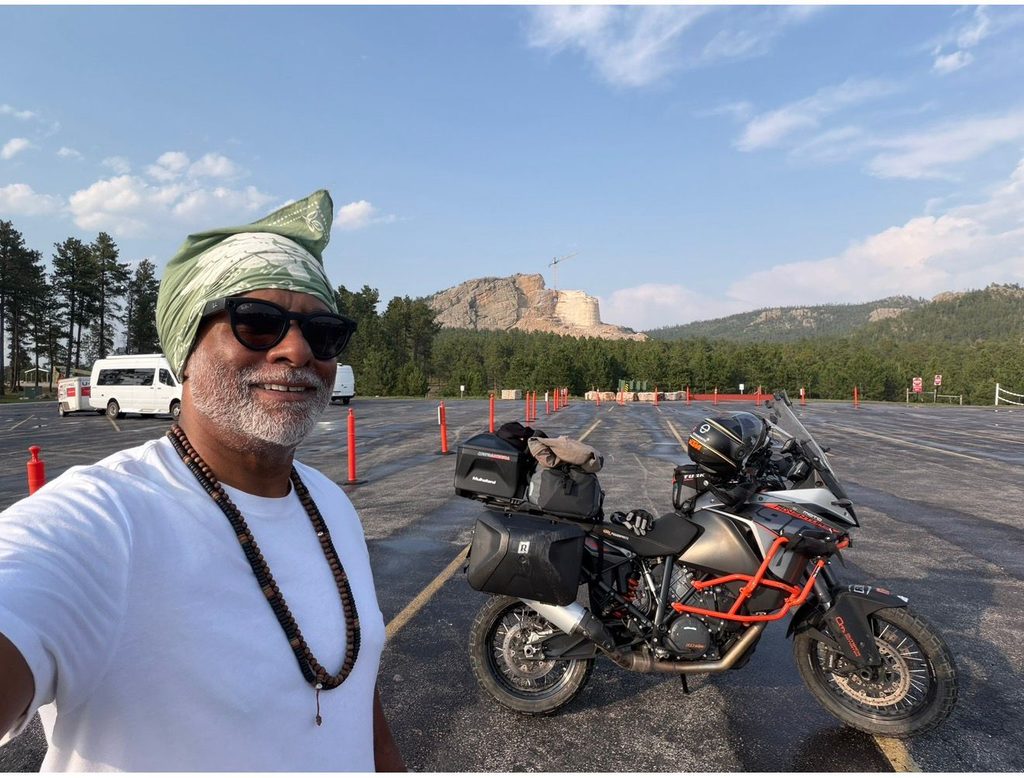
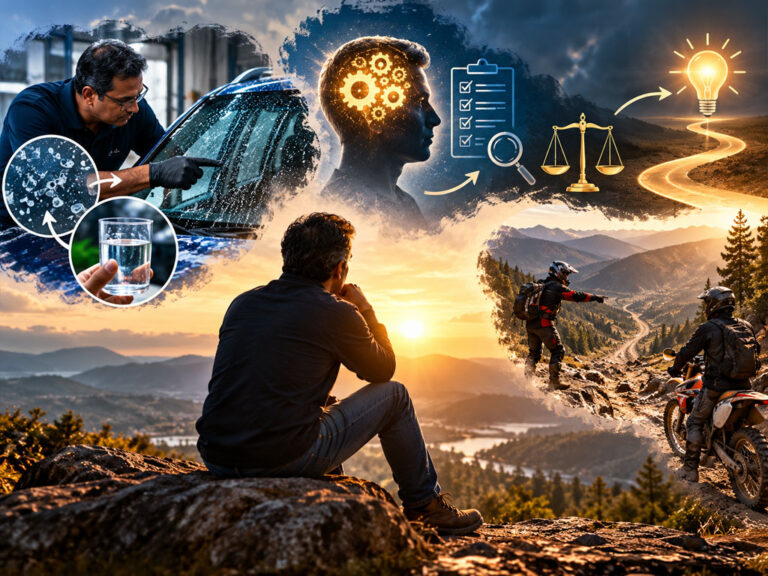
Flying was another curiosity that stayed with me from a young age. After high school I entered higher education connected with aviation maintenance, but that direction was abruptly stopped and life changed course. At another stage I came close to an opportunity involving helicopter flying, later worked as a flight attendant, and many years afterward returned to flying by beginning my private pilot training, which I still hope to complete. I find something interesting in the way a genuine curiosity can survive interruptions and completely different directions in life. The same has happened with physical activity. The gym later became less about competition and more about maintaining the body carrying me through ageing, while motorcycles became another form of learning through balance, judgement, reaction, terrain, risk and consequence. My working life has followed something similar because I have always been attracted to activity, practical results, solving what is in front of me and connecting with people. When something has a purpose I can see, experience or apply, curiosity naturally becomes involved.
Years later I found myself on the other side of education as a father. Like many fathers, I could be strict with my boys because I carried what I understood to be the responsibility of a parent. School mattered and there was naturally pressure to study and prepare themselves for life, but I never had a predetermined idea of what each of them should become. I wanted them to develop through their own interests, find their own direction and eventually build lives of their own. My hope was that they would understand something of the truth of nature and life, learn sympathy and empathy towards other human beings and live to the best of their abilities. We travelled, visited national parks, played sports, swam and often travelled with friends and their children, giving my boys plenty of opportunity to experience different places and develop friendships of their own. I could guide them and show them what I believed mattered, but I could not live their experiences for them. They had to make their own judgements, develop their own awareness and eventually find their own way. I enjoyed observing that part of their growth too, although at the time I was not calling it education.
There was also an education none of us would ever have chosen. During the Indian Ocean tsunami of 2004, my family and the friends travelling with us experienced nature’s destructive capacity firsthand. We survived. Wikum, our friend and the father of my eldest son’s good friend, did not. He was there with us and then he was gone, and the water that had given us so much enjoyment over so many years took him within minutes. My boys experienced at a young age fear, survival, loss, grief and the realization that life can change in a moment. They saw what a father’s absence meant to another family and learned that even the adults around them could not change what had happened. Whatever I had been teaching them until then, this was an education of a completely different kind, and none of us chose the lesson or the teacher.
Nature had shown me something of this when I was young too, when two of my uncles lost their lives in separate incidents involving the sea and a lake. Water had also given me some of the greatest enjoyment of my childhood through swimming and the beach. That is why when I speak about both sides of nature’s coin, I am not speaking only from an idea. The ocean can provide food, beauty and enormous enjoyment while natural processes within that same ocean can cause unimaginable destruction. I do not need to invent an ultimate reason for that contradiction. We can continue learning how nature works and improve our ability to protect life, while grief, compassion, helping one another and remembering those we lose remain part of our human response.
None of this means children should simply follow whatever interests them and forget structured education. Language, mathematics, science, history and disciplined study give a child access to knowledge that took humanity generations to develop. What I question is whether we can provide that necessary structure without disconnecting learning from the curiosity already operating inside the child. Some children naturally engage with books and structured study, while others may understand something more readily through movement, observation, experimentation, conversation, music, sport, nature or direct experience. I think education becomes stronger when we recognize the human being who is learning rather than assuming every developing mind must arrive at understanding through exactly the same route. The brain is not being educated while the body simply carries it to school, because the body, senses, emotions and relationships are already participating in the learning.
When adults educate a child, we are also handing over humanity’s inheritance. Within it are extraordinary achievements in science, medicine, engineering, literature, art, music, philosophy and technology, but alongside that knowledge come beliefs, prejudices, fears, divisions, political and economic constructs, religious interpretations, cultural identities and assumptions that do not necessarily carry the same degree of evidence or certainty. I was taught things as a boy that were presented to me with complete authority and that I later found were not so, and I do not remember anyone explaining how I might have known the difference at the time. The problem is not that we educate children. We must. What I question is whether we also give them the ability to recognize what kind of information they are receiving.
Collective agreement alone cannot turn something into truth because human beings have collectively accepted things before and later discovered they were wrong. What I understand as reliable knowledge is something that has survived observation, evidence, testing, questioning and repeated opportunities for correction, while still remaining open to better evidence. Some things we know with extraordinary confidence, some are strongly supported, some remain incomplete, some are beliefs or interpretations, some are human constructs, and there are things we simply do not know. This is why I increasingly appreciate the simple words, “I do not know.” They do not have to end a conversation. They can begin one. How do we know this? What evidence do we have? Could another explanation exist? What would cause us to change our understanding? A child who learns to ask these questions does not have to reject inherited knowledge. I think that child may actually respect knowledge more by understanding how it earns our confidence.
We also have to be careful not to replace one form of conditioning with another, because removing beliefs we dislike and inserting the ones we personally prefer only changes who is doing the conditioning. What interests me is developing the ability to observe, question, experience, reason, understand and correct. Being wrong does not have to become something embarrassing that we defend. Changing our understanding when better evidence arrives is part of learning, and respecting adults should not require a developing human being to stop asking good questions.
These thoughts eventually became part of the work I call The First Education, the first Living Module within the Human Continuum of The Living Human Manual. I do not offer it as a curriculum or a formula for raising children. It is an attempt to look at the foundation underneath whatever education follows: awareness before assumption, curiosity before certainty, evidence before conclusion, humanity before division, and understanding before judgement. If this thinking has any value, I think it should help preserve the freedom of a developing human mind to examine what it receives. Future generations will know things we do not know today, just as we know things previous generations could not have known. If respecting us requires preserving all our conclusions, then we have handed them our limitations along with our knowledge.
There is something I find amusing when I look at myself today. I voluntarily spend time questioning nature, consciousness, humanity, knowledge, the universe, our systems and our divisions, subjects I would not have been particularly excited to receive as homework when I was the boy wanting to get out of school and go and play. Nobody assigns these questions to me now and nobody gives me a grade for thinking about them. I think the curiosity was always there. It travelled its own route through sport, flying, friendships, work, fatherhood, mistakes, travel, loss, enjoyment and the years themselves until certain questions became interesting because life had given me reasons to ask them. The boy riding his bicycle, swimming in the ocean and looking towards the sky, and the man asking these questions today may not be as far apart as they first appear.
That brings me back to the newborn child where this thought began. Before that child knows any of the words humanity will eventually use to describe the world, the child is already part of reality. Nature is already operating and life is already happening. We should give that developing human being the best knowledge humanity has accumulated, explain honestly how we came to know it, distinguish what we know from what we believe or constructed ourselves, acknowledge what remains unknown, and leave enough openness for the next generation to discover where we were wrong. Every generation receives discoveries and mistakes, adds something of its own and passes them forward. Education therefore carries a responsibility larger than preparing a child to earn a living or succeed within the systems that exist today. If each generation can receive what the previous one learned without being required to inherit every mistake unquestioned, then education becomes more than the transfer of information. It becomes part of humanity’s continuing attempt to understand the reality we were born into and leave the next human being with a little more clarity than we ourselves received.
Author’s Note
Before We Call It Education grew from my continuing work on The First Education, the first Living Module within the Human Continuum of The Living Human Manual™. The module looks beneath formal education at the developing human being, our relationship with nature, the difference between knowledge and belief, our ability to question and correct, and what one generation carries forward to another. This article comes from the same thought through my own experience as a child, a father and now an older human being still observing, questioning and learning. I do not offer it as an educational theory or an answer for how anyone should raise a child. It is simply a question I think is worth asking: Before we decide what a child should know, how well do we understand the human being who is doing the learning?