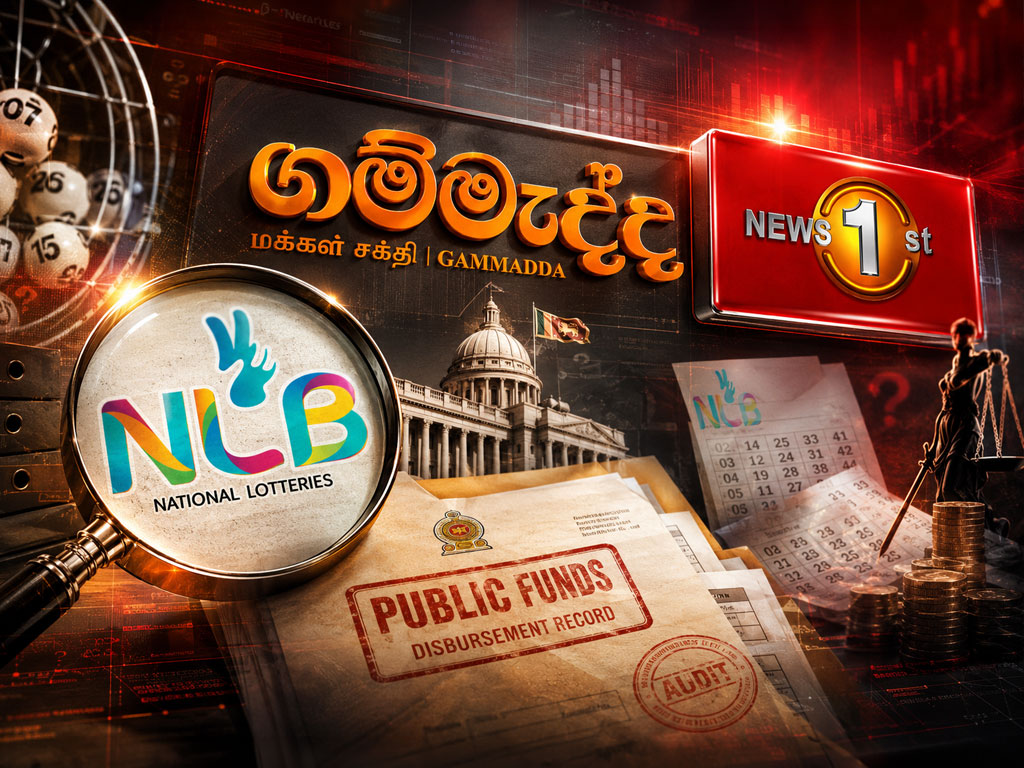
NLB, Sirasa Gammadda allegations raise questions over whether state-paid staff and public funds were used to support projects linked to a private media brand.
NLB, Sirasa Gammadda allegations are drawing fresh scrutiny as former Finance Minister Ravi Karunanayake prepares to appear before the Commission to Investigate Allegations of Bribery or Corruption tomorrow, August 31.
The inquiry concerns allegations that three officers employed and paid by the National Lotteries Board were deployed for political and personal activities.
However, the controversy extends beyond the attendance records or duties of three employees.
It raises a broader question over whether state-paid personnel and public resources were used to support promotional activities associated with a private media network.
The allegations remain subject to investigation and have not been established as fact.

NLB, Sirasa Gammadda Allegations Raise Public Funding Questions
People purchase lottery tickets knowing that part of the revenue generated by state lotteries contributes to public purposes.
Therefore, expenditure by a state institution on Corporate Social Responsibility projects or special programmes is expected to follow approved procedures and maintain transparency over the source of funding.
The controversy concerns projects associated with “News1st Gammadda,” promoted through the Sirasa media network.
The article alleges that state resources and NLB employees were involved in certain activities connected to those programmes without that support being prominently disclosed to the public.
Gammadda projects, including initiatives providing drinking water and other assistance to communities, have delivered benefits to the public.
However, critics argue that a different question arises if state-paid personnel or public funds contributed to projects presented primarily under the branding of a private media organisation.
The allegation is that such an arrangement could have helped strengthen the private network’s brand value while drawing upon resources connected to a state institution.
Whether any such arrangement breached the law would ultimately depend on the evidence, approvals and administrative procedures involved.
The article raises Section 70 of the Bribery Act No. 19 of 1994 in relation to potential corruption or misuse of public resources. Any criminal liability, however, would require determination by the appropriate investigative and judicial authorities.
CSR Partnership or Improper Use of State Resources?
Karunanayake’s position is that the three officials were involved in coordinating joint CSR programmes connected to the NLB’s “Niroga” lottery initiative and Gammadda.
That explanation raises several administrative questions.
State institutions normally employ staff within approved structures and according to established recruitment and administrative procedures.
Investigators will therefore need to determine under what authority NLB employees were assigned to the relevant activities and whether those duties fell within their legitimate official responsibilities.
Another issue concerns recognition and ownership.
If public expenditure contributed to a national welfare programme, critics argue that the role of the Government and National Lotteries Board should have been transparently identified alongside any private media partner.
The central issue is therefore not whether communities benefited from the projects.
It is whether the financial and administrative methodology behind them complied with rules governing state resources.
Ravi Karunanayake is expected to present documents before the Bribery Commission when he appears tomorrow.
Those records may help clarify the relationship between the then-government, the National Lotteries Board and the Sirasa-linked Gammadda programme.
The investigation will ultimately have to establish whether the arrangement represented a legitimate CSR partnership or an improper deployment of publicly funded staff and resources.
Until that process is completed, the NLB, Sirasa Gammadda allegations remain claims requiring independent examination rather than established wrongdoing.
The Morning Telegraph remains open to a Right of Reply or factual clarification from any party referred to in this report.
SOURCE:- HARI DESHAYA