Sri Lanka police reform plans include tougher crime laws, 10,000 new recruits, risk allowances, new vehicles and stronger action on corrupt officers.
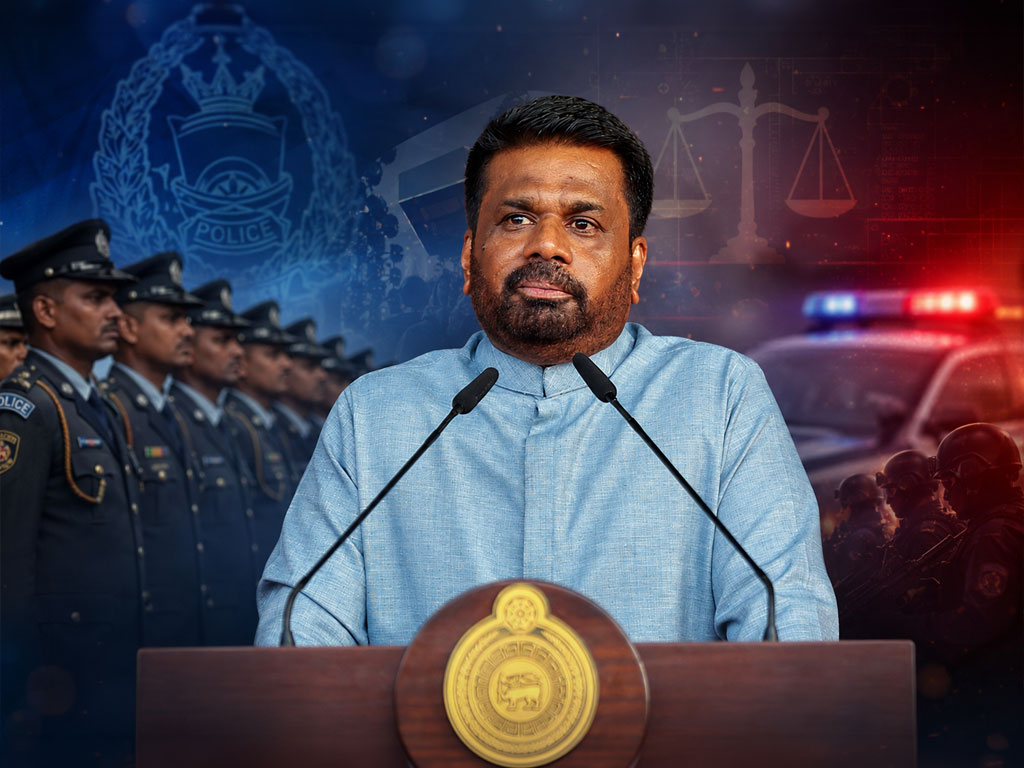
Sri Lanka police reform will include stronger laws, thousands of new recruits and tougher action against corrupt officers, President Anura Kumara Dissanayake has pledged.
Addressing the 160th Police Day celebration at the Thimbirigasyaya Field Force Headquarters in Colombo yesterday, the President said the government would not hesitate to introduce constitutional amendments if necessary to build a peaceful, crime-free country.
He said strengthening the legal framework was essential to protect the public and rescue the younger generation from the drug menace.
The President also pledged to facilitate the necessary legislation and provide the infrastructure required to support that effort.

Sri Lanka Police Reform Targets Corrupt Officers
President Dissanayake also focused heavily on discipline within the Police Department.
He said information had emerged about a small number of police officers who maintain links with drug traffickers.
According to the President, some officers may have become dependent on criminal networks through fear, while others may have been bought over through various forms of wrongdoing.
He warned that such officers must immediately abandon those practices and return to lawful conduct.
Otherwise, he said, they should voluntarily leave the service.
The President added that disciplinary authorities would take steps, based on evidence and proper investigations, to remove the uniforms of officers found responsible for such misconduct.
The message amounted to a direct warning that officers involved with criminal or drug networks would not be protected.
Drug Seizures and Delays in Justice
The event also highlighted the progress made by Sri Lanka Police and security forces in drug raids and operations against organised crime during the past two years.
During that period, authorities seized 5,255 kilograms of heroin, 9,966 kilograms of “ice”, 44,684 kilograms of Kerala cannabis and 16.2 million narcotic pills.
Authorities also brought 74 organised criminals hiding overseas back to Sri Lanka through international cooperation.
However, the President identified delays in the legal process as a major obstacle to effective crime suppression.
He referred specifically to the lengthy period between police investigations, the submission of reports to the Attorney General’s Department and the final conclusion of judicial proceedings.
According to the President, criminals can be encouraged when punishment does not follow an offence within a reasonable period.
He said the government had therefore made a policy decision to accelerate and improve the efficiency of the entire legal and judicial process.
10,000 New Police Recruits Approved
The government has also approved the recruitment of 10,000 new police officers to address the existing shortage within the department.
A new modern uniform is expected to be introduced for all police officers by the middle of next year.
The government also plans to introduce a special risk allowance in recognition of the dangers police officers face while performing their duties.
Several additional measures covering promotions, transport, buildings and technology were also outlined during the event.
The government plans to work with the Public Service Commission to streamline police promotions.
Under the proposed system, promotions would consider seniority together with skills and examinations.
Transport facilities will also be expanded.
Authorities have decided to purchase nearly 700 motorcycles and 200 cab trucks for official police duties.
Of those vehicles, 138 cab trucks have already been received through Indian assistance.
CID Building, Police Headquarters and Digital Services Planned
Infrastructure improvements form another major part of the government’s plans.
Funds are expected to be allocated in the forthcoming budget for a new building for the Criminal Investigation Department.
Plans also include constructing a modernised Police Headquarters.
The government intends to provide permanent state-owned buildings for police stations that currently operate from rented premises.
Technology will also play a larger role in Sri Lanka police reform.
The “Sri Lanka Police Mobile App” and a modernised police website were officially launched to improve communication between the Police Department and the public.
During the Police Day ceremony, promotion letters were symbolically presented to 1,489 officers below the rank of Chief Inspector based on long service.
Another 153 officers from the Special Task Force also received promotion letters.
The 160th anniversary commemorative stamp was presented to President Dissanayake during the ceremony.
Minister of Public Security and Parliamentary Affairs Ananda Wijepala attended the event alongside Deputy Minister Sunil Watagala and Police Chief Priyantha Weerasooriya.
Ministry secretaries, diplomats and heads of the tri-forces were also present.
The President’s message combined tougher enforcement with a wider programme of recruitment, welfare, infrastructure and technology.
His central pledge was clear: the government intends to strengthen the legal system, improve policing capacity and take disciplinary action against officers who undermine the law they are expected to enforce.