By Roy Denish.
Wellawatte illegal structures face legal action as questions grow over coastal enforcement, regulatory failures and systemic accountability.
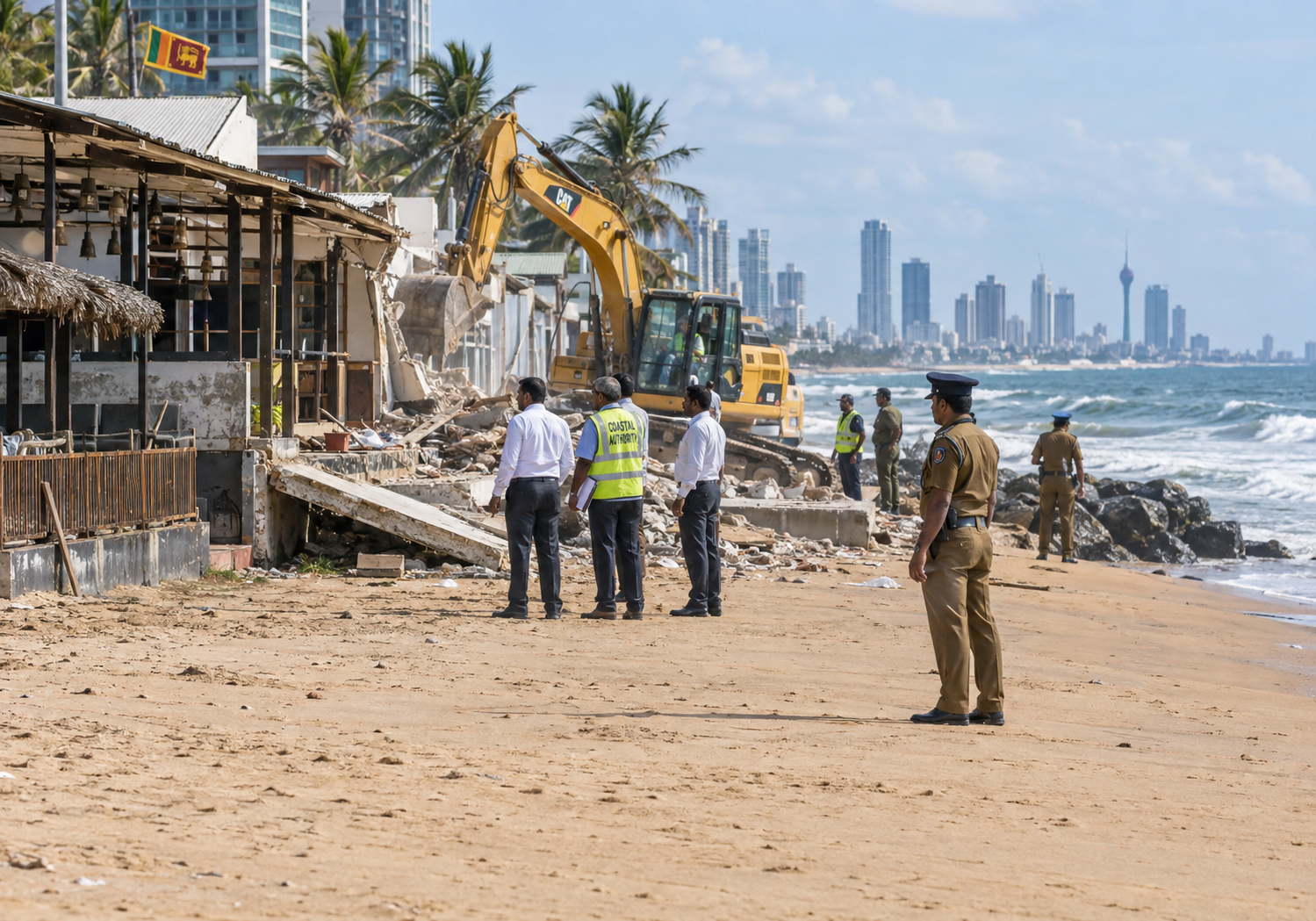
COLOMBO – President Anura Kumara Dissanayake has directed law enforcement and regulatory authorities to initiate immediate legal action against unauthorized commercial and private structures encroaching on the Wellawatte coastal belt, highlighting what officials have identified as 26 distinct illegal landholdings tied to organized criminal networks.

The directive, announced during a high-level administrative review, underscores the government’s growing push to reclaim public coastal zones from unlawful occupation. Speaking on the crackdown, the administration emphasized that occupying state-protected coastal reserves without legal clearance violates national environmental regulations and undermines public access to the coastline.
However, the presidential crackdown has sparked intense public and civil debate over the broader scope of coastal enforcement. Critics and transparency advocates have raised concerns that targeting criminal elements alone addresses only the surface symptoms of a much deeper systemic administrative failure. Questions remain over how commercial developers, affluent entrepreneurs, and foreign nationals have managed to erect permanent structures within the legally mandated 35-metre coastal buffer zone without immediate regulatory intervention.
Particular scrutiny has fallen on the Coast Conservation and Coastal Resource Management Department, with civic groups pointing to past audit reports that revealed widespread backlogs in executing demolition orders for unauthorized beach constructions across the Western and Southern provinces. Observers argue that meaningful reform requires not only clearing illegal structures but also investigating regulatory oversions continue to demand comprehensive accountability audits across all coastal districts. They argue that the Wellawatte illegal structures case should lead to consistent enforcement of coastal law.