By Roy Denish.
NAZA documentary earns a 25-minute Venice ovation before Israeli ministers accuse its filmmakers of treason over its AI warfare claims.
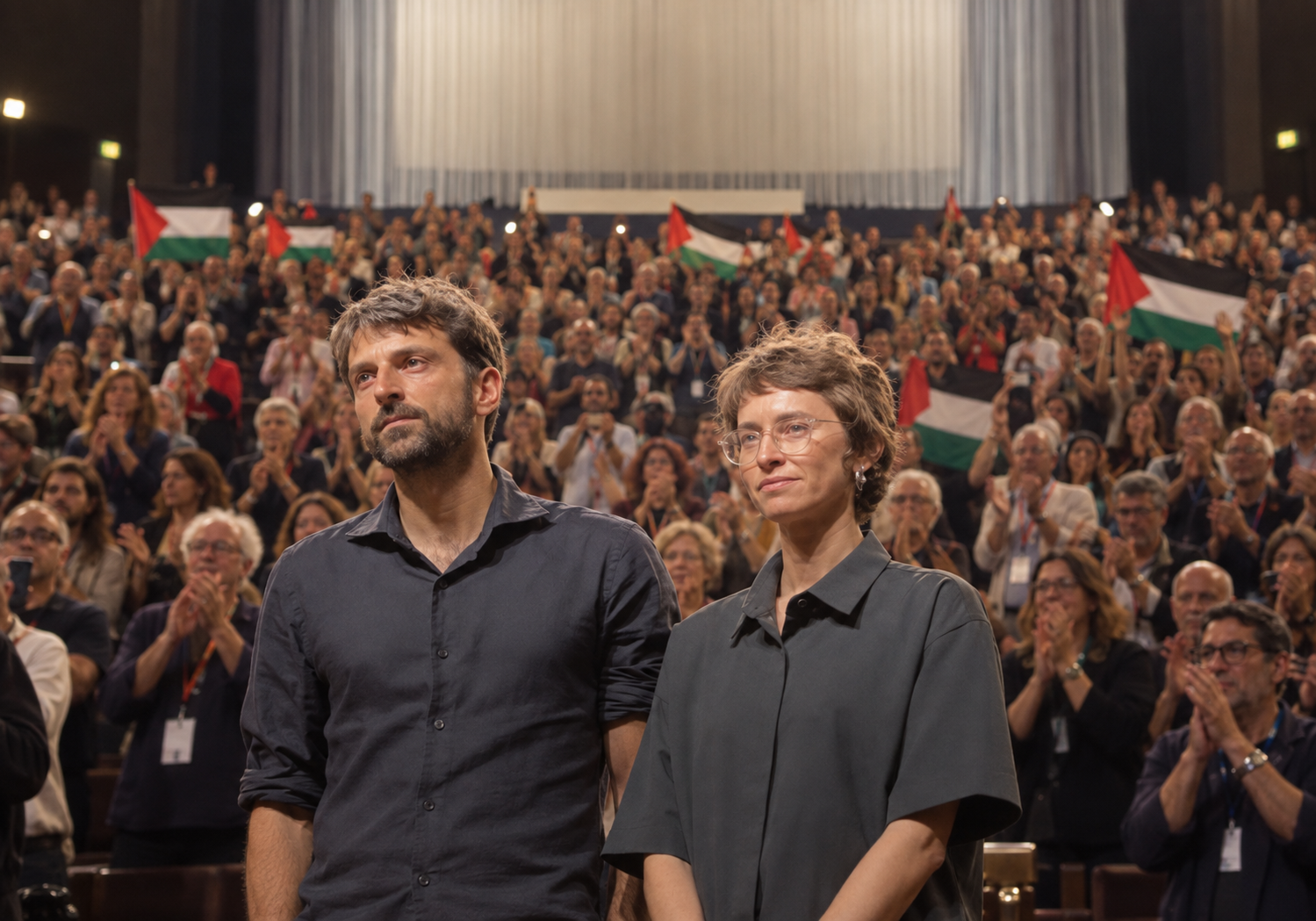
VENICE – Oscar-winning Israeli filmmakers Yuval Abraham and Rachel Szor transformed the 83rd Venice Film Festival into a political and emotional epicenter with the premiere of NAZA, an 80-minute investigative documentary that drew a record-setting twenty-five-minute standing ovation. Built around secretive rooftop interviews in Tel Aviv conducted over nearly three years, the film features anonymous testimonies from twenty-four Israeli military and intelligence insiders detailing AI-assisted targeting systems such as Lavender and the mechanized calculus of civilian casualties in Gaza. Named after a military shorthand acronym for expected collateral deaths, the project confronts a society deeply supportive of the war.

The international triumph triggered swift and explosive fury from Jerusalem. Culture Minister Miki Zohar denounced the co-creators on social media, accusing them of committing treason against the state and pandering for international applause, while pledging immediate steps to initiate citizenship revocation procedures. Far-right National Security Minister Itamar Ben-Gvir amplified the attack, calling them an embarrassment and telling them to join Hamas. The Israel Defense Forces dismissed the film’s reliance on obscured, unverified whistleblowers, maintaining that military operations adhere to international law and target combatants embedded within a dense civilian population. Abraham countered that systemic denial preserves atrocities rather than preventing them, urging Western allies to apply concrete pressure.
Beneath the geopolitical shockwave lies a quieter, harrowing human reality on a dimly lit Tel Aviv rooftop at three in the morning, where Rachel adjusts audio levels and Yuval shares lukewarm black coffee from a dented thermos with a former target coordinator whose eyes remain bloodshot after months of staring at algorithmic life-or-death coordinates. He speaks not of malice, but of the numbing architecture of automated mathematics, where breathing turns into data flow. When the Venice auditorium erupted into a twenty-five-minute wall of sound beneath its velvet drapes, neither director raised a victorious fist. Instead, they locked shoulders in the darkened aisle, weeping not for red carpets, but for the ghost geometry haunting every coordinate they had managed to record.
Opinion: We have entered an era in which industrialized state violence no longer demands passionate cruelty; it requires a clean user interface. When artificial intelligence processes human survival into collateral ratios labelled NAZA, war sheds its messy political tragedy and adopts the frictionless efficiency of a factory floor.
Israel’s knee-jerk scramble to brand documentary artists as traitors and strip them of citizenship is not a defence of national security, but an institutional panic attack. A state that treats the exposure of automated slaughter as treason has confused moral reckoning with national suicide.
True survival cannot rest on the calcified denial of ruin, nor can collective safety be salvaged by pretending that a server room humming hot in the dark washes away the ethics of the scorched earth below. Until society finds the spine to interrogate the machine rather than silence the mirror, mechanized cruelty will wear the mask of neutrality, and humanity will foot the bill.