Sri Lanka boxing selection faces allegations of favoritism and poor oversight as questions emerge over the squad for the 2026 Asian Games.
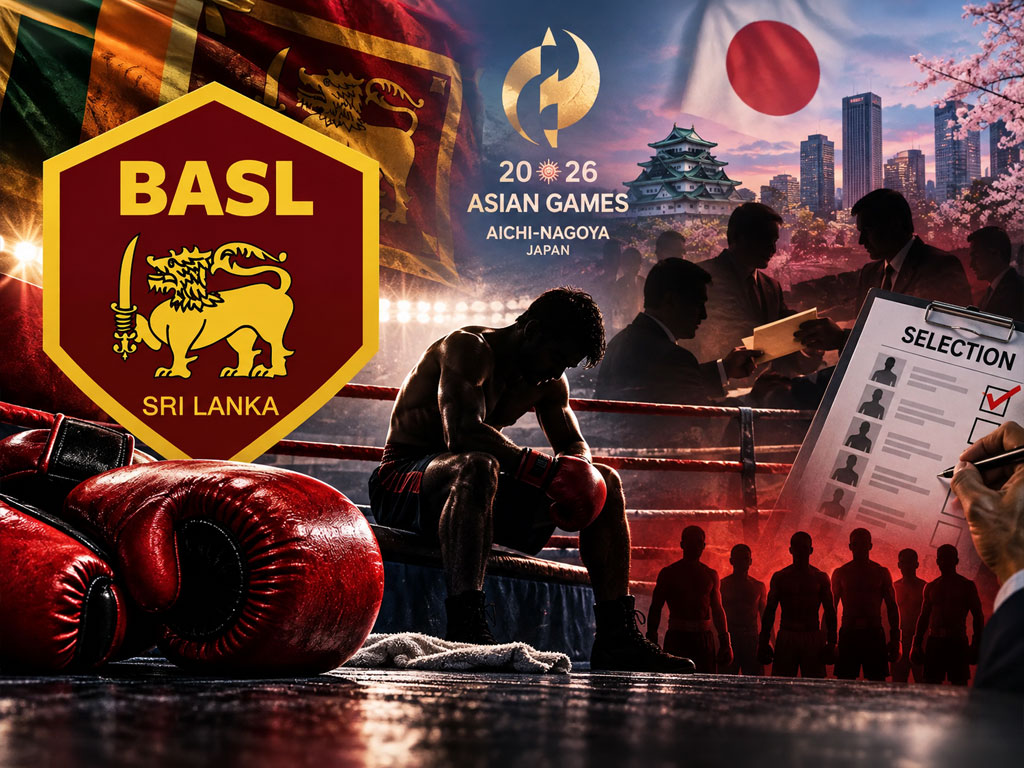
The Sri Lanka boxing selection process has come under renewed criticism ahead of the 2026 Asian Games, with allegations of favoritism and questionable appointments surrounding the national setup.
The controversy follows Sri Lanka’s medal-less boxing campaign at the 2026 Commonwealth Games. Critics now argue that the Boxing Association of Sri Lanka, also referred to as BASL or SLBA, has failed to address weaknesses exposed during that competition.
Instead, they allege the selection process for Aichi-Nagoya continues to favour individuals linked to internal allegiances over boxers considered more deserving on performance.
The Asian Games will run in Japan from September 19 to October 4. Boxing competition begins on September 21, with the men’s 80kg division starting on September 23.

Sri Lanka Boxing Selection Raises Fresh Questions
Critics claim a pattern of questionable selections has continued from the Commonwealth Games into the Asian Games campaign.
One disputed inclusion is Mohamed Usaith in the 80kg category.
The article’s sources allege Usaith was knocked down during Commonwealth Games trials by Army boxer Sithija Prathap. Prathap subsequently competed in the men’s 80kg event at the Commonwealth Games.
The criticism centres on why selectors would recall a boxer who had previously struggled against Prathap when international performance should, critics argue, remain central to selection.
These claims about the trial bout and selection reasoning have not been independently verified by The Morning Telegraph.
Questions have also emerged over the coaching setup.
Critics have challenged the inclusion of Jamitha Gayan ahead of Sri Lanka Army coaches associated with fighters including Rukmal Prasanna and Lahiru Lakmal.
Published reports independently confirm that Jamitha Gayan Bandara has previously served within national boxing coaching structures alongside Head Coach Amila Aravinda Tissera.
However, insiders allege Gayan’s appointment resulted from his social media support for Amila Aravinda and attacks on the head coach’s critics. The Morning Telegraph has not independently established that this influenced his appointment.
Questions Over Public Funds and Boxing Governance
The controversy has also raised questions about the use of public resources.
Critics argue that sending inadequately prepared boxers and officials to international competitions wastes taxpayer money when selection standards lack transparency.
They also allege systemic barriers within Sri Lankan boxing.
High participation fees and short notice for trials, critics claim, can disadvantage independent clubs and make participation financially difficult. They argue that such conditions leave greater room for established factions to influence team selections.
The most serious allegations concern regulatory oversight.
Critics accuse the Sports Ministry of failing to intervene despite repeated complaints about alleged malpractice within boxing administration.
Further allegations claim that personal favours, influence and improper benefits involving people connected to Coach Amila and ministry officials have helped shield boxing administrators from scrutiny.
No evidence establishing those allegations was provided with the source article, and The Morning Telegraph has not independently verified them. Those named should be given an opportunity to respond.
The central concern remains transparency.
When athletes believe national places depend on loyalty rather than sporting merit, confidence in the selection process suffers.
Critics therefore want the Ministry of Sports to examine potential conflicts of interest and introduce a transparent selection system based on clearly defined performance standards.
With the Aichi-Nagoya Asian Games beginning this week, Sri Lanka’s boxers will soon face international competition. The unresolved question is whether the administration can demonstrate that those representing the country reached that stage through a selection process based on merit, fairness and accountability.