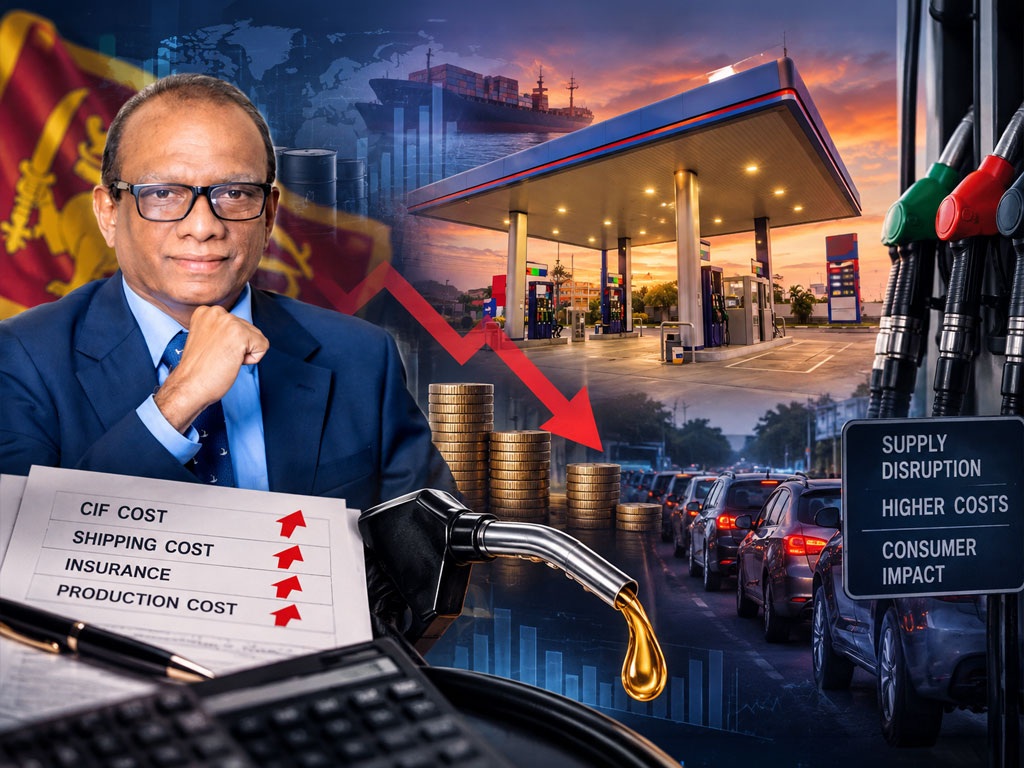
Sri Lanka fuel station crisis puts nearly 500 sheds at risk as private suppliers face rising import costs and dispute the current pricing structure.
The Sri Lanka fuel station crisis threatening nearly 500 private filling stations is rooted, according to the article, in a growing dispute over pricing and rising import costs. It argues that the conflict stems from the market arrangements under which foreign fuel companies Sinopec, LIOC and RM Park entered Sri Lanka, and the government’s current approach to fuel pricing.

Financial Pressure Behind the Sri Lanka Fuel Station Crisis
Rising CIF costs and shrinking margins: Shipping charges, insurance and production costs in the global market have increased the cost of landing fuel in Sri Lanka. The article argues that retail prices have not been adjusted sufficiently to reflect those higher import costs. It claims this has eroded the profit margin on each litre and pushed private operators into substantial daily losses.
Taxes remain while companies absorb losses: The article argues that the government continues collecting VAT and Excise Duty from each litre of fuel. Meanwhile, it says private companies must continue meeting maintenance and distribution expenses. According to this argument, the government’s tax revenue remains protected while companies and retail agents carry the financial pressure.
Why diesel supplies have been restricted: Diesel distribution has reportedly been reduced by about 50% across LIOC (275), Sinopec (150) and RM Park (100) filling stations. The article attributes these restrictions to financial pressure rather than a deliberate threat. It argues that losses from diesel sales have damaged daily cash flow and reduced the companies’ ability to place new fuel orders.
Questions Over Pricing and Market Competition
Calls for official discussions: The article says private operators have sought discussions with the Ministry of Power and Energy over the practical problems facing the sector. It also presents the dispute as one centred on whether prices should change to reflect higher costs.
Pressure on the free-market model: Foreign investors and private fuel companies entered Sri Lanka as part of efforts to create greater competition. However, the article argues that the present pricing structure undermines that model because operators cannot freely respond to changes in their costs.
Risk to consumers: The article also challenges the argument that keeping fuel prices unchanged necessarily protects consumers. It warns that if companies continue restricting supplies because of financial losses, shortages could worsen. In that scenario, consumers could again face queues and disruption despite avoiding an immediate price increase.
The wider Sri Lanka fuel station crisis therefore centres on the balance between affordable prices, reliable supplies and the financial sustainability of private operators.
The article argues that Sri Lanka cannot promote foreign investment and market competition while maintaining a pricing system that operators say prevents them from recovering rising costs. It calls for transparent discussions on CIF costs, taxation and pricing.
Without such discussions and a workable settlement, it warns that nearly 500 filling stations could face closure and that transport could suffer serious disruption. The article places responsibility on the Ministry of Power and Energy to engage the companies and find a transparent solution before the dispute escalates further.