Mohamed Anwar Rizkan spoke after his conviction in the Easter case, maintaining his innocence and offering to give evidence about the attacks.
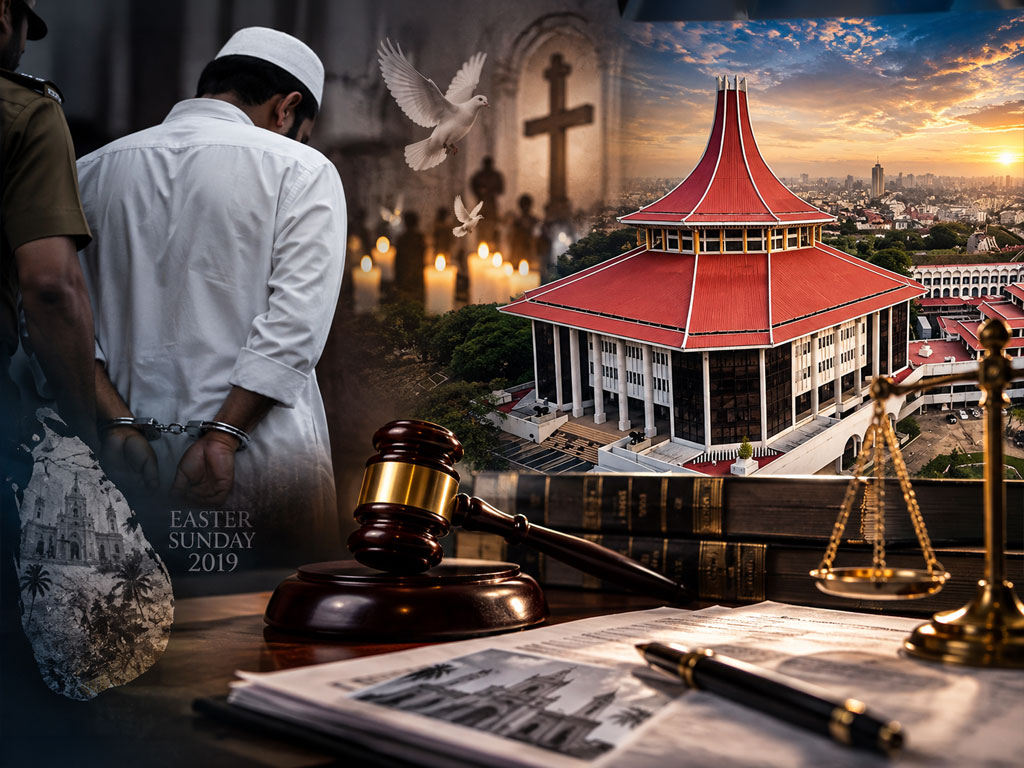
COLOMBO — Mohamed Anwar Mohamed Rizkan, the sixth accused convicted in the main Easter Sunday attacks case, broke years of silence in open court after the verdict, maintaining his innocence and saying he was prepared to give evidence concerning the 2019 attacks.
Rizkan made the remarks before the three-judge Colombo High Court Trial-at-Bar after being found guilty on Tuesday, September 22.
He was among 15 defendants convicted in the case relating to the Easter Sunday attacks, while nine others were acquitted and released.
The verdict was delivered by a bench comprising High Court Judges Navaratne Marasinghe, Ramanathan Kannan and Sujeewa Nissanka following proceedings that lasted nearly five years.
Rizkan had remained silent during the trial and had not made a dock statement in his defence. Given an opportunity to address the court following his conviction, however, he delivered an emotional statement in which he continued to deny wrongdoing.

‘I Am Very Happy’
Addressing the three judges, Rizkan said:
“I am very happy. I think the three of you do not have as much happiness as I have. I understand that you cannot, in good conscience, give me a punishment. This is the first time I am speaking; until now I followed a silent stance. God has given me this opportunity.
“I was found guilty, and at that moment too I am happy about myself. The situation prevailing in the country may have affected the aggrieved party a great deal. But God knows that no wrong has been committed by our family; we have done nothing wrong. Someone has entangled me in this incident, and God will look into that.”
His remarks represented his own assertions following conviction and do not alter the findings reached by the Trial-at-Bar.
The court found Rizkan and 14 other defendants guilty in proceedings involving 23,270 charges connected with the Easter Sunday attacks, including charges relating to conspiracy and aiding and abetting.
‘There Are Others Connected to This’
Rizkan went further in his statement, claiming that other people connected to the attacks remained outside the case.
He told the court:
“If I get even one opportunity to deliver justice, I will deliver justice for the land I won. There are others connected to this. There is no smoke without fire, is there? Those connected to this incident who are outside are carrying the problem on their heads, burning.
“Today, those who were with us and were released left weeping. But even though we were found guilty, we are smiling, we accepted that verdict smiling.”
No evidence substantiating those particular claims was set out in the statement reported from court.
Rizkan did not identify in the remarks quoted in the source material who he meant by “others connected to this”, nor did he provide details of the evidence he claimed he was prepared to give.
His assertions should therefore be distinguished from the court’s findings in the case.
Wife Battling Cancer
Rizkan also referred to his family’s circumstances, telling the court that his wife was suffering from cancer and that his mother was 75 years old.
He said:
“A trial like this has probably never been seen before. My wife is suffering from cancer. My mother is seventy-five years old. My younger sister has sat for the Ordinary Level examination. But I do not grieve thinking about those things, I am happy.
“Finally, what I have to say is, why were we made to face this for a wrong we did not commit? If true justice is served, I am ready even to give evidence related to this incident.”
The remarks again amounted to Rizkan’s denial of responsibility despite the guilty verdict entered against him.
15 Convicted, Nine Acquitted
The Attorney General’s case was filed against 24 defendants over allegations connected with the April 21, 2019 Easter Sunday suicide bombings.
A total of 23,270 charges were brought in the proceedings, while 2,309 witnesses testified for the prosecution during the trial.
Fifteen defendants, including Mohamed Naufar Maulavi and Rizkan, were ultimately convicted. Nine were acquitted and released.
Following the convictions, the Trial-at-Bar sentenced each of the 15 defendants to 220 years of rigorous imprisonment and ordered the confiscation of their movable and immovable property.
Rizkan’s statement is notable because it was made after he had remained silent during the lengthy trial. His offer to provide evidence concerning the attacks is now a matter for the relevant investigative and prosecutorial authorities to assess; his allegations about unidentified others remain claims made by a convicted defendant rather than findings of the court.