By Roy Denish
The Suresh Salley CID investigation has raised questions over residence searches, digital evidence and travel records in the Easter Sunday probe.
In the lead-up to the annual International Book Exhibition, investigative journalists Tharindu Uduwaragedara and Fazeer Mohamed released their newly authored book, “Pasku Praharaye Toththababalaa” (“The Babies of the Easter Sunday Attacks”), on September 28.
Investigative journalists including Tharindu Uduwaragedara, Tharindu Jayawardena, and Fazeer Mohamed have consistently brought information relating to the Easter Sunday attacks into the public domain through social media and independent news websites, keeping questions surrounding accountability in public focus.
However, a closer examination of the current phase of the Easter Sunday investigations, particularly inquiries into those alleged to have masterminded the attacks, has raised questions over possible investigative lapses, missed opportunities, and omissions by the Criminal Investigation Department (CID).

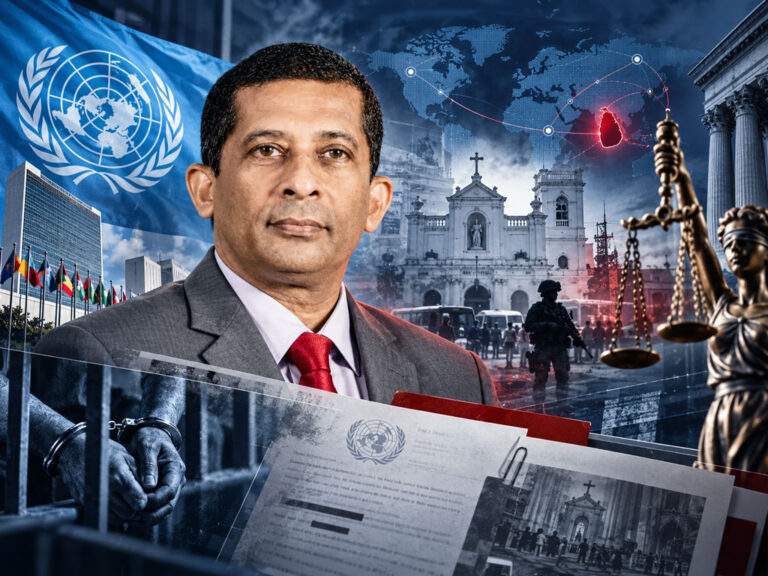
The arrest of former Director of Military Intelligence and former Director of the National Intelligence Bureau, Major General Suresh Salley, on February 25, 2026, stands as one of the most high-profile developments in the investigation.
Representing the Attorney General, Additional Solicitor General Dileepa Peiris presented submissions before court concerning allegations against Salley in relation to the Easter Sunday attacks. However, despite an extensive preliminary investigation, questions have been raised regarding the CID’s actions immediately following his arrest.
Before making the arrest, CID investigators reportedly recorded statements from more than 100 individuals in an attempt to build their case. Salley was eventually intercepted by CID officers in Peliyagoda during the morning while reportedly travelling to Milinda Moragoda’s Pathfinder Foundation. At the time of his arrest, authorities took possession of his mobile phone and laptop.
Under conventional investigative procedures, the arrest of a primary suspect in a serious criminal investigation may be followed by searches of residences or other locations connected to that individual, subject to the necessary legal authority.
In high-profile narcotics and organised crime investigations, for example, residential searches can uncover weapons, financial records, documents, digital devices, and other potential evidence.
Questions have therefore been raised as to why Salley’s residence was not searched at the time of his arrest or shortly afterwards. Potentially relevant material could have included passports, additional communication devices, and supplementary records.
Salley’s travel documents are particularly relevant because his whereabouts during key periods connected to the investigation have been raised by his legal representatives and political figures supporting him.
In a separate disclosure, Pillayan’s former secretary, Azad Hanseer Moulana, alleged that Salley facilitated a forged passport under the name Kokila Dushantha Gunawardena for Pillayan to travel to England. These allegations remain matters requiring proper evidentiary examination.
Investigators have also reportedly not recorded comprehensive statements from Salley’s immediate family members concerning his travel history and whereabouts during relevant periods.
Such testimony could potentially assist investigators in corroborating or challenging timelines presented during legal proceedings.
Meanwhile, former Defence Secretary Hemasiri Fernando reportedly testified before court that Salley met him prior to the attacks, with the meeting allegedly coordinated by then-Army Commander Mahesh Senanayake. Cross-checking such accounts against other testimony and documentary evidence could prove important to investigators.
The CID has repeatedly informed court that Salley has not provided passwords for his seized mobile phone and laptop, leaving investigators unable to access potentially important digital information.
Salley’s defence counsel, Shavendra Fernando, argued in court that intelligence officers regularly changed their device passwords and that Salley had forgotten the final credentials following his sudden arrest.
Additional Solicitor General Dileepa Peiris reportedly indicated in court that authorities had other means of attempting to access the devices. Nevertheless, questions remain over the pace of digital forensic examination.
The issue has also revived attention on earlier controversies surrounding digital evidence connected to the Easter Sunday investigations, including allegations that data had been deleted from devices linked to former State Intelligence Service Director Senior DIG Nilantha Jayawardena.
The broader investigative process has attracted criticism over the pace at which inquiries involving other senior figures have progressed.
Names publicly discussed in connection with various strands of the investigation include former President Maithripala Sirisena, former Eastern Commander Major General Aruna Jayasekera, members of military intelligence, and Sivanesathurai Chandrakanthan.
With some suspects seeking relief through writ petitions before the Court of Appeal and significant evidentiary questions still unresolved, public pressure for a comprehensive investigation continues.
Civil society organisations and other observers have called on the CID and Attorney General’s Department to complete forensic examinations, close outstanding investigative gaps, and ensure that all individuals against whom credible evidence exists are dealt with through due legal process.