By Roy Denish.
Sri Lanka’s rugby crisis reflects deeper problems of political interference, weak investment, governance failures and unequal global competition.
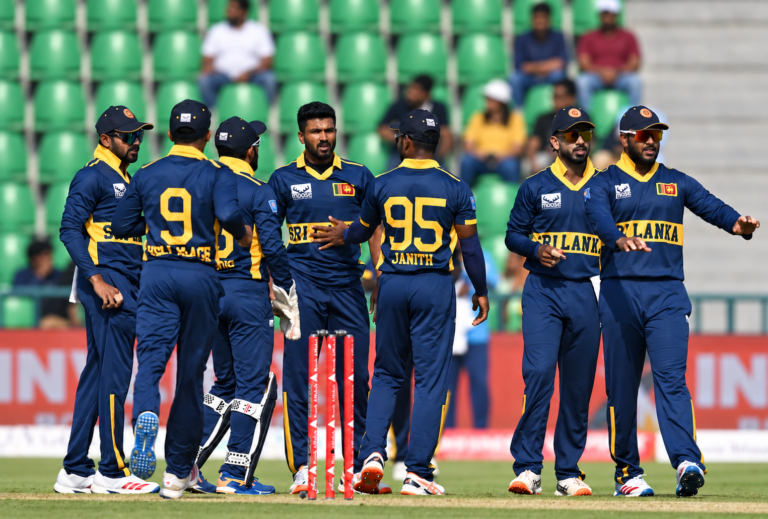
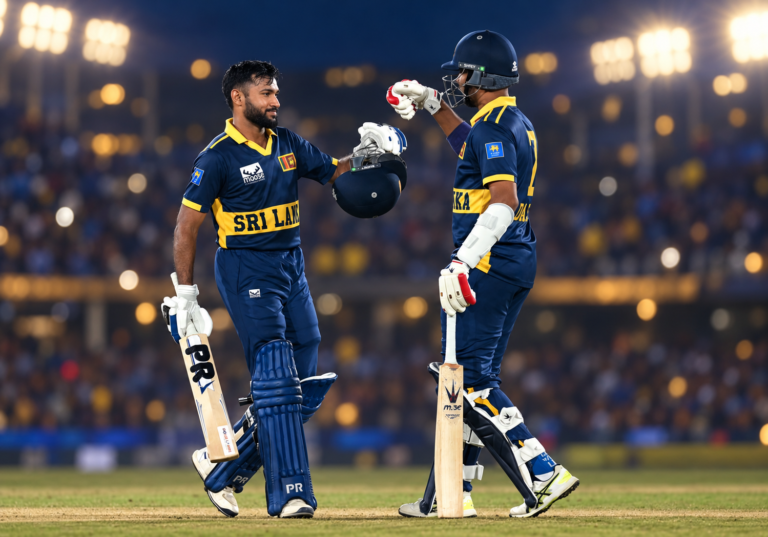
Based on Indrajith Subasinghe’s report from Nagoya, Japan, published in Aruna, Sri Lanka suffered a narrow 19–17 defeat against China in the Asian Games Sevens Rugby tournament.
Viewed through the lens of critical theory, cultural studies, and postcolonial political economy, however, this match report transcends conventional sports journalism. It reflects the structural asymmetries faced by a smaller Global South nation competing within the modern global sports apparatus.
Applying Antonio Gramsci’s concept of cultural hegemony and Pierre Bourdieu’s theories of capital, international sport can be understood as a structured arena in which powerful states project national prestige and economic strength.

An economic powerhouse such as China approaches elite sport through a highly professionalised system sustained by national prestige, state funding, scientific training, advanced nutrition, and sophisticated technical infrastructure.
Sri Lanka, by contrast, continues to grapple with severe economic pressures.
Resource-intensive and structurally demanding sports such as rugby often survive largely through the individual dedication, determination, and personal sacrifices of athletes, coaches, and volunteer administrators.
Their participation at the international level therefore becomes a testament to resilience within a comparatively under-resourced sporting system.
Rugby in Sri Lanka is also a direct legacy of the colonial era, having been introduced by the British and historically entrenched within elite class structures.
According to Bourdieu, elite-dominated sports and cultural practices can alienate broader sections of society, and Sri Lankan rugby long reflected upper- and middle-class dominance.
Although rugby has since expanded its geographical and social base, national sports institutions have repeatedly struggled to build the grassroots infrastructure and professional development pathways required to compete consistently at the highest levels.
Consequently, despite players displaying immense passion and skill on the international stage, deficiencies in technical preparation, sports science, conditioning, nutrition, and development can contribute to narrow and heartbreaking defeats.
The 19–17 loss to China can therefore be understood partly as a political-economic consequence of broader institutional weaknesses.
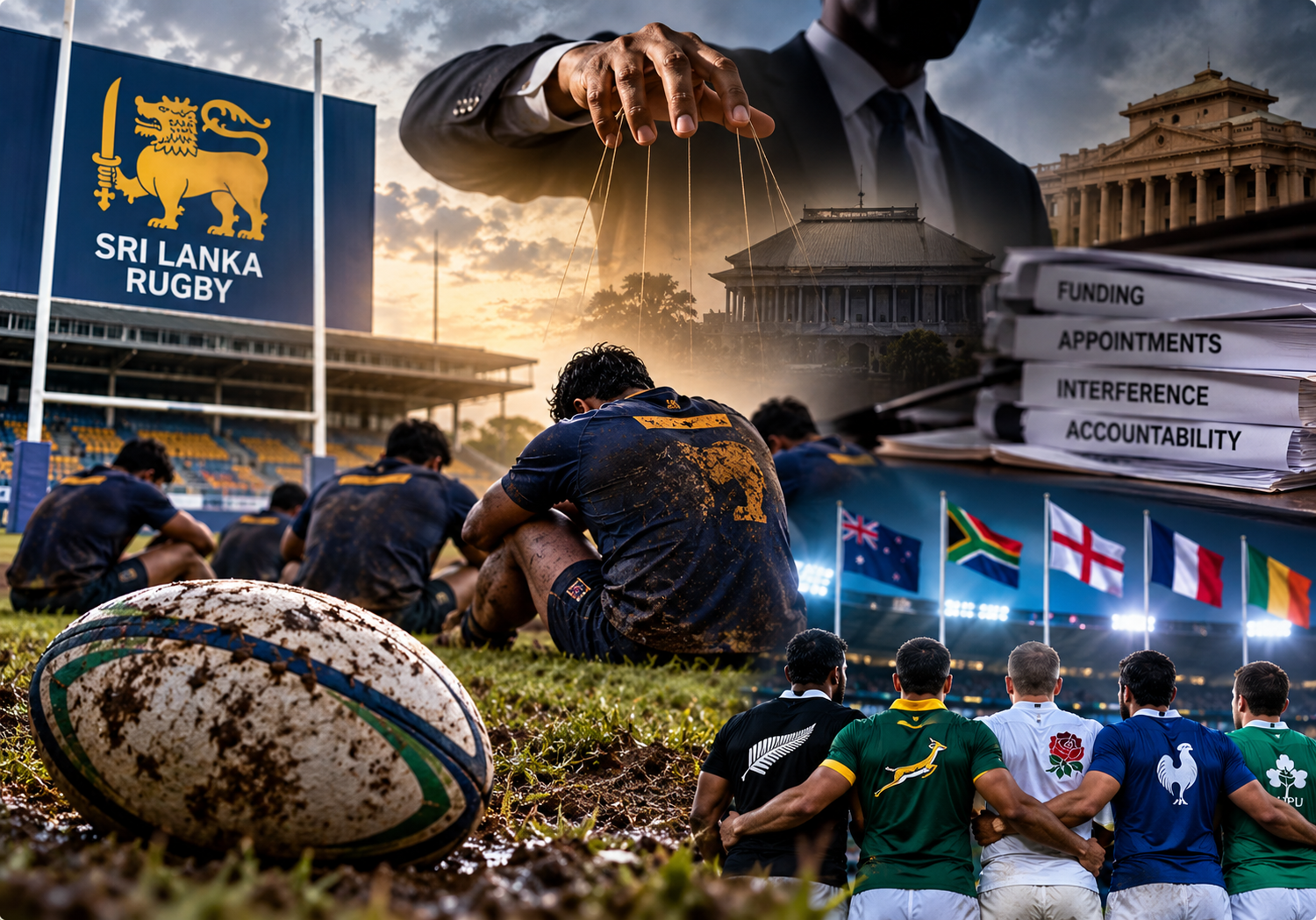
These vulnerabilities are further exacerbated by the intersection of political interference and economic instability within Sri Lanka’s sports sector.
Drawing upon Louis Althusser’s concept of Ideological State Apparatuses and Jürgen Habermas’s critique of instrumental rationality, sport in a postcolonial and economically distressed state can cease to function as an autonomous realm of human flourishing and instead become intertwined with wider political and ideological objectives.
Althusserian critical theory argues that ruling classes maintain influence through ideological institutions that manufacture consent and cultivate nationalism.
When a national economy experiences severe collapse—characterised by foreign-exchange shortages, soaring inflation, and austerity—the traditional sources of political legitimacy become weakened.
In such circumstances, political actors may lean heavily on sporting success to project national strength, stimulate collective emotion, and divert public attention from broader socio-economic grievances.
This ideological dimension is compounded by political interference in sports governance, a phenomenon that can be understood through Gramsci’s framework of elite hegemony and clientelism.
Rather than operating as merit-based and professional institutions managed primarily by technical experts, Sri Lankan sports federations and boards have frequently faced allegations of political interference, patronage, and factionalism.
Where political influence dominates administration, scarce public funds and corporate sponsorships risk being channelled through networks of patronage rather than invested transparently in grassroots infrastructure, scientific training, athlete welfare, and long-term development.
Athletes can then find themselves entering international competitions inadequately supported while simultaneously carrying the emotional burden of national expectation.
Habermas’s critique offers another useful perspective.
When sports administration becomes dominated by short-term political survival, commercial interests, institutional rivalry, and personal prestige, the human elements of sport—the athletes, coaches, youth development systems, and supporters—risk being treated as secondary considerations.
Ultimately, Indrajith Subasinghe’s report and the wider systemic reality highlight far more than a single rugby defeat.
They reflect the economic and institutional vulnerabilities of a smaller nation competing within unequal global structures while simultaneously confronting domestic governance weaknesses.
For sport to serve as a genuine emblem of national pride rather than a burden carried largely through the sacrifice of players, Sri Lanka must strengthen institutional independence, reduce political interference, professionalise administration, expand scientific investment, and establish transparent development pathways from grassroots participation to elite competition.