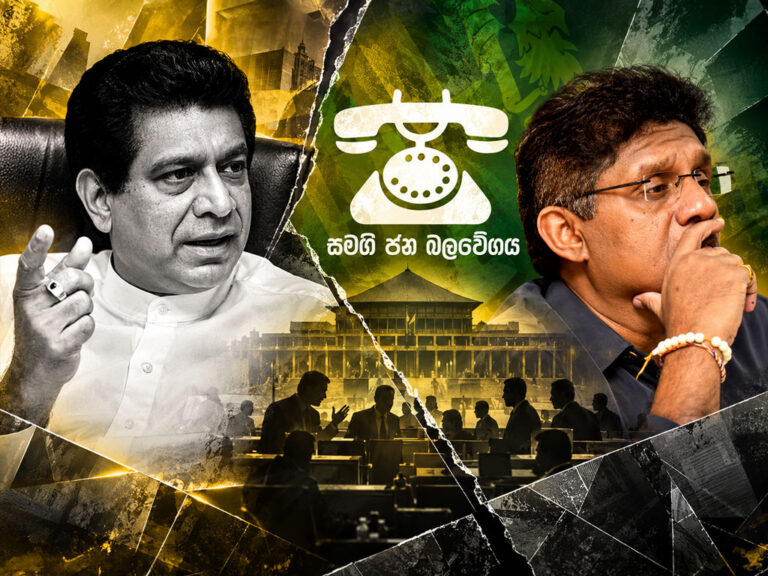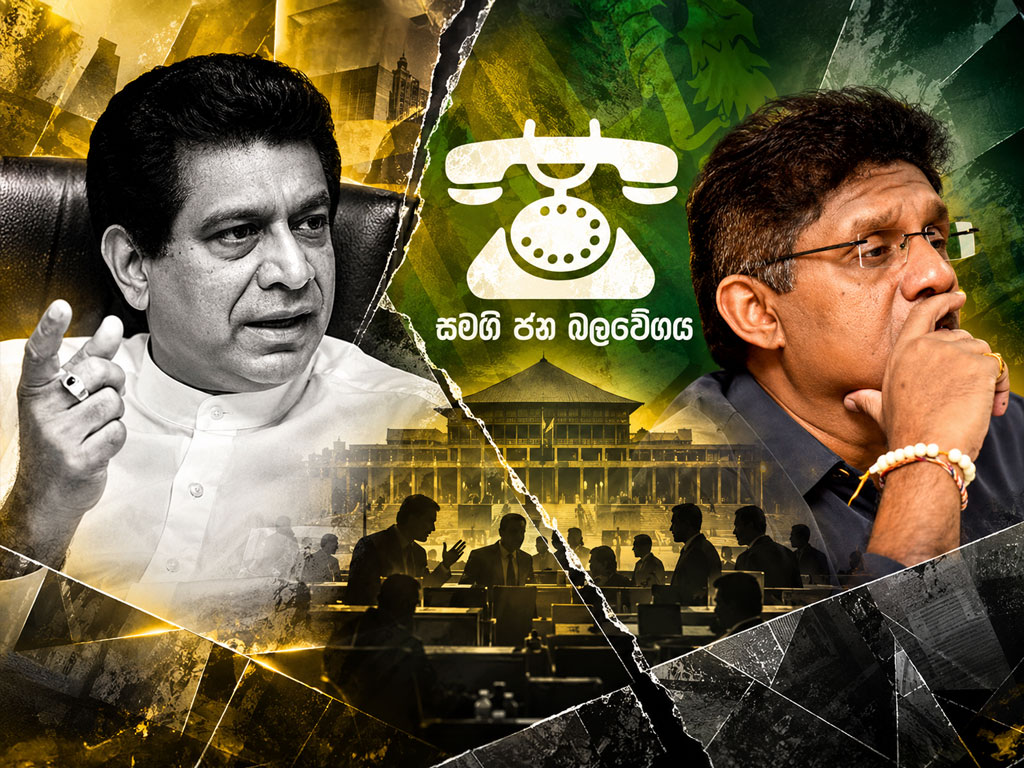
The senior politician’s resignation from his party positions has renewed debate over the Samagi Jana Balawegaya’s leadership, its failure to forge an alliance with the United National Party and the wider opposition’s ability to challenge the Government.
COLOMBO — Former State Minister Ashok Abeysinghe’s resignation from his senior positions in the Samagi Jana Balawegaya (SJB) has brought the party’s internal disagreements into sharper focus, as questions persist over whether Sri Lanka’s parliamentary opposition can convert its numerical strength into an effective political challenge to President Anura Kumara Dissanayake’s administration.
Abeysinghe, who served as the SJB’s Deputy Secretary and Kurunegala Chief Organiser, submitted his resignation to party leader and Opposition Leader Sajith Premadasa with effect from October 12, 2026.
He also relinquished his positions as President of the Samagi Sewaka Sangamaya, Trade Union Coordinating Secretary to the Opposition Leader and a member of the party’s Executive Committee.
The resignation follows disagreements over the SJB’s political direction, particularly the absence of a broader understanding with the United National Party (UNP), from which the SJB emerged.
Although the source describes Abeysinghe as having left the party, available reporting confirms his resignation from party positions rather than independently establishing that he formally terminated his membership.
His departure from the leadership structure nevertheless presents an uncomfortable question for Premadasa: can the SJB credibly offer an alternative government while remaining divided over how to build the political support necessary to win power?

A Parliamentary Opposition With 66 Seats
Sri Lanka’s parliamentary opposition entered the current legislature with 66 members, representing 12 parties and political groupings.
Of these, the SJB secured 40 seats at the November 2024 general election, making it the largest opposition party.
The governing National People’s Power (NPP) won 159 seats, giving President Dissanayake’s political alliance a commanding parliamentary majority.
The disparity is substantial, but the opposition’s difficulties cannot be explained by parliamentary arithmetic alone.
Opposition parties retain opportunities to scrutinise legislation, question ministers, examine public expenditure through parliamentary committees and draw attention to weaknesses in government policy.
The criticism directed at the SJB is that it has not consistently transformed those opportunities into a coordinated national political campaign.
A fragmented opposition can possess a sizeable parliamentary presence without necessarily presenting voters with a persuasive alternative.
Abeysinghe’s resignation brings that distinction into focus.
The Lessons of Sri Lanka’s Opposition in the 1980s
The present situation has invited comparisons with the political environment that followed the 1977 general election, when the United National Party dominated Parliament.
During the period from 1983 to 1989, the parliamentary opposition was considerably smaller than it is today.
The Tamil United Liberation Front (TULF), which had emerged as the principal opposition following the 1977 election, ceased participating in Parliament in 1983 after its members refused to take the oath required under the Sixth Amendment.
Anura Bandaranaike subsequently occupied an important position within the parliamentary opposition, although allegations of political accommodation with the Government circulated at the time.
Despite its limited representation, the opposition demonstrated that parliamentary weakness did not necessarily translate into an inability to attract voters.
In 1983, opposition candidates won four of the 18 parliamentary by-elections held that year.
Those victories came in Maharagama, Matugama, Akmeemana and Baddegama, while questions were also raised over the Government’s victory in Mahara.
The winners included Dinesh Gunawardena in Maharagama, Anil Moonesinghe in Matugama, Richard Pathirana in Akmeemana and Amarasiri Dodangoda in Baddegama.
These results showed that opposition parties could retain a significant electoral presence even when their parliamentary representation was severely restricted.
The historical circumstances were different, however. Sri Lanka’s electoral system, political institutions and national conditions have changed substantially since the 1980s.
The comparison is therefore best understood as a reminder that parliamentary seat numbers are only one measure of political strength.
Government Publicity and the Opposition’s Response
Another criticism concerns the opposition’s response to the Government’s public communication strategy.
The administration has publicised a range of development activities, from local infrastructure improvements to larger investment and construction projects.
The source argues that comparatively modest initiatives, including the renovation of bus stops, installation of water pipelines and the addition of floors to existing buildings, have sometimes received publicity disproportionate to their scale.
That assessment is a political criticism rather than an independently established finding about the value of particular projects.
Small infrastructure improvements may deliver practical benefits to communities, even when they attract considerable political attention.
The opposition’s responsibility is to examine whether public claims are supported by measurable results, appropriate expenditure and completed work.
Effective scrutiny would require evidence showing whether projects were delivered within budget, whether promised outcomes were achieved and whether government announcements accurately reflected progress.
Critics argue that the SJB has not consistently made those distinctions central to its public messaging.
Instead of disputing publicity for its own sake, the opposition could be expected to demonstrate where official claims differ from documented performance.
Anti-Corruption Campaign Presents Another Challenge
The Government’s anti-corruption agenda has also tested the opposition’s political response.
President Dissanayake and senior ministers have emphasised investigations and prosecutions involving alleged wrongdoing under previous administrations.
The source points to parliamentary remarks suggesting that some recent arrests relate to cases initiated during the former Yahapalana administration.
Critics argue that the opposition should more clearly distinguish between investigations initiated by previous governments and enforcement measures undertaken by the present administration.
The distinction matters when assessing claims of political achievement.
An investigation may begin under one administration and continue through several others before reaching the stage of arrest, indictment or trial.
Equally, the Government is entitled to pursue outstanding investigations and enforce the law regardless of when a case originated.
Determining which administration deserves credit for a particular development requires examination of investigative records, prosecutorial decisions and the actions taken at each stage.
The opposition has an opportunity to scrutinise those details without suggesting that the continuation of earlier investigations is inherently improper.
Why Has the SJB Not Reunited With the UNP?
Perhaps the most consequential political disagreement concerns the absence of a formal alliance between the SJB and its predecessor, the United National Party.
The division between the two parties was again evident during the 2024 presidential election, when Sajith Premadasa and Ranil Wickremesinghe contested separately.
Anura Kumara Dissanayake ultimately won the presidency.
Critics of the opposition argue that a unified candidacy could have presented a stronger challenge.
That contention is politically understandable, but it cannot be established simply by combining the votes received by Premadasa and Wickremesinghe.
Voters do not necessarily transfer their support automatically between candidates, and an alliance could have altered turnout, political preferences and campaign dynamics.
Nevertheless, the divided candidacies illustrate the difficulties involved in consolidating voters who oppose the NPP.
For the SJB, cooperation with the UNP presents questions of leadership, party identity, policy differences and the political legacy of previous administrations.
A wider alliance involving the Sri Lanka Podujana Peramuna would introduce additional difficulties, particularly given the parties’ differing histories and positions.
Abeysinghe’s resignation has renewed attention to whether the SJB leadership is willing to negotiate a workable arrangement with the UNP or intends to pursue a separate electoral strategy.
Allegations of Political Pressure Require Evidence
The supplied commentary also suggests that some opposition politicians may be reluctant to confront the Government because they fear becoming targets of criminal investigations.
Opposition figures have previously alleged that legal proceedings against political leaders can be influenced by political considerations.
Such allegations require evidence and should not be treated as proof that arrests or investigations are politically motivated.
Equally, the existence of allegations against a political figure does not justify abandoning due process or presuming guilt.
The same standard must apply whether the person under investigation belongs to the Government, the opposition or a former administration.
Sri Lankan political history also includes instances of politicians changing allegiances while facing allegations or disputes.
Yet the suggestion that present-day opposition politicians are moderating their criticism to avoid investigation remains an interpretation rather than an established explanation for their conduct.
It would require direct evidence to substantiate claims that particular individuals had been threatened, pressured or induced to change their political positions.
Can the SJB Rebuild Its Credibility?
Abeysinghe’s resignation has placed renewed attention on the strategic choices confronting Sri Lanka’s largest opposition party.
The SJB must decide whether it can maintain a distinct political identity while building cooperation with other parties, particularly the UNP.
It must also demonstrate that parliamentary scrutiny can produce a credible public account of the Government’s performance on economic management, development, governance and corruption.
The NPP’s large majority gives the administration substantial legislative power, but it does not remove the need for scrutiny or make the opposition’s responsibilities less important.
Nor should the opposition’s effectiveness be measured solely by the intensity of its criticism. Its capacity to present practical alternatives is equally significant.
For the SJB, the immediate question is how its leadership intends to respond to the concerns highlighted by Abeysinghe’s resignation.
Whether that response involves renewed alliance negotiations, organisational reform or a different political strategy, the party will ultimately be judged by its ability to regain voter confidence.
A parliamentary opposition with 66 members across its constituent parties is not powerless.
Its challenge is to demonstrate that those numbers can support an effective political alternative rather than remain a collection of separate voices.