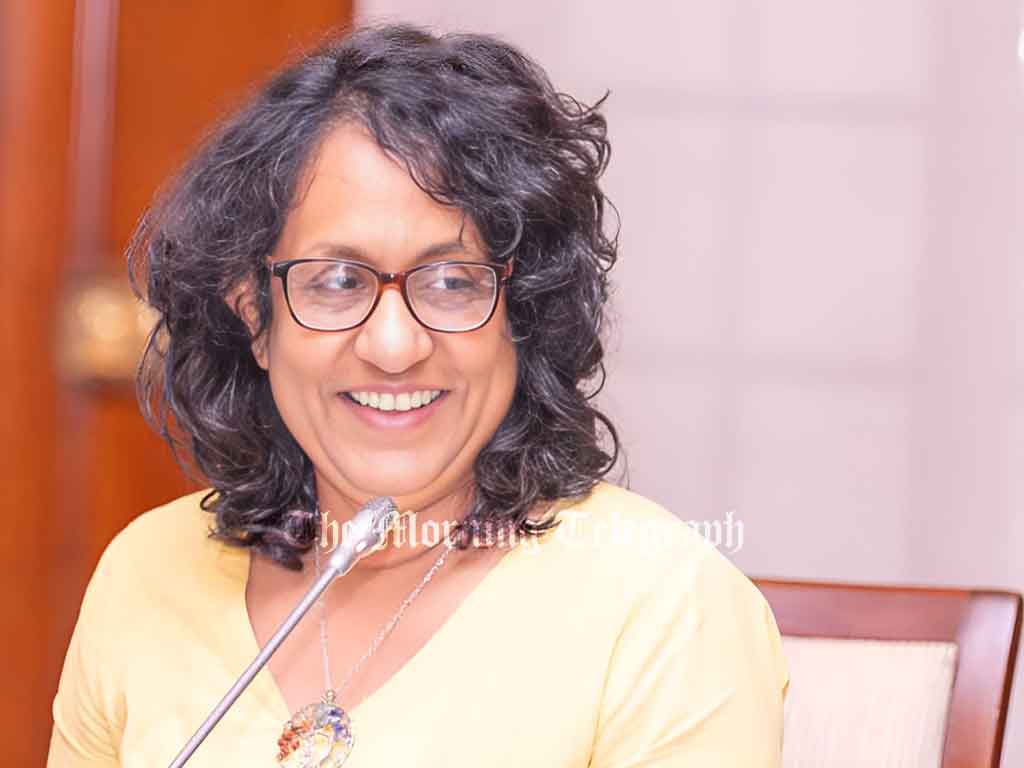
Prime Minister Harini Amarasuriya has set the record straight on Sri Lanka’s 2026 education overhaul, rejecting claims that teachers will merely sit back and listen to children talk. Addressing Sabaragamuwa’s education officials, she emphasized a phased, practical shift focused on Year 1 and Year 6 students, aiming to reduce dropout rates and address teacher shortages. Amid criticism and confusion, she reaffirmed that the new system balances structure with innovation, not chaos and is driven by global learning standards, not political gimmicks.
The proposed 2026 education reforms are not about flipping classrooms into chaos where teachers simply listen to students talk, clarified Prime Minister and Education Minister Dr. Harini Amarasuriya.
Speaking to provincial education authorities at the Ratnapura District Secretariat, she explained that the reform rollout will begin with grades 1 and 6 and progress in stages. While acknowledging the success of past systems, Amarasuriya stressed that Sri Lanka must now address deep-rooted issues like high dropout rates, unequal teacher distribution, and children missing from the education radar altogether.
“We are not saying the current system is entirely wrong, it has produced many brilliant individuals,” Amarasuriya said. “But tens of thousands of children are being left behind, and nobody talks about them.”
A 2024 Ministry of Education census revealed that 20,000 children have completely dropped out of the system, while 80,000 others are not attending school regularly. “That’s a massive concern,” she added.
The new structure will move beyond curriculum tinkering to an overhaul of the system itself. Harini emphasized that teachers remain central to the process, and that solving shortages requires stronger transfer and induction policies.
She also noted that some rural schools in Sabaragamuwa have fewer than 10 students, with as few as five students per teacher. “That imbalance must be corrected,” she said.
Responding to public debates about lengthened class periods, she warned against misrepresenting the reforms. “This isn’t about abandoning the traditional learning process. Nor are we replacing teacher-led lessons with unstructured chatter,” she said. “Children will be engaged in practical, participatory methods.”
Addressing misconceptions about the modular system, she clarified that it is a globally recognized method—not something invented by a previous administration to gain political mileage.
Finally, Amarasuriya criticized how past governments politicized education by using school admissions as a tool to gain votes. “We have moved away from that. This reform is about building a resilient, child-focused education system for the future.”