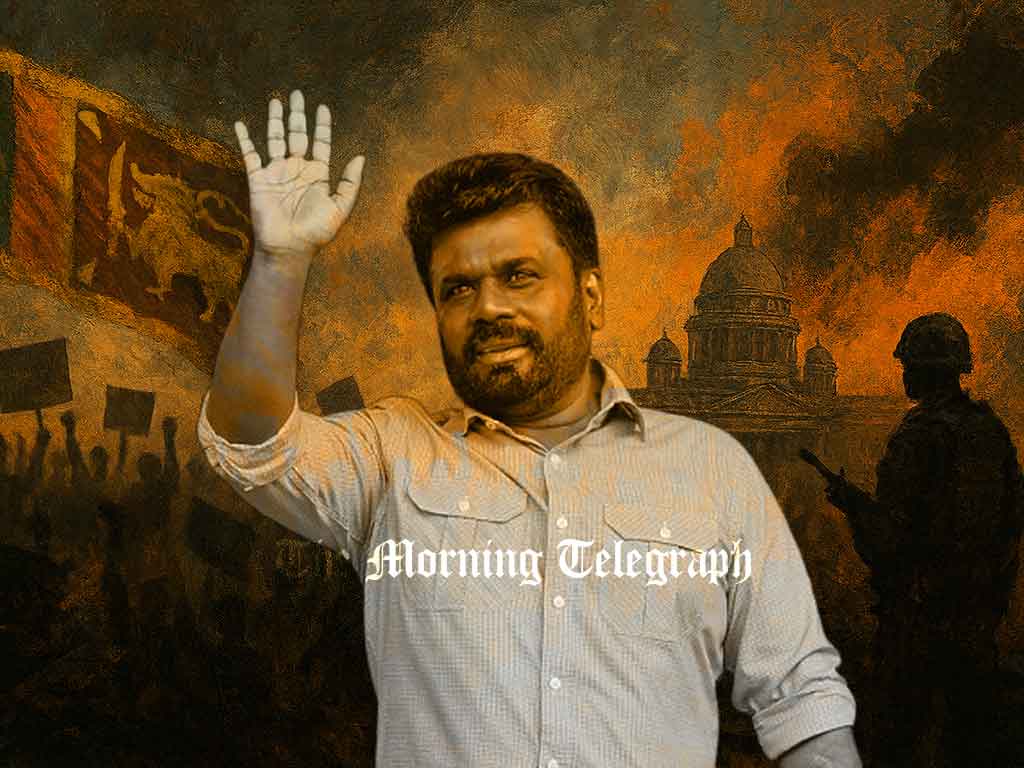
One year after Anura Kumara Dissanayake swept into power on promises of clean government, national unity, and justice, Sri Lanka finds itself suspended between hope and hard ground. Reform remains more slogan than system, minorities in the north and east feel sidelined, and a path to accountability has yet to open. What comes next will decide whether the island turns promise into policy, or lets another chance slip away.
A new mandate, a crowded inheritance
The September 2024 election of President Anura Kumara Dissanayake, followed by a November landslide for the National People’s Power alliance, looked like a political reset. Voters punished corruption, nepotism, and abuse of power linked to the 2022 economic collapse, and rewarded an outsider brand that seemed free of the elite party machines that have ruled since independence. The NPP pledged to end impunity, rebuild the rule of law, and shape a new political culture that would transcend ethno-religious rivalry, calm Sinhala, Tamil, and Muslim anxieties, and bring economic credibility back to a battered state. The rhetoric resonated in Colombo and in Jaffna alike, in part because the coalition sounded different, and because the old establishment had run out of excuses.

War shadows that refuse to lift
Sixteen years after the guns fell silent in May 2009, scars still ache. Mass graves continue to be uncovered in the northern province, families search for tens of thousands of disappeared relatives, and atrocity claims from the final months of war remain largely uninvestigated. On top of grief, a heavy security footprint lingers across Tamil districts, with soldiers stationed near villages, farms, and beaches, creating economic distortions and a climate of intimidation. Government agencies, together with activist monks, have asserted control over dozens of locations that Tamils and Muslims consider culturally or religiously significant. The virtually all-Sinhala military still dominates public space in many areas of the north and east, hampering normal economic rhythms and discouraging outside investment. None of this is new, yet the first year of this new administration has not materially altered that reality.
The constitutional bottleneck
The thirteenth amendment, drafted in 1987 to devolve power to provinces, offered a partial political solution, yet full implementation never arrived. Sinhala and Buddhist nationalist lobbies fear dilution of the unitary state, and successive governments chose expedience over principle. The new administration campaigned on modernizing governance and on building a more inclusive political culture, but it has sent mixed signals, questioning devolution, resisting provincial council elections, and arguing that the amendment is unconstitutional. That stance has chilled expectations in Tamil-majority districts, where local leaders expected progress on power sharing, language rights, and budgetary autonomy. A government that promised to rewrite political culture now risks defending the status quo by another name.
Land, detainees, and demilitarization
On the campaign trail in 2024, NPP leaders courted Tamil and Muslim voters, promised the return of military-held land, vowed to review and release detainees held under the Prevention of Terrorism Act, pledged to repeal the PTA, and floated targeted economic development for the north and east. The party’s rhetoric praised diversity, rejected the politics of suspicion, and defended Muslims against hate speech organized by militant Buddhist groups. Those lines helped produce surprising tallies in Tamil-majority districts such as Jaffna and Vanni. Voters heard the language of inclusion and gave the benefit of the doubt. In office, however, follow-through has been thin. Symbolic visits and photo opportunities cannot substitute for gazetted land releases, court-monitored case reviews, and a clear timetable to replace the PTA with rights-compliant legislation.
Families want the release of land fenced by camps, or occupied by military-run farms and businesses, because livelihoods depend on fields, lagoons, and forests. They ask for repeal of the PTA, a transparent review of cases, and the release or fair trial of roughly sixty Tamil detainees. They call for a credible demobilization plan, with the army scaling back its footprint in civilian spaces, because constant surveillance chills activism, media, and commerce. The government has returned small parcels and spoken about reconciliation, yet progress is slow, uneven, and poorly communicated. Without public schedules, measurable targets, and district-level dashboards, communities assume promises are being deferred.
Accountability, the elusive cornerstone
Sri Lanka’s reconciliation debate always circles back to justice. The administration has promised a refreshed Office for National Unity and Reconciliation, new mechanisms to address the disappeared, and a willingness to listen to families who have protested for more than two thousand five hundred days. Officials still dispute casualty numbers, resist independent investigations, and oppose hybrid courts, which keeps survivors skeptical and international partners wary. Without credible accountability, trust in state institutions remains fragile, investment remains cautious, and domestic politics polarize along familiar lines. Accountability does not have to mean collective guilt, it means individual responsibility, transparent evidence, and legal process that meets international standards.
International pressure, calibrated and constant
The UN Human Rights Council has kept Sri Lanka on its agenda since 2012, and the 2021 resolution created an evidence-preserving project within the Office of the High Commissioner for Human Rights. That mandate, due to expire in September 2025, underpins documentation to support future prosecutions using universal jurisdiction, and gives families a measure of hope when domestic remedies stall. The Core Group of states has noted limited progress, and diplomats are now discussing a successor resolution that would renew and strengthen the accountability project, while urging concrete steps on land returns, detainees, and legal reform. Continued engagement is not a foreign imposition, it is a backstop for rights that Sri Lankan citizens themselves demand.
Economy, governance, and reform bandwidth
The administration governs amid a precarious recovery. Inflation pressure has eased, foreign reserves are fragile, debt restructuring is ongoing, and households still face high living costs. Governance reform competes with fiscal consolidation for scarce political capital, which tempts leaders to postpone controversial steps on land, detainees, and devolution. Yet economic credibility depends on the rule of law, property rights, and social peace, because investors avoid regions that look unstable or discriminatory. Tourism in the north and east requires predictable security practices, clean beaches, and local partnerships. Agribusiness needs titles that are free of disputes. Renewable energy investors want provincial cooperation and transparent procurement. Policy coherence, delivered visibly, would unlock growth where it is needed most.
Signals that would rebuild confidence
Small steps, delivered reliably, can change the national mood. A monthly public update on land releases, a standing hotline for families of the missing, a moratorium on building new religious structures on contested sites, a review panel to vet PTA cases with international observers, and a reduction of military-run businesses, would all be noticed. So would a curriculum initiative that teaches shared histories in Sinhala and Tamil, and a budget line for bilingual public services in northern and eastern districts. None of these actions requires constitutional change. All of them would demonstrate a willingness to put people before optics.
A year on, a choice that cannot be dodged
Momentum decays quickly in polarized democracies. If communities conclude that promises were campaign theater, cynicism grows, hardliners gain, and economic green shoots wither. The NPP won power on clean governance, anti-corruption, and a new political culture. The administration can still deliver a course correction by embracing measurable commitments, inviting independent monitoring, and welcoming diaspora input. Sri Lanka’s brand, in the eyes of lenders and tourists, is tied to whether the state protects rights and keeps promises. That is not an international lecture, it is an economic fact.
Sri Lanka stands at a fork. One path offers careful, steady steps toward accountability, devolution, and demilitarization, coupled with economic reforms that reduce poverty and restore opportunity. The other path leans on familiar majoritarian comfort, postpones difficult files, and hopes that growth alone will mute grievances. The first path is harder in the short term, but it aligns with constitutionalism, international law, and the aspirations of all communities. The second path risks renewed cycles of protest, repression, and capital flight. Voters asked for a different politics, not another set of excuses.
By the next September Council session, the government could present a credible scorecard. It could return significant tracts of land, repeal or deeply reform the PTA, release or charge detainees, schedule provincial council elections, and publish a roadmap for constitutional reform that protects the unitary state while expanding meaningful devolution. It could support a truth-seeking mechanism with victim participation, adopt witness-protection guarantees, and invite regional jurists to advise on standards. It could professionalize the security services with clear rules that separate defense from commerce, and issue a binding directive against harassment of journalists and memorial events. Measurable, verifiable, and public, such steps would rebuild confidence at home and abroad.
A call to courage
Hope is not yet lost, because institutions can be reformed, and trust can be rebuilt, if leaders spend political capital on the public interest rather than on partisan comfort. The administration should choose candor over caution, metrics over slogans, and partnership over defensiveness. If it does, Sri Lanka can move from crisis management to durable peace, from stopgap fixes to structural change, and from symbolic gestures to substantive justice. If it does not, the year of hype will harden into a decade of disappointment, and another chance for reconciliation will pass unused.