Central Bank dollar cap controversy deepens as money supply exceeds Rs.2.1 trillion and IMF compliance questions intensify.
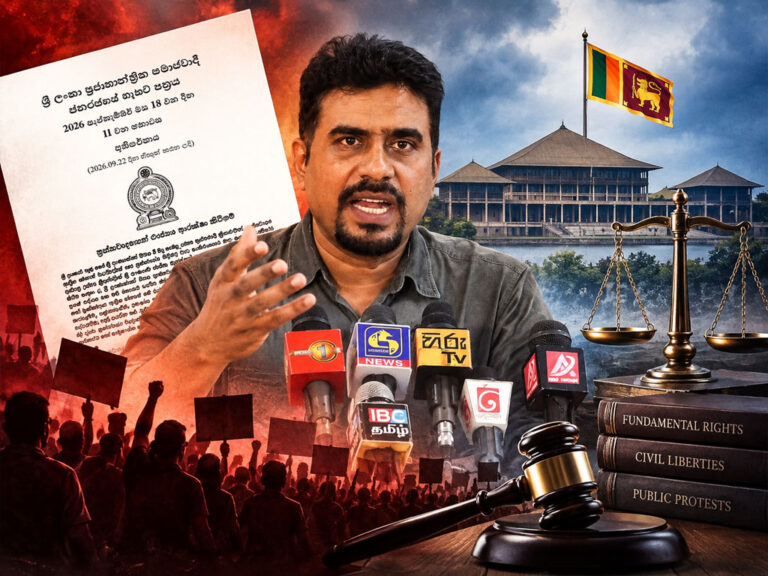
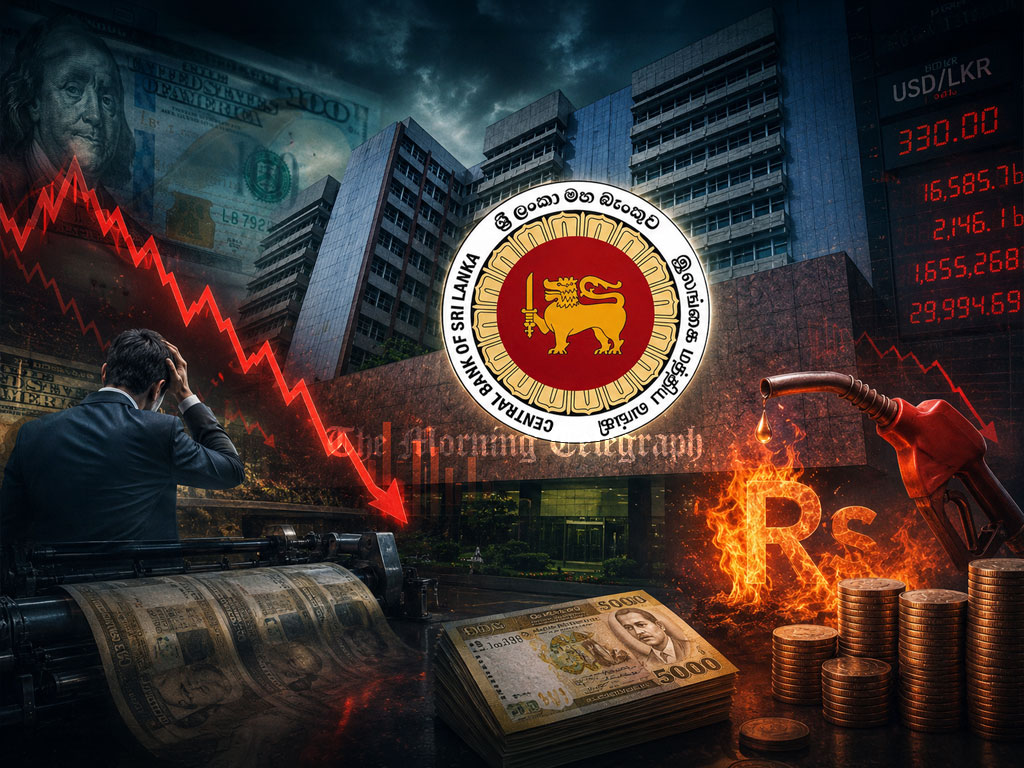
Central Bank dollar cap claims have triggered fresh controversy after Rajith Keerthi Thennakoon alleged that money supply has exceeded Rs.2.1 trillion.
Thennakoon says that although the Central Bank of Sri Lanka is purchasing dollars from commercial banks by increasing the broad money supply, the government’s inability to increase reserves or reduce the debt burden is being portrayed as an economic crisis.
According to a press release issued on behalf of the Human Rights Centre of Sri Lanka, broad money supply, known as M2b, stood at Rs.14,439.1 billion in January 2025.
By March 2026, it had expanded by Rs.2,146.1 billion, or Rs.2.1 trillion, to Rs.16,585.7 billion.
The statement cited the Central Bank of Sri Lanka Weekly Economic Indicators dated May 22, 2026, and March 28, 2025.

M2b Expansion Raises Questions
The Central Bank has been creating money through the expansion of broad money supply, technically known as M2b, over the past 15 months, according to the statement.
It said the Central Bank is creating money to increase foreign reserves by obtaining foreign currency from commercial banks.
According to IMF loan conditions, money printing for daily monetary needs cannot be done in the traditional sense.
However, the statement alleges that the Central Bank is using indirect tactics to do so.
“The Central Bank gives rupees to commercial banks and takes dollars. Without printing money – without creating it – the Central Bank cannot get dollars. What is happening here is money creation. Money printing,” Thennakoon said.
Sri Lanka’s economic crisis is now making headlines around the world.
Steve Hanke, who made highly controversial statements about inflation in Sri Lanka during the Gotabaya era, said in his latest X message on Sri Lanka: “INFLATION STORY = MONEY SUPPLY STORY.”
Regarding money printing, Ranga Sirilal said in an X message: “Rupee under pressure with Central Bank printing money: Rupee depreciated 7.2% against the US dollar so far this year to 353.17 rupees from last week’s 327.35 & last year’s 299.61. @CBSL printed 309.4 billion rupees in March bringing first three months printing to Rs.610.7 billion.”
| Month | 2025 | 2026 |
|---|---|---|
| January | 117.4 | 94 |
| February | 104.7 | 207.3 |
| March | 233.9 | 309.4 |
| April | 154.2 | |
| May | 33.6 | |
| June | 210.3 | |
| July | 30 | |
| August | 162.1 | |
| September | 97.1 | |
| October | 112.8 | |
| November | 102 | |
| December | 295.2 | |
| Total | 1653.3 | 610.7 |
Note: The data is in billions of rupees (Rs. billion)
New Currency Notes Enter Circulation
Currency notes bearing the signature of President Anura Kumara Dissanayake have now widely entered daily circulation.
The currency in circulation on January 1, 2025, was Rs.1,351,312 million.
By May 22, 2026, it had increased by Rs.303,956 million to Rs.1,655,268 million.
The statement says this increase in currency notes directly affects inflation.
Trust Erodes After Treasury Heist
After the Free Lawyers organization revealed the Treasury heist on April 22, 2026, details emerged about money disappearing from several institutions.
Those institutions reportedly included the Postal Department, Aswasuma, National Development Bank, People’s Bank, Road Development Authority, and SriLankan Airlines.
The Central Bank has so far not provided a formal explanation regarding several concerns, according to the statement.
These include the unusual increase in broad money supply, the imposition of a maximum price for the dollar on interbank exchange rates outside accepted methodologies, and the increase in the amount of currency in circulation.
As the rupee continues to depreciate, the Central Bank Governor has reportedly convened two informal discussions with commercial bank heads and authorized money exchange institution owners.
They were reportedly advised to maintain the dollar’s value within the Rs.329 to Rs.335 range.
The Central Bank of Sri Lanka has unofficially announced a controlled price of Rs.330 for the dollar for interbank exchange, the statement says.
It alleges that this violates IMF provisions.
The time allowed for importers to bring money into the country has also reportedly been restricted to 30 days, down from 90 days.
In 2021, the then-government also implemented similar temporary measures to prevent the rupee from weakening and to control inflation.
Interest Rate Pressure Builds
In the coming days, bank interest rates will inevitably rise, according to the statement.
It also warned that fuel prices and, along with them, the prices of every commodity should be expected to rise.
Reserve Growth Remains Weak
Foreign reserves stood at US$6,531 million in March 2025.
By the end of April 2026, they had grown only slightly to US$6,759 million.
Although the Central Bank managed to increase reserves by about US$175 million each month during 2023 and 2024, reserves have stagnated even after broad money supply expanded by Rs.2.1 trillion, the statement said.
On the 27th of this month, the IMF is scheduled to provide US$700 million for Sri Lanka’s budget financing.
However, the statement said this amount is intended for the Treasury’s daily operations and fiscal management.
It is not for increasing reserves and cannot be used for reserve building.
Debt Burden Keeps Rising
The outstanding central government debt stood at Rs.28,240.22 billion in November 2024.
By the end of 2025, it had increased by Rs.1,754.47 billion to Rs.29,994.69 billion.
The statement says the unusual increase in broad money supply, the imposition of a maximum dollar price outside accepted methodologies, the increase in currency circulation, rupee depreciation, and the inability to accumulate reserves are signs of the current economic crisis.
To resolve this crisis, Thennakoon said the government must urgently seek the assistance of financial experts, intellectuals, and professionals in the country.
The statement was issued by Rajith Keerthi Thennakoon, Executive Director of the Human Rights Centre of Sri Lanka.