By Roy Denish.
Sri Lankan vs Thai cuisine reveals why two tropical nations use coconut, chili and spice to create very different food identities.
Sri Lankan vs Thai cuisine shows how two tropical food cultures can use coconut and chili and still create completely different flavor worlds.
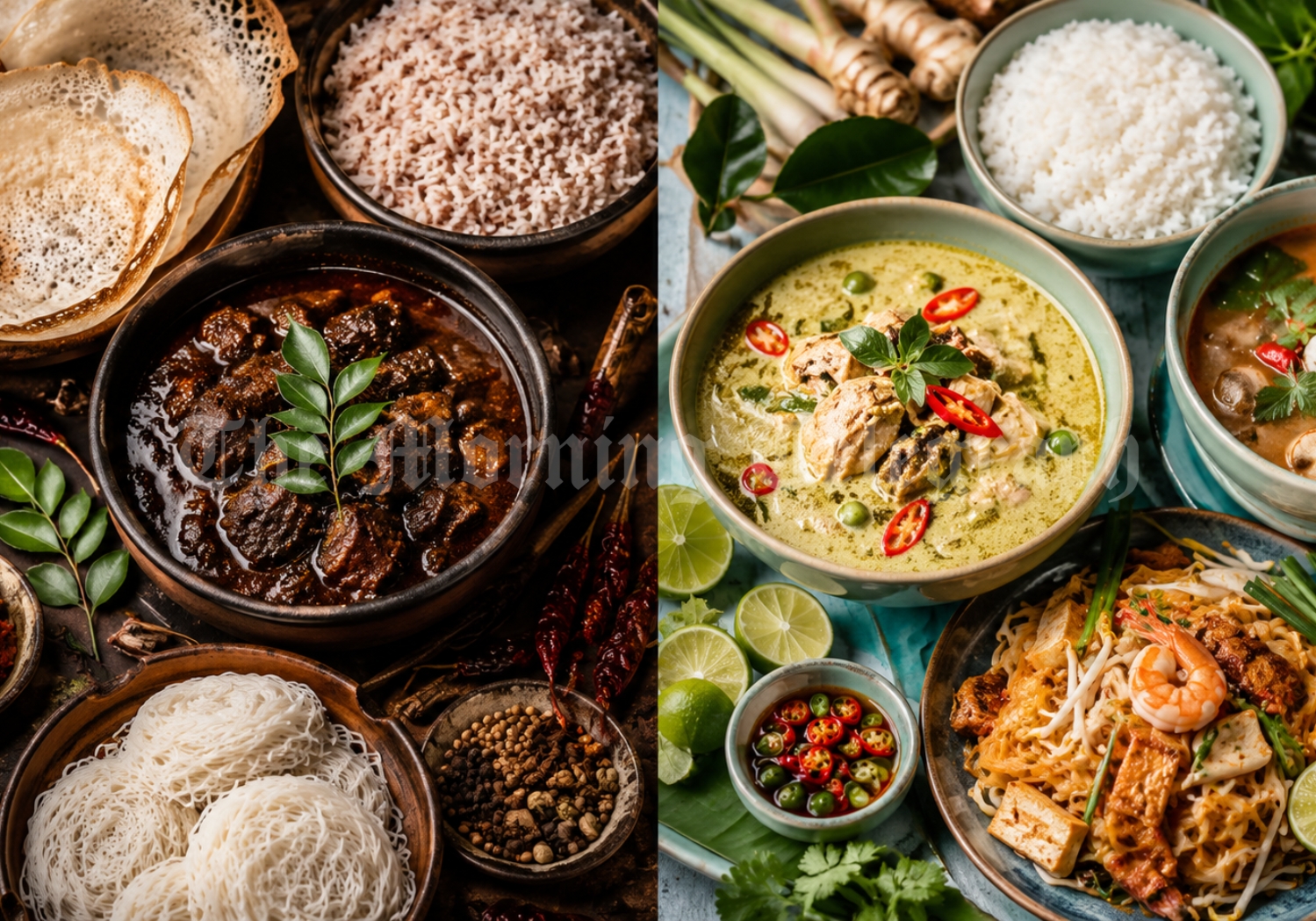
Both countries cook with heat, fragrance, herbs, and fruit-driven sourness. Yet the logic behind each kitchen is different. Sri Lanka reaches for deep, earthy warmth. Thailand aims for fast harmony between sweet, sour, salty, and spicy notes.
That contrast begins with spices and aromatics. Sri Lankan food often depends on heavy roasting. Cooks darken coriander, cumin, and fennel seeds in a dry pan until they turn smoky brown. That gives dishes such as black pork curry their rich intensity.

The aromatic base is dry, bold, and layered. Fresh curry leaves, pandan leaves, cloves, and true Ceylon cinnamon go straight into hot oil. As they fry, they release the slow warmth that defines many island curries.
Thai food moves in another direction. It builds flavour through fresh spice pastes pounded from raw ingredients. Lemongrass, galangal, kaffir lime leaves, and coriander roots create a citrusy, herbaceous perfume. The result hits quickly, instead of building a long burn.
Sri Lankan vs Thai Cuisine Starts With Coconut
The use of daily staples shows the same divide. Sri Lankan cooks treat coconut as a layered ingredient. Thin coconut milk simmers vegetables, fish, or meat. Thick coconut milk finishes the gravy. Raw scraped coconut becomes pol sambol.
Thailand uses coconut with a smoother, richer purpose. Thick coconut cream often goes into a hot pan until the oil separates. That cracked cream then becomes the frying base for curry paste. Thai curries often carry richness from the start.
The two cuisines also cut through richness in different ways. Sri Lanka relies heavily on Garcinia cambogia. This dried fruit gives a dark, smoky tartness, especially in fish ambul thiyal. Thailand instead turns to tamarind paste and fresh lime juice. Tamarind brings fruity depth, while lime adds a sharp lift.
Umami follows the same pattern. Sri Lankan kitchens traditionally add flakes of Maldives fish, a cured and sun-dried tuna. It gives vegetables a quiet background savouriness. Thai cuisine uses fish sauce and shrimp paste for a direct hit of umami.
Sweetness creates another clear difference. Sri Lanka usually keeps sweetness for desserts or specific side dishes, often with kithul palm jaggery. Thailand brings palm sugar directly into savoury curries and salads. It balances fiery chilies and sour lime in the same bite.
Rice, Street Food And Regional Habits
These flavour philosophies shape how each country serves starches. A traditional Sri Lankan meal is communal. Long-grain white rice or red rice sits at the centre. Around it comes a spread of four to six vegetable, lentil, and meat curries.
Sri Lanka also adds distinctive starch forms. Hoppers and string hoppers bring texture and structure to the plate. On the street, kottu roti captures the island’s energy. Cooks chop flatbread on a roaring griddle with vegetables, eggs, meat, or curry.
Thailand pairs its starches with regional precision. Fragrant Jasmine rice supports central curries. Sticky rice appears in the north, where diners use it to scoop up grilled meats and dips. Meanwhile, Thai street food moves through individual noodle bowls, stir-fries, and dishes built for speed.
This makes Thai food easier to standardize for global restaurant menus. Sri Lankan food, by contrast, often depends on the relationship between many curries on one table. That makes it expressive, but harder to package as one international format.
Why Thai Food Went Global Faster
The global presence of these two cuisines looks different because of state strategy. Thailand transformed public diplomacy through its state-backed Global Thai campaign launched in 2002. The gastrodiplomacy project gave citizens low-interest loans, culinary certificates, and streamlined visas to open standardized restaurants worldwide. In effect, Thailand turned Thai food into a global brand.
Sri Lanka has faced a different reality. Structural and economic hurdles slowed any similar large-scale rollout. The country’s tourism ministry has often focused on short-term crisis management instead of long-term culinary branding. Limited budgets went toward destination recovery after major macro shocks, not international restaurant subsidies.
Sri Lankan food expanded mostly through diaspora entrepreneurship. Independent restaurant owners carried the island’s flavours abroad, often without state-backed support. They also faced supply chain problems because essentials such as Garcinia cambogia and fresh curry leaves never had the vast export pipelines that Thailand built over decades.
However, thinking inside Sri Lanka’s tourism sector is now shifting. Policy think tanks are calling for structured gastrodiplomacy. The state has also begun to feature the island’s rich, dark curries and unique food heritage in international marketing.
That change matters. Sri Lankan vs Thai cuisine is not only a story about taste. It is also a story about branding, policy, supply chains, and cultural confidence. Food can capture the global imagination when a country presents it with purpose.
#SriLankanCuisine #ThaiCuisine #SriLankanFood #ThaiFood #AsianFood #FoodCulture #SriLankaTourism #ThailandTourism #Gastrodiplomacy #TheMorningTelegraph