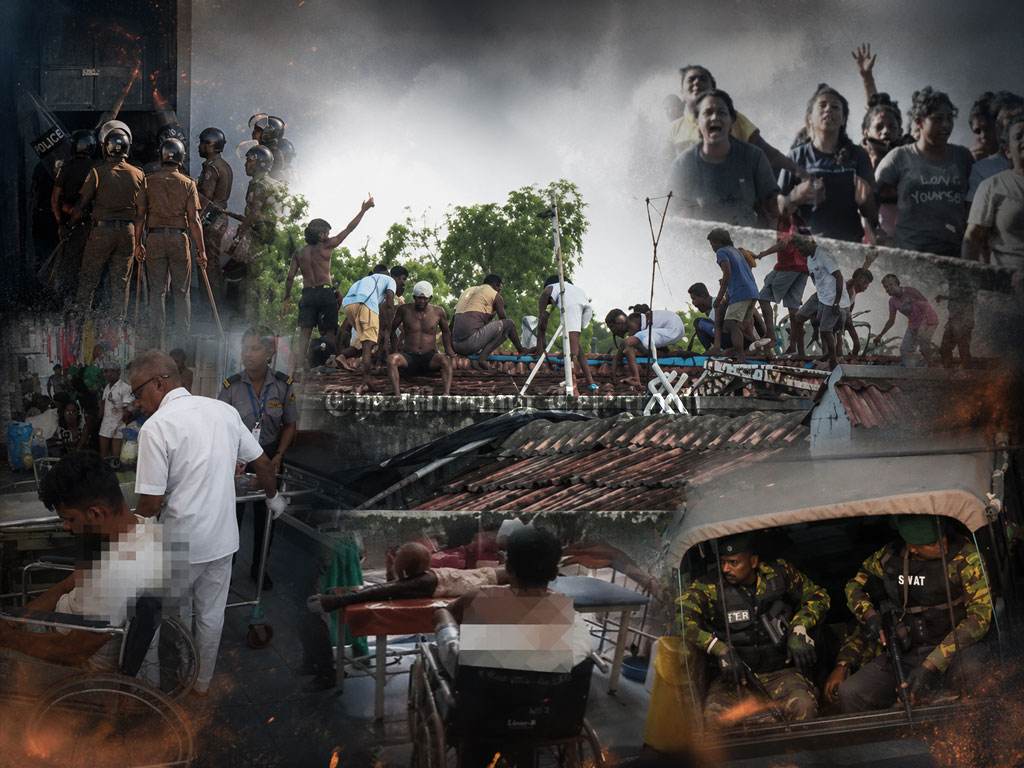
The Negombo Prison clash left two dead and 35 injured as reports link the violence to betrayal over an alleged illicit drug operation.
The Negombo Prison clash that erupted on Sunday afternoon (05) has left two people dead and 35 others injured, as disturbing details emerge about an alleged betrayal linked to an illicit drug operation inside the prison.
What initially appeared to be a sudden confrontation between rival groups of inmates is now being described as a carefully organized and systematically executed attack. Information emerging from within the prison suggests that tensions had been building for some time.
Authorities launched a special security operation following the outbreak of violence. However, the atmosphere inside the prison remained volatile as officials struggled to restore complete order.
The violent confrontation claimed two lives and caused injuries to dozens of inmates. According to reports, authorities admitted 35 injured prisoners to the Negombo General Hospital following the unrest.
Two of those admitted had already succumbed to their injuries. Meanwhile, medical authorities transferred two other critically injured inmates to the Colombo National Hospital for further emergency treatment.
Ten injured inmates receiving treatment at the Negombo Hospital were also scheduled to undergo immediate surgery. Medical teams continued to closely monitor the remaining patients.
The unrest also spread to the prison roof. Reports indicated that several inmates climbed onto the roof amid the tense situation. Two prisoners reportedly fell after breaking through sections of the roof and suffered serious injuries.

Betrayal Allegedly Triggered Negombo Prison Clash
Preliminary investigations have reportedly pointed to an alleged betrayal connected to an illicit drug operation operating secretly inside the prison as the trigger for the deadly confrontation.
Internal prison sources have alleged that an organized criminal known as “Katuwellegoda Suresh”, who is currently incarcerated, orchestrated the attack.
He has been identified in reports as a key associate of the underworld gang leader known as “Booru Moona.”
According to information emerging from the prison, Katuwellegoda Suresh had established his own sphere of influence inside the Negombo Prison. He allegedly exercised considerable influence over other inmates and acted arbitrarily within the institution.
Reports further claim that certain prison officers had been secretly providing information to the Prisons Commissioner about his alleged activities.
This reportedly created deep hostility and growing tension between different factions inside the prison. The divisions had allegedly developed over a considerable period before finally exploding into open violence.
On the morning of the incident, a dispute had already broken out between the rival groups. Prison officers intervened and temporarily brought the confrontation under control.
However, the calm did not last.
After officials served the midday meal, the conflict erupted again. This time, the confrontation quickly escalated into extreme violence.
Inmates reportedly armed themselves with iron rods, stones and other available objects that could be used as weapons. The rival groups then launched violent attacks against each other.
Officers Overwhelmed as Violence Escalated
The scale of the Negombo Prison clash eventually overwhelmed the prison authorities and the limited number of officers available inside the facility.
As the unrest intensified, a group of female inmates from the women’s ward reportedly climbed onto the prison roof. They shouted in support of Suresh’s faction, according to reports.
Shortly afterwards, a separate group of male inmates also climbed onto the roof and launched another protest. The developments added to the confusion and turned the prison premises into a scene of widespread chaos.
Authorities reportedly attempted several methods to resolve the confrontation and restore order. However, continued violent behaviour among the inmates prevented officials from quickly bringing the situation under control.
Prison authorities then temporarily suspended water supplies and other essential services to the affected wards. The move was reportedly intended to bring down the inmates occupying the roof and help suppress the unrest.
Although the Prisons Department continued to technically manage the institution internally, authorities hoped to fully restore order before nightfall.
As control deteriorated, security officials called in the police and the Police Special Task Force to strengthen security around the prison.
However, amid concerns that direct intervention could further escalate the internal confrontation, STF personnel did not immediately enter the prison. Instead, they reinforced external security around the perimeter.
Families Gather Outside Amid Information Confusion
News of the deadly Negombo Prison clash quickly brought relatives and local residents to the area surrounding the facility.
A large crowd gathered near the prison and demanded accurate information about the condition of their loved ones. However, confusion surrounding the incident made it difficult for officials to provide immediate answers.
The lack of clear information reportedly contributed to tense confrontations between members of the crowd and security personnel stationed around the prison.
The incident has also raised serious questions about the influence of underworld networks and organized criminal groups inside Sri Lanka’s prison system.
Criticism is growing over how an incarcerated individual could allegedly establish such influence and authority within a secure correctional facility. The incident has also renewed questions about the responsibility of prison authorities and officials charged with maintaining internal security.
The violence has already resulted in two deaths and left dozens requiring medical treatment.
Reports indicate that authorities expect legal action against Katuwellegoda Suresh, who has been identified as the primary suspect in the alleged orchestration of the violence. The expected charges relate to the mass violence and killings arising from the incident.
The deadly unrest is also expected to increase pressure on the government to introduce stricter and more comprehensive measures to reform the prison system and suppress organized criminal activities operating from within correctional institutions.
The Negombo Prison clash has exposed the dangerous consequences of unchecked rivalries and alleged criminal influence inside a high-security institution. With two lives already lost and dozens injured, attention will now turn to the investigation, accountability for the violence and the measures authorities take to prevent another such incident.