By Roy Denish.
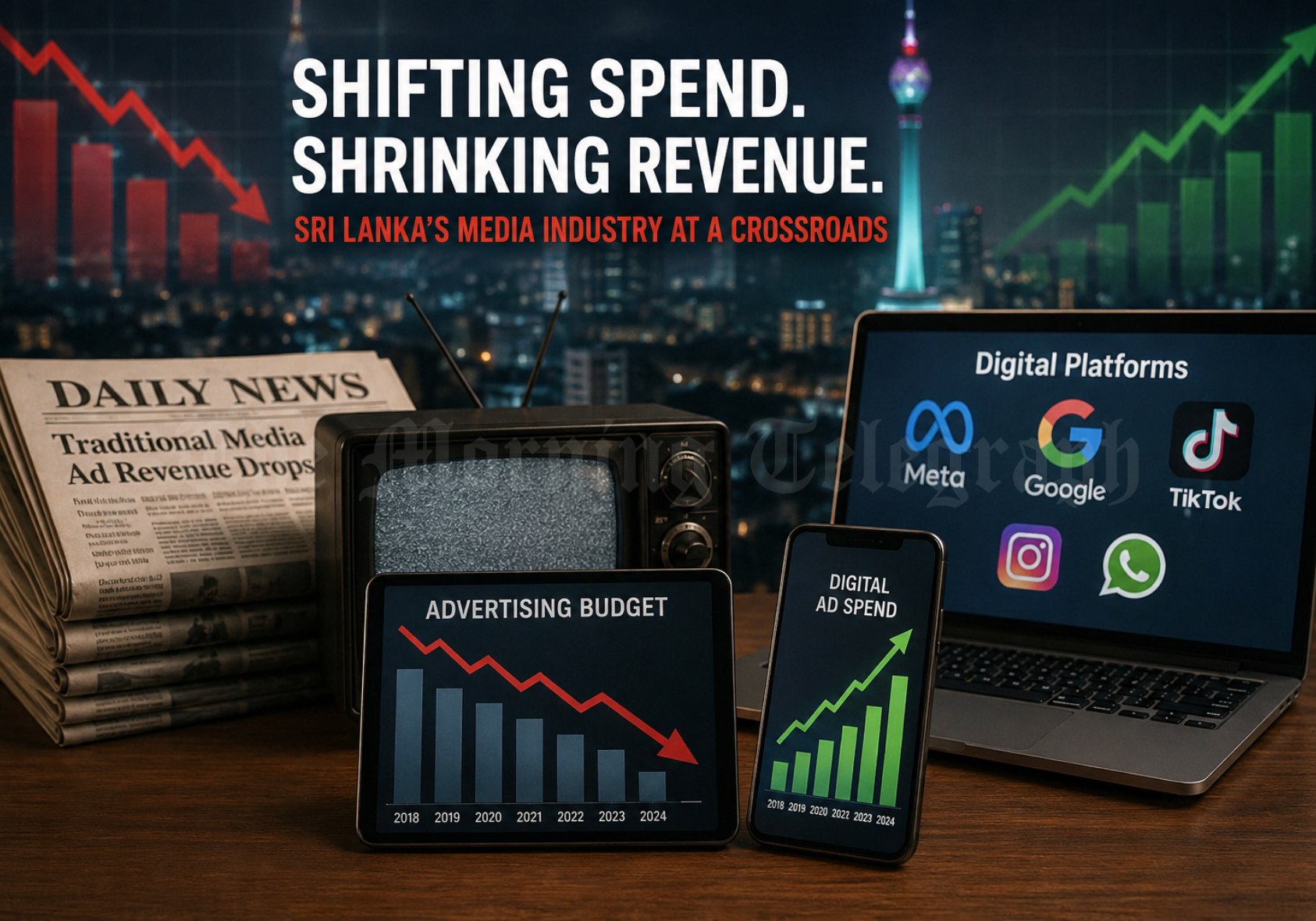
Sri Lankan media revenue is shrinking as ad budgets tighten, digital platforms expand, and traditional agencies struggle to protect growth.
The contraction of Sri Lanka’s advertising industry has become a deeper structural crisis. It stems from corporate austerity after the economic meltdown, sharp changes in consumer buying habits, and a major shift in how companies now divide marketing budgets.
Following the 2022 sovereign default and later tax reforms, macro stability has returned, pushing the country back into upper-middle-income status. However, corporate spending remains highly defensive. Major fast-moving consumer goods brands, conglomerates, and retailers still face high corporate tax rates, elevated utility bills, and costly production. For wider economic context, readers can refer to the Central Bank of Sri Lanka.
As a result, many companies have trimmed overheads. Marketing budgets often face the first and deepest cuts. Even when businesses spend, they now avoid the broad brand-building campaigns that once sustained large creative agencies. Instead, companies prefer conservative budgets focused mainly on immediate sales and measurable returns.

Sri Lankan media revenue faces digital pressure
This shift is closely linked to a major change in media consumption across the island. Internet penetration has reached nearly 60% of the population, with close to 14 million Sri Lankans now online. That growth has fractured the audience base that once supported Sri Lankan traditional media.
Audiences under 35 have moved away from terrestrial television and print media in large numbers. They now spend more time across digital spaces. Static images and polished corporate advertisements also carry less influence because many consumers have grown tired of conventional brand messaging.
Therefore, brands have moved toward video-first, direct, and performance-based digital marketing. This has further weakened the traditional advertising model.
Consequently, advertising budgets are moving away from legacy advertising houses and expensive celebrity brand ambassadors. Instead, capital now flows directly into global digital tech platforms such as Meta and Google. It also reaches micro and niche creators on TikTok, Instagram, and WhatsApp.
This migration has created space for specialized, conversion-driven digital performance agencies. However, the broader traditional advertising ecosystem faces a structural contraction. As a result, conventional media institutions, which historically depended on advertising revenue, now face financial pressure.