By Dwayne Ferreira.
Iran missile attack toward Jordan and a reported US strike near Bushehr raise nuclear fears across the Middle East.
The Iran missile attack toward Jordan has pushed the Middle East into a more dangerous phase, as Iranian officials also said US projectiles struck the perimeter area of the Bushehr nuclear power plant.
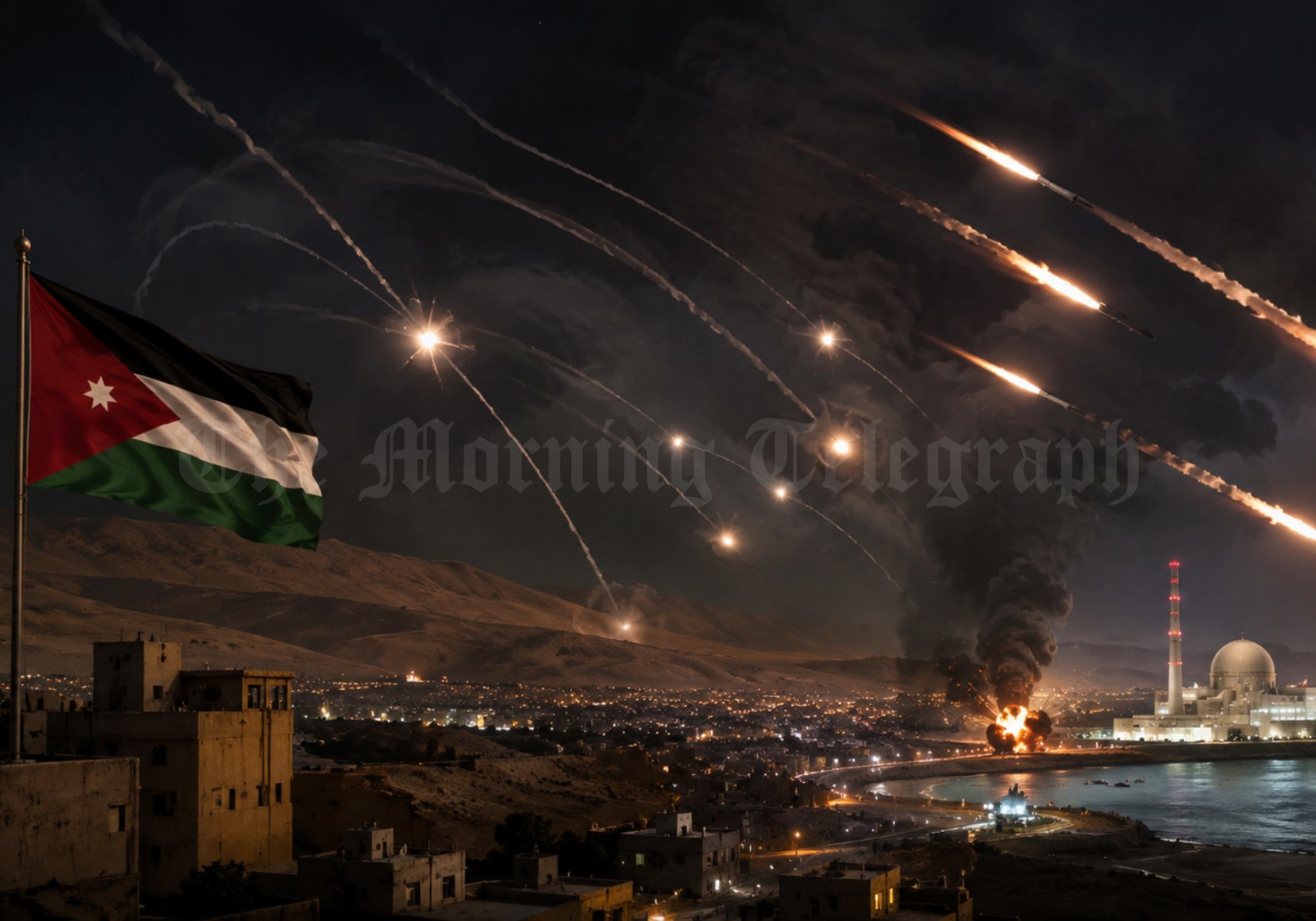
Iranian media and regional reports said Tehran launched ballistic missiles toward the Azraq military base in Jordan on Thursday. The base has been associated with American military activity in the region. Reports gave different figures for the strike, with some accounts saying eight projectiles were launched and others reporting 10 ballistic missiles.
Jordanian air defenses reportedly intercepted the missiles. There was no immediate confirmation of major damage or casualties. The attack appeared to form part of a wider Iranian response to renewed US strikes on Iranian targets after a fragile ceasefire understanding collapsed.
The latest exchange marks one of the most serious escalations between Washington and Tehran in recent weeks. It also comes at a highly sensitive moment for Iran. The country is preparing for the burial of Supreme Leader Ayatollah Ali Khamenei in Mashhad following his reported death in a previous US strike.

Iran Missile Attack Raises Regional Tension
According to Iranian state media, a US projectile hit the perimeter area of the Bushehr Nuclear Power Plant during attacks on Bushehr province. Provincial officials said they had no immediate reports of deaths from the strike near the facility.
Iranian officials also said several locations in Bushehr province came under attack. These included a military base and a fishing pier. Bushehr is Iran’s only civilian nuclear power facility. Therefore, any strike close to the site creates serious regional and international concern.
Iranian officials said the nuclear facility itself did not suffer a direct hit. However, the reported impact near its perimeter will likely deepen fears about military action around nuclear infrastructure. Even without a radiation leak or a direct strike on reactor systems, such an incident can trigger major diplomatic alarm.
The United States has not yet issued a detailed public confirmation of the reported Bushehr perimeter strike. However, multiple reports said Washington launched a broad wave of attacks on Iranian military and strategic sites. US officials accused Tehran of escalating attacks in the Strait of Hormuz and against American interests in the region.
Bushehr Nuclear Plant Becomes Flashpoint
Iran’s retaliation did not stop with Jordan. Reports said Iranian forces also targeted sites linked to US military operations in Kuwait, Qatar and Bahrain. Air defense systems across several Gulf states were placed on alert as missiles and drones were reported in the region.
The attacks show how quickly the conflict is spreading beyond Iranian and American territory. Jordan, Kuwait, Qatar and Bahrain all host or support Western military activity. As a result, they could become targets in a wider confrontation between Iran and the United States.
The reported missile launch toward Jordan is especially significant. Jordan has repeatedly tried to avoid being pulled deeper into regional conflicts. However, its location and security ties with Washington leave it exposed during any US-Iran escalation.
The Azraq area carries strategic importance because of its links to air operations and regional military coordination. If officials confirm it as the target, the Iran missile attack would signal that Tehran is willing to strike beyond the Gulf. It would also show that US-linked facilities across the wider Middle East remain vulnerable.
Iran has framed its missile and drone attacks as retaliation for American strikes. Tehran says US attacks over the past two days have killed at least 14 people and injured dozens more. Iranian officials have accused Washington of trying to disrupt the country during a period of national mourning.
Gulf States Brace For Wider Fallout
The United States, meanwhile, has said its strikes aim to respond to Iranian military actions and protect regional security. President Donald Trump has declared that the ceasefire understanding with Iran is over. His statement followed renewed Iranian attacks on commercial shipping and US-linked targets.
The crisis has added fresh pressure to oil markets and regional security planning. Bushehr province sits along Iran’s southern coast, not far from the Persian Gulf. The nearby Strait of Hormuz remains one of the world’s most important energy corridors.
Any prolonged military confrontation in this area could affect global oil flows, shipping insurance costs and regional aviation routes. It could also force Gulf states to take stronger defensive measures if Iranian strikes continue to target bases and infrastructure connected to the United States.
Diplomatic efforts are still underway. However, the latest missile exchanges suggest the conflict is becoming harder to contain. Qatar and other regional actors have called for restraint. They have warned that further escalation could push the Middle East into a wider war.
For now, the most alarming development remains the reported strike near Bushehr. Even without confirmed damage to the nuclear plant, the incident creates a new level of risk. Military activity around nuclear infrastructure carries consequences far beyond the battlefield. The International Atomic Energy Agency remains the key global body for nuclear safety oversight.
Region Waits For Confirmation
The coming hours will be critical. If Jordan confirms further details of the missile interceptions, or if Washington confirms the Bushehr strike, the crisis could enter a more dangerous phase. Iran has already signaled that it is prepared to expand its retaliation if US strikes continue.
With missiles now reported over Jordan and projectiles landing near Iran’s most sensitive civilian nuclear site, the conflict is no longer limited to direct US-Iran strikes. It is turning into a regional confrontation with growing risks for military bases, energy routes and civilian infrastructure across the Middle East. Official updates from the Jordan Armed Forces and the US Department of Defense could determine how the crisis develops next.