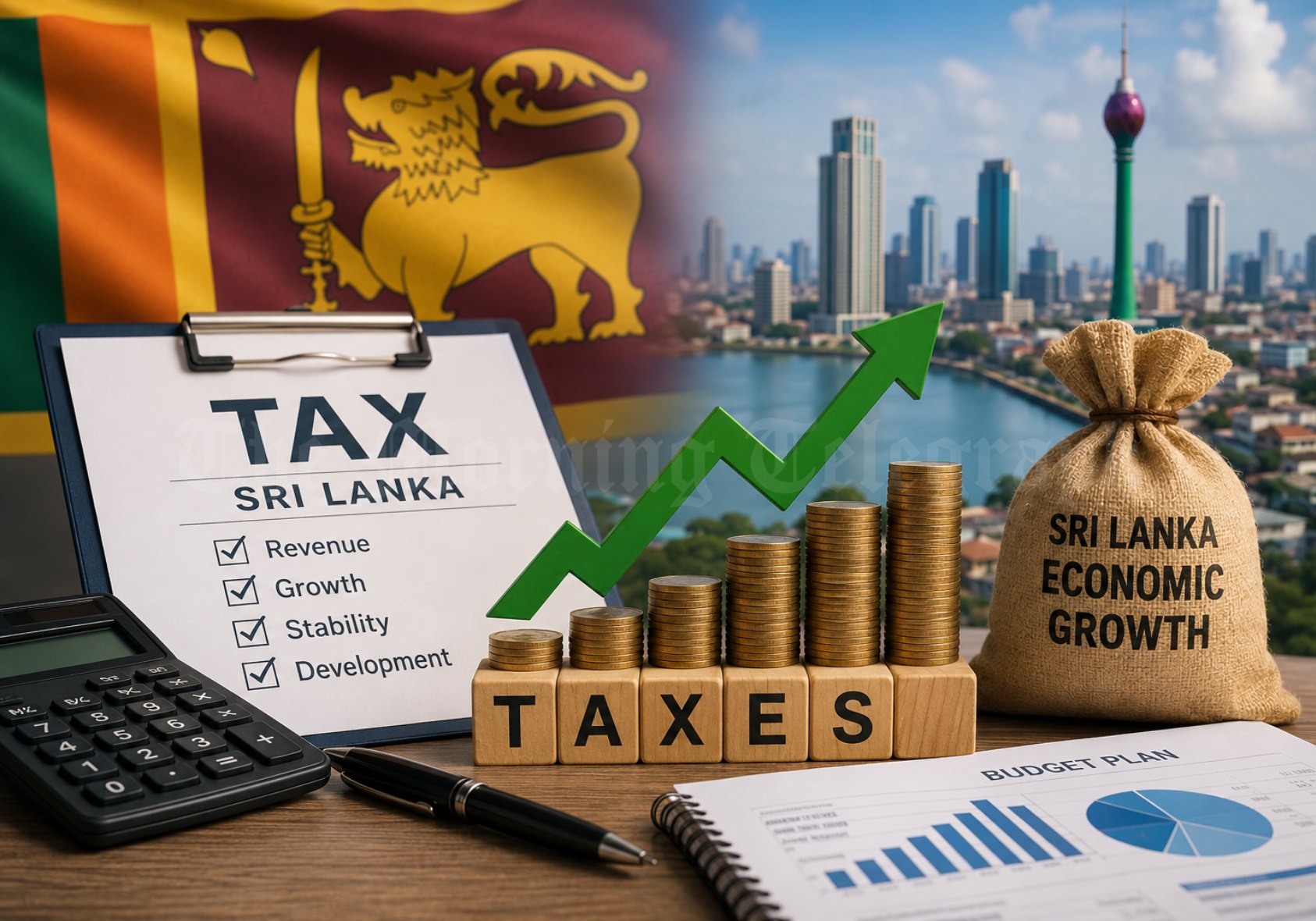
Sri Lanka taxes must become the foundation of real economic growth, not a political slogan recycled whenever the country faces pressure.
For decades, a seductive but dangerous myth echoed through the corridors of power in Colombo. It claimed the fastest way to stimulate the Sri Lanka economy was to slash taxes. The country tested that theory to destruction in 2019. Revenue-to-GDP collapsed to an abysmal 8%, and Sri Lanka then plunged into the worst economic crisis in its history.
Today, the economy has entered a fragile recovery. GDP expanded by 5.1% in the first quarter of 2026. Yet the old debate has returned. Critics say higher taxes introduced under recent reforms now act as a chokehold on growth. They ask a fair question: how can a country become prosperous when citizens and companies face heavy taxation?
The answer may sound counterintuitive. But history makes it clear. Sri Lanka cannot achieve sustained, long-term GDP growth without a strong tax framework.

Why Sri Lanka Taxes Matter For Growth
The case against higher taxes depends on a simple but flawed equation. Less tax, critics argue, means more disposable income. More disposable income then leads to more investment and faster growth.
However, that formula collapses when a government cannot provide the basic building blocks of a working economy. When public revenue dries up, the state cannot fund infrastructure, maintain a stable electricity grid, or invest properly in education and healthcare. Instead, it borrows just to keep the country functioning.
For Sri Lanka, the so-called low-tax era did not create a dynamic private sector. It produced sovereign default, rolling blackouts, fuel queues and crippling inflation.
Sustainable GDP growth never happens in a vacuum. It needs a stable macroeconomic environment. Higher taxes, aimed at rebuilding steady public revenue, should not be treated as a punishment for success. They are the price of predictability. They help narrow the fiscal deficit, stabilize the rupee and reassure international markets that Sri Lanka can meet its commitments.
Fair Collection Is As Important As Revenue
However, public skepticism remains entirely valid. The way the state collects taxes matters as much as the amount it collects.
For too long, Sri Lanka has depended on an unjust, upside-down tax system. It has leaned heavily on indirect taxes such as the Value Added Tax, known as VAT. When most tax revenue comes from indirect levies, a daily wage earner pays the same tax on a packet of milk powder as a billionaire. That weakens domestic consumption, which remains the engine of local business growth.
The path forward requires a serious shift toward direct taxation. Sri Lanka must broaden the income tax base. It must also ensure that profitable corporations and high earners pay their fair share.
That approach can raise revenue without suffocating low- and middle-income consumers who keep the retail and services sectors alive. Moving away from a system where three-quarters of revenue depends on flat consumption taxes is essential. It will help restore the purchasing power of the average citizen.
A Stronger Fiscal Foundation Needs Trust
Higher taxes do not have to mean higher rates for those already paying. The state’s main priority must be capturing the vast untaxed parallel economy.
Automated data systems inside the Inland Revenue Department are vital. By linking data across banks, vehicle registries and property deeds, Sri Lanka can curb rampant evasion. When the tax net catches those who now slip through, the pressure on existing taxpayers can ease. That would create a fairer business landscape where compliant companies do not suffer for playing by the rules.
Ultimately, taxation is a social contract. Sri Lankans will accept a higher tax regime only if they see a return on their investment. If increased tax revenue disappears into a bloated public sector or corruption, growth will stagnate.
But if the government channels those funds transparently into modern schools, stronger healthcare infrastructure, better transport networks and targeted subsidies for SMEs, the economic returns can be powerful.
Sri Lanka’s recent return to upper-middle-income status proves the country is stabilizing. But stabilization is not prosperity. To move from a recovering island to a dynamic global competitor, the country must abandon the fantasy of a tax-free shortcut.
Higher, fairer and more efficiently collected Sri Lanka taxes remain the only foundation strong enough to support the future the nation wants to build.