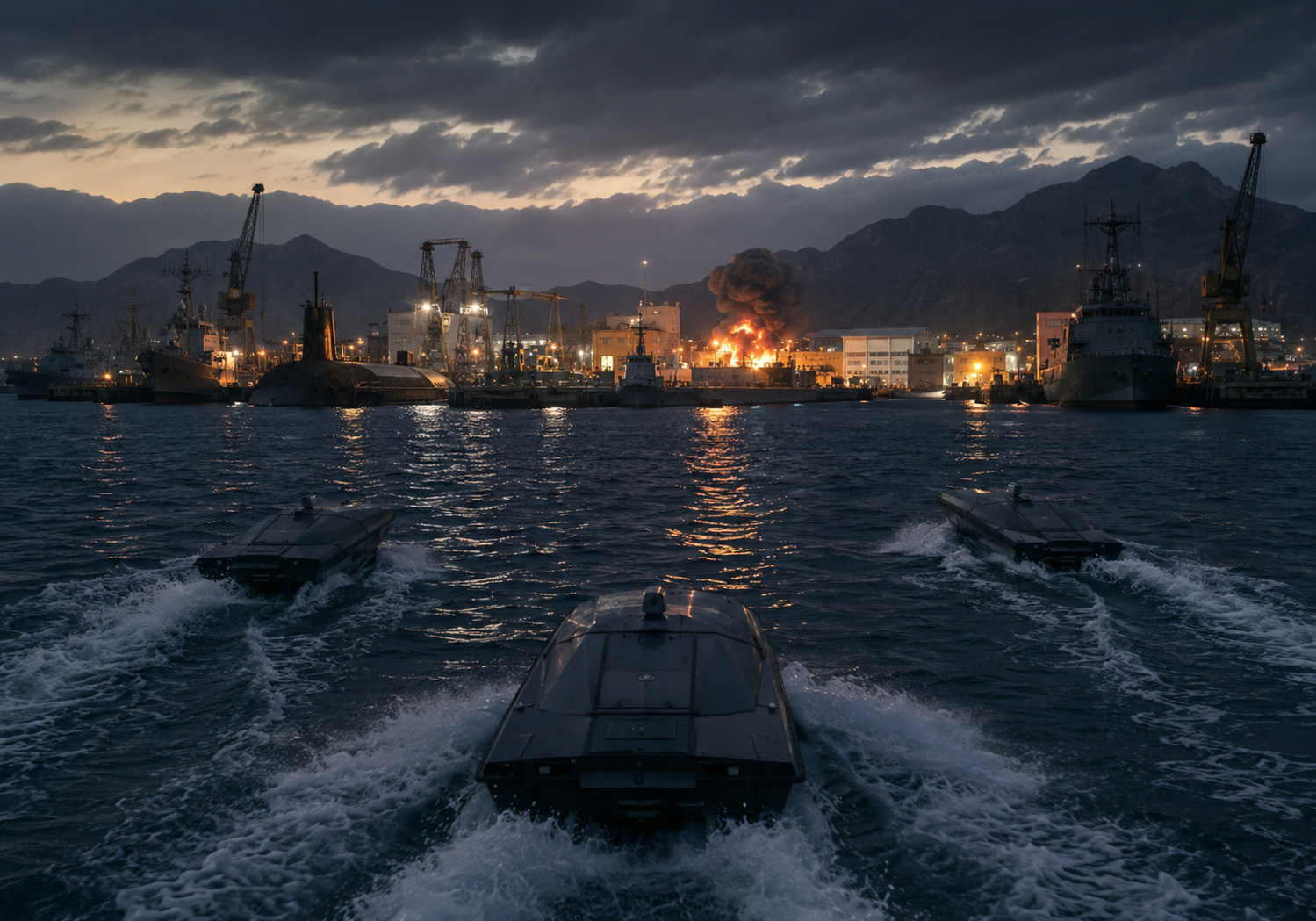
The US sea drone strike on Bandar Abbas marked America’s first combat use of explosive surface drones against an Iranian naval facility.
The United States has used one-way attack surface drones in combat for the first time, striking a submarine and ship maintenance facility at Iran’s Bandar Abbas Naval Base, according to US Central Command.

CENTCOM said three Corsair unmanned surface vessels hit the port facility on Sunday, July 12. American forces carried out the operation as part of a wider campaign against Iranian military infrastructure.
CENTCOM also released video footage of the operation on July 12, one day before this report. The military-issued footage relates to the sea drone attack and provides a visual record released by the command itself. However, it does not amount to independent confirmation of the full damage caused at the facility.
Video: Footage released by US Central Command on Sunday, July 12, relating to the first American combat use of one-way attack sea drones against Iran’s Bandar Abbas naval facility.
CENTCOM said the operation damaged Iran’s ability to support attacks on commercial shipping. However, independent sources have not confirmed the full extent of the destruction.
The military’s statement does not establish that the drones struck or destroyed an Iranian submarine. Instead, CENTCOM said the vessels targeted a facility used to maintain submarines and other ships.
Officials have not released a detailed assessment of casualties, structural damage or vessels present at the site.
Why Bandar Abbas Matters to Iran
Bandar Abbas is one of Iran’s most important naval centres. It lies close to the Strait of Hormuz, a strategic waterway carrying a significant share of the world’s seaborne oil and gas.
The base supports Iranian naval operations, logistics and maintenance. Therefore, its repair infrastructure may play an important role in Tehran’s ability to keep vessels operational.
The strike also marks a significant milestone in the Pentagon’s rapid expansion of unmanned maritime warfare.
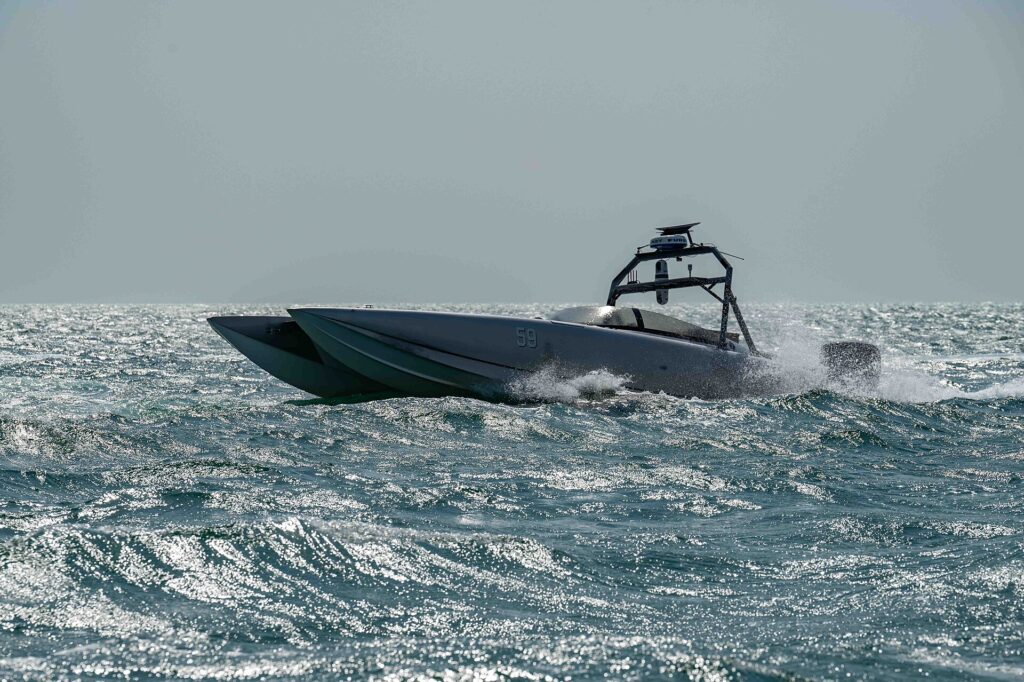
The Corsair is a 24-foot autonomous surface vessel manufactured by US defence technology company Saronic.
According to the manufacturer, the vessel can travel more than 1,000 nautical miles, reach speeds above 35 knots and carry a payload of up to 1,000 pounds.
In a one-way attack role, operators load the unmanned boat with explosives and deliberately direct it into a target. They do not expect the vessel to return after completing its mission.
Such vessels may give militaries a comparatively inexpensive way to attack ports, ships and coastal infrastructure. They also reduce the danger faced by military personnel.
Corsair Moves From Rescue to Combat
Corsair vessels attracted international attention in June after one helped rescue two US Army aviators. Their AH-64 Apache helicopter had gone down near Oman.
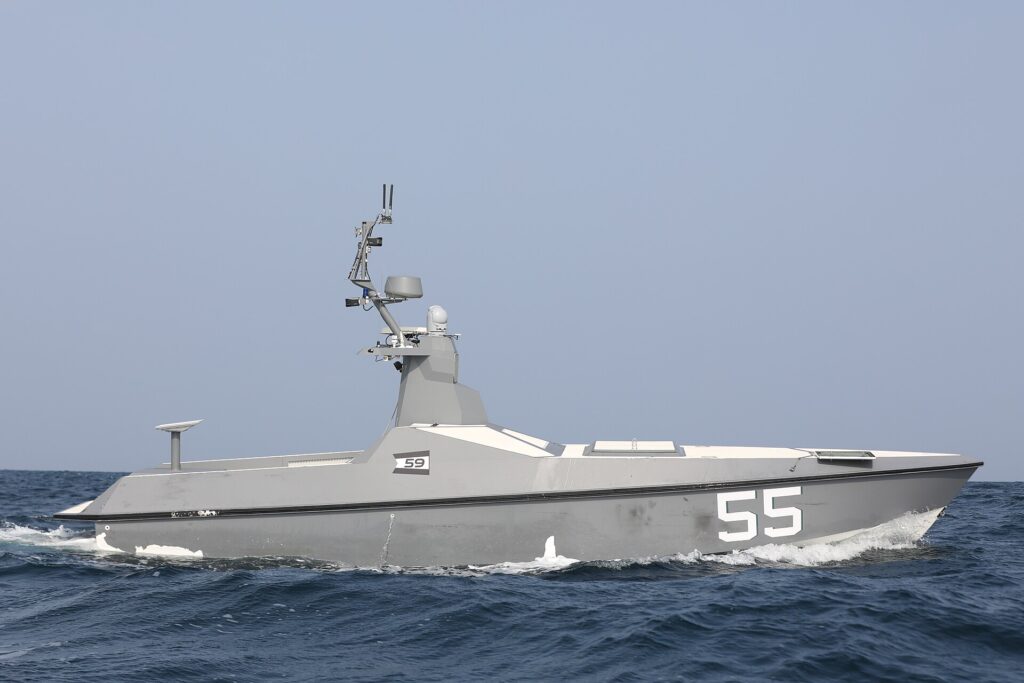
The US Navy’s Task Force 59 operated the drone. It recovered the crew and transported them to a position where a helicopter could complete their evacuation.
Reuters described the incident as the first known American use of an unmanned military vessel to recover personnel at sea.
The Bandar Abbas operation now marks the platform’s transition from surveillance, transport and rescue duties to a direct offensive mission.
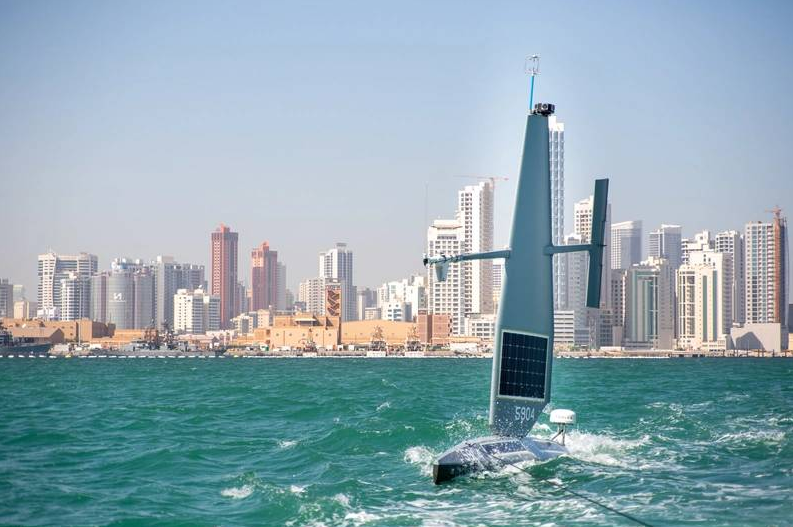
Sea drones have become increasingly prominent in modern conflicts. Ukraine has repeatedly used explosive unmanned boats against Russian naval vessels and infrastructure in the Black Sea.
Those operations demonstrated how small platforms could threaten much larger and more expensive warships.
Similar systems have also emerged as a danger to commercial shipping in Middle Eastern waters.
Full Extent of Bandar Abbas Damage Remains Unclear
For Iran, damage to specialist workshops, docks, spare-parts stores or maintenance equipment could create operational problems even if the strike destroyed no warship.
Naval repair facilities depend on skilled personnel and specialised machinery. Iran may find such resources difficult to replace quickly during an ongoing conflict.
However, CENTCOM has not released enough information to determine how seriously the Bandar Abbas facility was affected.
It also remains unclear whether all three drones reached separate targets. Officials have not said whether Iranian forces attempted to intercept them or whether the operation killed or injured anyone.
Iranian authorities had not provided a detailed public account of the strike at the time of reporting.
Independent satellite imagery or later damage assessments may provide a clearer picture of what the three Corsair vessels hit and how much destruction they caused.
The CENTCOM video offers an official visual account of the operation. However, because the US military selected and released the footage, it should not be treated as an independent assessment of the results.
Nevertheless, the attack signals a new phase in American naval operations.
By employing explosive autonomous vessels against a military port, the United States has demonstrated that sea drones are no longer limited to experiments, surveillance or support missions.
They have now become an active weapon in the widening confrontation with Iran.