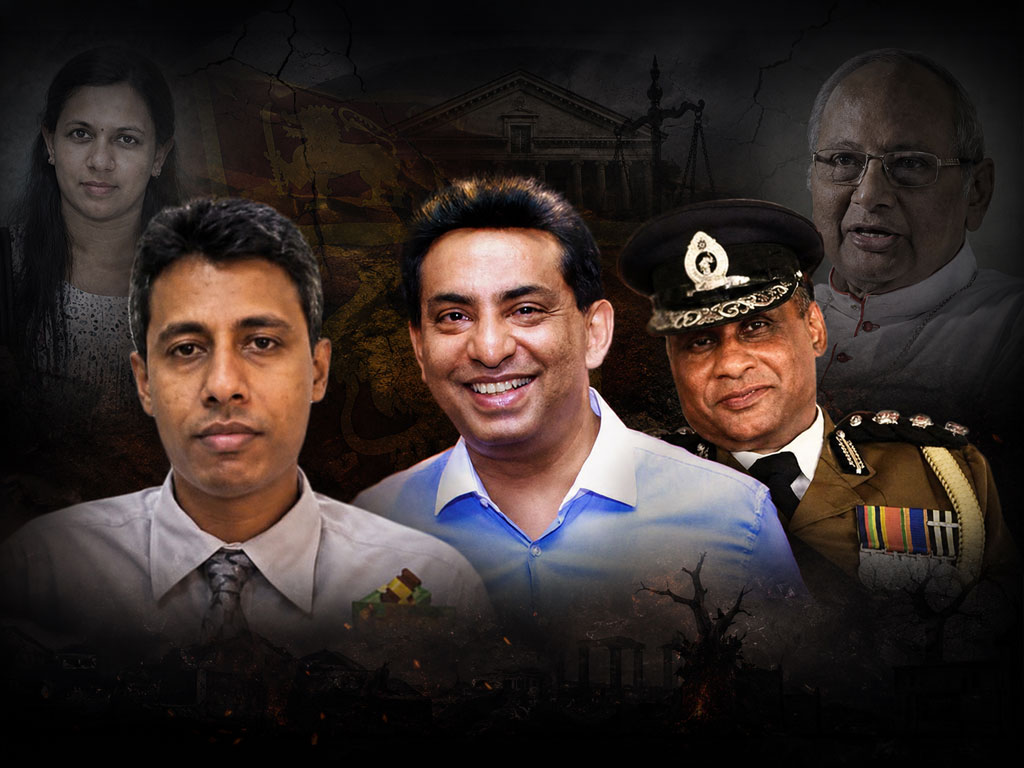
The Sri Lanka sensitive deaths investigation focuses on former IGP Wickramaratne, Finance Ministry official Rajapaksa, and SriLankan CEO Chandrasena. Their deaths raise questions about the Easter Sunday probe.
The Sri Lanka sensitive deaths investigation has intensified scrutiny of politically charged cases, including the Easter Sunday probe and the unresolved Sarah Jasmine controversy. The deaths of former IGP C.D. Wickramaratne, Finance Ministry official Ranga Nishantha Rajapaksa, and former SriLankan Airlines CEO Kapila Chandrasena have raised serious questions across the country.
Former IGP Chandana Deepal Wickramaratne, 63, succumbed to a gunshot injury at his residence in Thalahena, Malabe, on 17 July. Wickramaratne, the 35th IGP who served from 25 November 2020 to 23 November 2025, was pronounced dead at Mulleriyawa Hospital. The incident triggered widespread speculation. Some claimed Wickramaratne shot himself with a weapon issued to his bodyguard. Others alleged that he was deeply depressed over divorce proceedings involving his son and daughter-in-law. They also cited accusations against his son over domestic violence. There are lingering concerns about the impact of the ongoing Easter Sunday investigations on Wickramaratne’s death.

The Finance Ministry Official’s Death
Assistant Director of the External Resources Department, Ranga Nishantha Rajapaksa, 50, was found dead in the garden of his Kuliyapitiya home on 30 April 2026. The authorities blamed injuries he supposedly inflicted on himself using a knife. He was under suspension over the USD 2.5 million heist from the Treasury. Rajapaksa was the official who lodged a complaint with the CID regarding the unprecedented theft.
The SriLankan Airlines CEO’s Death
Former CEO of SriLankan Airlines, Kapila Chandrasena, 61, was found dead at No. 38, Pedris Road, Kollupitiya, on 8 May 2026. Authorities declared that Chandrasena died by hanging. He was the prime suspect in the SriLankan Airlines bribery case. The UK Serious Fraud Office exposed the case in a joint investigation with US and French authorities. At the time of his death, he was out on bail but faced re-arrest over alleged violations of bail conditions.
The Finance Ministry official and ex-IGP died as a result of incidents at their homes, while Chandrasena allegedly took his own life at his brother-in-law Aravinda de Silva’s residence. Their deaths are mired in controversy. One major issue is whether their deaths impacted the ongoing politically sensitive cases.
The USD 2.5 Million Theft and Other Scandals
The USD 2.5 million theft sent shockwaves through the National People’s Power (NPP) government. The government was already struggling with other sensitive developments. These included the massive coal scam that led to Energy Minister Kumara Jayakody’s resignation. The controversial release of 323 red-flagged containers from the Colombo port, without any checks, also caused concern. Two containers carrying narcotics were also involved.
The police faced a challenging task. They had to conduct transparent investigations into the deaths of Rajapaksa, Chandrasena, and Wickramaratne.
Controversies Surrounding the Autopsy Reports
Although cardiorespiratory failure due to heavy blood loss caused the Finance Ministry official’s death, many questioned how he inflicted grievous cut wounds on his legs and left wrist. The judicial post mortem report became available within 24 hours after the alleged suicide. This raised concerns. The Opposition expressed suspicions. A section of the media also expressed dissatisfaction with the government’s handling of the case. Despite a post mortem examination conducted by a four-member expert panel, suspicions remain regarding the Finance Ministry official’s death.
It is pertinent to mention that The Sunday Leader Editor Lasantha Wickrematunga was stabbed to death. Police and others initially claimed a firearms attack caused his death. The Attorney-at-Law was killed inside his car on Attidiya Road, Ratmalana, on 8 January 2009. Over 17 years after the still unresolved killing, the vast majority still believe Wickrematunga was shot dead. His case is just one of several high-profile investigations hampered by deliberate falsification of autopsy reports.
The Sarah Jasmine Factor
Among those who paid their last respects to Wickramaratne was former President Ranil Wickremesinghe. Former Minister Sagala Ratnayake accompanied the UNP leader.
One issue that received public and media attention after Wickramaratne’s death was the controversial third DNA test. Two previous DNA tests confirmed that Pulastini Rajendran, alias Sarah Jasmine, was not among the dead from the Sainthamaruthu explosions. These explosions occurred a week after the 2019 Easter Sunday carnage. Sarah was married to Achchi Muhammadu Mohammadu Hasthun, the National Thowheeth Jaamath operative who carried out the St. Sebastian Church suicide blast.
The CID questioned Wickramaratne as he served as IGP at the time of the third DNA test. The CID also questioned former Deputy IGP Prasad Ranasinghe in December last year. Public Security and Parliamentary Affairs Minister Ananda Wiejapala commented on the issue in Parliament in early June 2025.
Contradictory Claims on Sarah
There have been contradictory claims about Sarah, a Batticaloa Tamil convert to Islam who lived with the extremist group. Controversy surrounds her fate despite investigations by Sri Lankan and Indian intelligence services.
There were claims that Indian intelligence took her out of the country. DSJB lawmaker Mujibur Rahuman said in Parliament on 10 November 2022 that Sarah had taken refuge in India. He alleged that the Wickremesinghe-Rajapaksa government was struggling to prove she died in the Sainthamaruthu blasts on 26 April 2019.
Rajarathnam Kavitha, Sarah’s mother, told the Presidential Commission of Inquiry that her daughter had been with Zahran Hashim’s wife, Fatima, from early February to 26 April 2019. The NTJ group triggered the Sainthamaruthu blasts on that day.
Sarah’s mysterious status remains a key factor in the overall investigation. Retired Major General Suresh Sallay is a suspect in this high-profile case. Sallay served as Director of State Intelligence Service from November 2019 to October 2024. The CID arrested him in late February 2026 under the Prevention of Terrorism Act.
Church Intervention
Archbishop of Colombo, Malcolm Cardinal Ranjith, filed an intervening petition before the Court of Appeal. The petition concerns Sallay’s challenge to his arrest and detention under the PTA. Cardinal Ranjith sought permission to make submissions regarding Sallay’s petition. He also requested the court to dismiss Sallay’s petition.
The Church intervened after several prominent Buddhist monks, religious and civil society organisations filed intervention petitions. These petitions sought leave to intervene in Sallay’s writ application.
They highlighted the following points:
- The Supreme Court and the PCoI identified Zahran Hashim and the ISIS-inspired NTJ as the perpetrators of the 2019 Easter Sunday carnage. They attributed responsibility to State officials for failing to act on prior intelligence.
- None of the official investigations or judicial findings implicated Sallay in planning or facilitating the Easter Sunday attacks.
- The PCoI recorded that Major General Sallay had warned authorities about the rise of Islamist extremism before the attacks.
- The intervening petitions expressed concerns that unsubstantiated allegations have created a public narrative. This narrative suggests a wider conspiracy involving Sinhala Buddhist military and intelligence officers. This is contrary to the findings of the Supreme Court and the PCoI.
- The petitions argued that such unsupported narratives risk undermining public confidence. They also risk damaging communal harmony and unfairly tarnishing reputations without credible evidentiary foundation.
Ex-IGP’s Statement
In his statement to the CID, Wickramaratne explained that he directed the senior police officer in charge of Ampara to secure military and STF backing for the Sainthamaruthu operation. This operation led to the death of some inner remnants of Zahran’s group. The Ampara-based officer, identified as Samantha Wijesekera, had contacted the Department’s number two officer. IGP Jayasundera could not be contacted over the phone. The statement dealt with measures to ascertain Sarah’s status. It also addressed the final assertion, based on the Government Analyst’s third DNA test findings, that she perished in the suicide blast.
Wickramaratne directed then Police Spokesman DIG Nihal Thalduwa to issue a press release confirming Sarah’s death. In his statement, Wickramaratne explained the deep interest shown by the head of Indian Intelligence in Colombo regarding Sarah’s status. The Indian official repeatedly emphasised the importance of establishing Sarah’s status and never tried to hide their interest.
Did India accept the third DNA test findings? The possibility of Sarah being an Indian informant cannot be ruled out. India was able to alert Sri Lanka of the impending attacks. SJB Colombo District MP Rahuman has often commented on this possibility. Perhaps India knew of Sarah’s status but raised the issue to indicate they too were unaware. Perhaps we will never know the truth.
Intelligence Warnings
Sri Lanka received three specific warnings on 4, 20, and 21 April regarding the impending NTJ operation. The last warning arrived several hours before the NTJ struck hotels and Churches in Colombo, Katana, and Batticaloa. The blasts killed 270 people and wounded about 500.
At the time of the NTJ operation, Brigadier Chula Kodituwakku headed the DMI. He appeared alongside President Maithripala Sirisena at a media briefing days after the attacks. Now retired, Kodituwakku testified that the SIS refrained from sharing foreign intelligence with the DMI. Army Commander Lt. Gen. Mahesh Senanayake also explained the difficulties the Army faced due to the SIS’s refusal to cooperate.
According to an appeal filed in the Supreme Court, India issued the following warning: “As per an input, Sri Lanka based Zahran Hashim of National Thowheeth Jamath and his associates are planning to carry out suicide terror attack in Sri Lanka shortly. They are planning to target some important churches. It is further learnt that they have conducted reconnaissance of the Indian High Commission in Sri Lanka and it is one of the targets for the planned attack.”
The Investigation Controversy
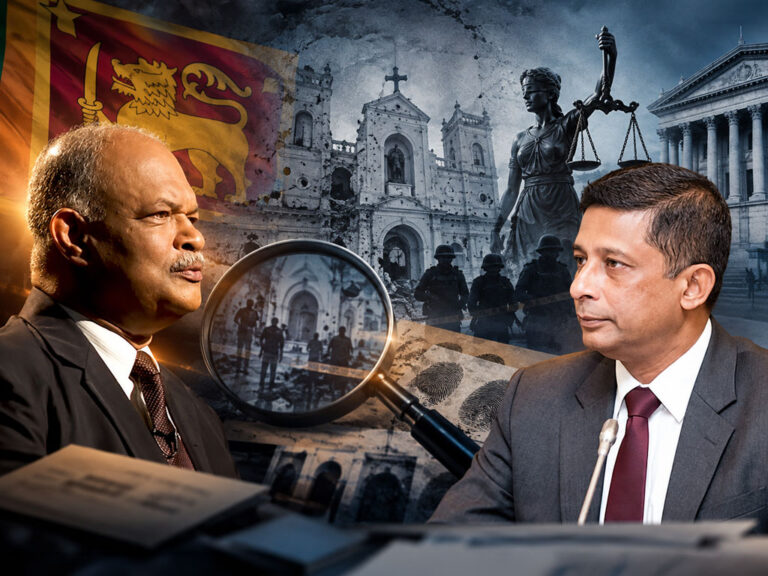
A no-holds-barred investigation is required to establish the truth. The Opposition has repeatedly questioned the government’s decisions. These include handing the investigation to retired Shani Abeysekera, who had been Director of the CID at the time of the 2019 Easter Sunday carnage. They also questioned accommodating Senior DIG Ravi Seneviratne as Secretary of the Public Security Ministry. Both had been accused of failing to act on specific intelligence from the SIS.
Both Abeysekera and Seneviratne, as members of the Retired Police Collective, backed the NPP campaigns before the 2024 presidential and parliamentary polls. Abeysekera, who retired on 30 June 2021, was recalled and officially reappointed as CID Director on a contract basis by the NPP.
Political Factors
There has never been a case as politicised as the 2019 Easter Sunday carnage. The massive security lapse and negligence by the Sirisena-Wickremesinghe government facilitated the NTJ operation. Immediately after, the Church threw its weight behind Gotabaya Rajapaksa’s 2019 presidential bid. Church backing made a significant difference. This prompted SJB’s Harin Fernando to accuse Malcolm Cardinal Ranjith of ensuring Gotabaya Rajapaksa’s victory at Sajith Premadasa’s expense. Since the SJB’s highly publicised June 2020 accusations, contradictory statements about the Easter Sunday attacks have emerged.
In February 2021, on behalf of the JVP/NPP, Dr. Nalinda Jayatissa declared that India masterminded the Easter Sunday attacks. This accusation came just weeks after the PCoI handed its report to President Gotabaya Rajapaksa. The President appointed a six-member committee of SLPP lawmakers headed by his brother Chamal. He did not request Attorney General Dappula de Livera to act on the recommendations.
In May 2021, Dappula alleged that the Easter Sunday attack was a grand conspiracy. This followed his failure to convince President Rajapaksa to extend his term by one year. Despite growing doubts about the delay in implementing the PCoI recommendations, the Church tried to convince the President to act. In July 2021, the Church wrote to President Rajapaksa. Against the backdrop of SLPP indifference, the Church reached a consensus with those opposed to the government by the end of that year. The Church openly backed the protest campaign against President Rajapaksa and remained committed to the operation until the end.
Two sons of wealthy spice merchant Mohamed Yusuf Ibrahim carried out suicide attacks for the NTJ. His sons Ilham Ahamed and Imsath Ibrahim were involved. Ibrahim was later released on bail in May 2022 during Wickremesinghe’s presidency. Ilham Ahamed’s heavily pregnant wife detonated an explosive vest inside their Dematagoda mansion when police surrounded the place after the attacks. Did the spice trader know about the NTJ strategy? Zahran Hashim’s wife Abdul Cader Fathima, who survived the Sainthamaruthu blast, was also granted bail in March 2023.
The Church demanded that Deputy Defence Minister Maj. Gen. Aruna Jayasekera be removed pending the investigations’ conclusion. The Church claimed Jayasekera served as Eastern Commander during the Sainthamaruthu blasts and should give up the Defence portfolio for the time being. The government ignored that demand.