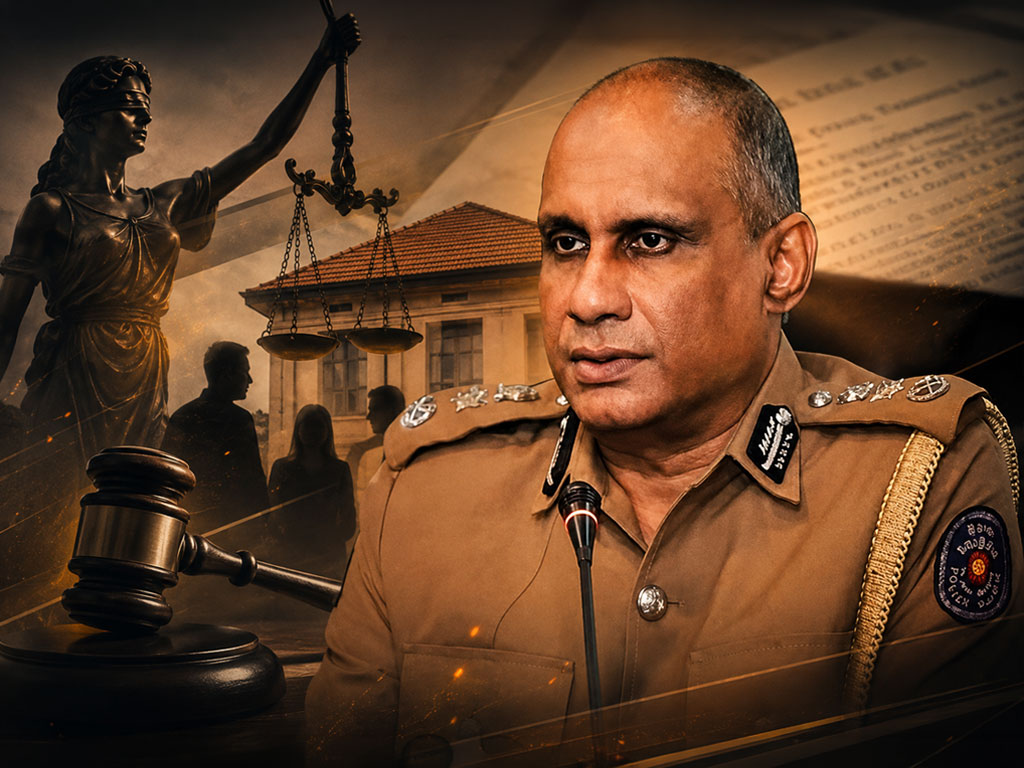
The C.D. Wickramaratne court case heard competing claims over household belongings, missing clothes and 23 boxes recovered from a church.
The C.D. Wickramaratne court case involving his son’s marital dispute has revealed competing claims over household belongings, missing clothes, jewellery and 23 boxes recovered from a church.
Counsel representing former Inspector General of Police C.D. Wickramaratne’s son told the Colombo Additional Magistrate’s Court that the former police chief had been deeply distressed by the removal of belongings from his son’s apartment.
The submissions came before Colombo Additional Magistrate Oshada Migara Maharachchi on July 23. The court was considering a case filed by the complainant against Wickramaratne’s son, N.B. Wickramaratne, who appeared as the respondent.
Defence Counsel Chamin Parangama alleged that the complainant, her mother and police officers had removed household goods beyond what the court authorised.
However, Chief Police Inspector Nimali Fonseka of the Women’s and Children’s Affairs Bureau rejected that allegation. She maintained that officers acted under a court order to help the complainant recover clothes, documents and essential personal belongings.
The court eventually rejected the defence request to begin contempt proceedings. It fixed the case for trial and postponed further proceedings until October 1.
The specific July 23 proceedings described here could not be independently confirmed through accessible published court records. Therefore, every disputed claim below remains attributed to the party that made it.

Defence Says Household Items Were Taken From Apartment
Defence Counsel Chamin Parangama told the court that the respondent’s parents had supplied the items inside the apartment.
He claimed the complainant and her mother entered the residence with police officers and removed a range of household goods. These allegedly included mattresses, pillowcases, kitchen equipment, drinking glasses and cooking spoons.
According to Parangama, the former police chief telephoned him after learning what had happened. The lawyer said Wickramaratne appeared to be in severe shock over the removal of items that he and his wife had given their married son.
The defence argued that the police party had acted beyond the limits of a court order issued on July 15, 2026.
Parangama said the complainant and respondent were involved in divorce proceedings. He maintained that neither party could disregard or expand the court’s directions according to their own interpretation.
The lawyer claimed virtually everything had been removed from the residence.
“Even the drinking water glasses are not there. Even the spoons for cooking have been taken,” he told the court, according to the account provided.
Parangama said the apartment’s household equipment came from the respondent’s parents. He added that some items had originally been presented to the former police chief as gifts before reaching the couple’s home.
The defence asked the magistrate to take action against the complainant, her mother and the Women’s and Children’s Affairs Bureau director for alleged contempt of court.
Parangama cited Section 3(a) of Act No. 8 of 2024 while making the application.
Police Say Respondent Cooperated With Removal
Chief Police Inspector Nimali Fonseka rejected the claim that she or her officers had violated the court order.
She told the magistrate that the police visited the apartment because the complainant needed clothes, personal documents and other everyday essentials.
According to Fonseka, the complainant had been unable to access the residence. She alleged that someone had locked the door and changed the key.
The officer said the woman had complained to police more than five times while seeking access to her documents and personal belongings.
Fonseka maintained that the Women’s and Children’s Affairs Bureau acted only after receiving a complaint. She said officers obtained a court order because the complainant had allegedly remained without her clothes for approximately four months.
The Chief Inspector told the court that the respondent raised no objection when the officers, the complainant and her mother entered the apartment.
She said the woman opened a wardrobe and searched for her clothes and documents. However, none of those items were reportedly inside.
According to Fonseka, the complainant asked the respondent what had happened to the missing belongings. He allegedly replied, “I don’t know.”
The officer also denied the claim that police independently selected or removed property. She said the complainant gathered items for daily use while officers observed and documented the process.
Questions Raised Over Safe and Gold Jewellery
The C.D. Wickramaratne court case also heard allegations concerning jewellery reportedly kept inside a safe.
Fonseka said the complainant asked the respondent about her gold jewellery after failing to find her clothes and documents.
The respondent allegedly told her that the jewellery remained inside the safe. However, he reportedly said he did not possess the key required to open it.
According to the officer’s account, the complainant shook the safe and believed it did not contain the jewellery.
When she questioned the respondent again, he allegedly replied that he did not know what had happened. He then reportedly told her she could take the safe.
The complainant declined to remove it, Fonseka said.
The officer stressed that the respondent cooperated as pillows, bedsheets and kitchen goods were collected.
She told the court that the complainant repeatedly asked whether particular items belonged to the respondent and whether he wished to retain them.
Fonseka said he did not object and also assisted while officers prepared the list of removed property.
The police party sent the complainant and her mother out of the apartment at approximately 2.30 p.m., according to the Chief Inspector.
Officers then recorded a statement from the respondent.
Fonseka said he declared that he respected the court order but remained unhappy about the items the complainant had removed.
The officer reportedly reminded him that she had asked several times whether he objected before the property left the apartment.
Bank Card Use and Items Found at Wattala Church
Fonseka also described a separate complaint involving the woman’s bank card.
She said the complainant contacted her official mobile phone at around 6 p.m. on July 16, 2026. According to the officer, the woman was crying and reported several deductions from her bank account.
The subsequent inquiry allegedly found that someone had used the card to buy items from a shop in the Wattala area.
The court also heard details about the complainant’s clothes and documents, which police said were missing from the apartment.
Fonseka said a person responsible for a church in Wattala later provided information about a collection of belongings stored there.
Officers reportedly recovered 23 boxes from the church.
According to the Chief Inspector, the boxes contained the complainant’s clothes, cosmetics and documents. Investigators have marked all 23 boxes as exhibits in the case.
The officer did not suggest that the discovery had resolved every dispute between the parties. However, she presented it as relevant to the earlier inability to find the woman’s possessions inside the apartment.
These claims remain part of an active legal dispute and have not yet produced a final judicial finding on responsibility.
Court Rejects Contempt Request and Orders Trial
After hearing both sides, Magistrate Oshada Migara Maharachchi questioned Chief Police Inspector Fonseka about the defence allegations.
Fonseka maintained that she had complied with the court order and had not committed contempt.
She again referred to the complainant’s alleged lack of access to the apartment. The officer argued that denying the woman access to her residence and essential belongings had affected her rights.
The defence continued to argue that the quantity and nature of the removed goods exceeded what the order allowed.
However, the Additional Magistrate rejected the application seeking contempt proceedings against the complainant, her mother and the police officer.
The court ordered the case to proceed to trial and fixed October 1 for the next hearing.
A separate divorce case involving the couple also remains pending.
The C.D. Wickramaratne court case therefore presents sharply conflicting accounts. The defence says police facilitated the removal of property beyond the court’s authority. Police say the respondent cooperated and that officers helped a woman recover essential belongings after months without access.
The trial will determine how the court assesses those competing claims, the recovered boxes, the disputed household property and the conduct of everyone involved.
C.D. Wickramaratne served as Sri Lanka’s 35th Inspector General of Police, although publicly available references differ on some details surrounding the end of his tenure.