US strikes on Iran killed three Revolutionary Guard members in Zanjan as Washington launched fresh attacks on IRGC military facilities.
Three members of Iran’s Islamic Revolutionary Guard Corps were killed in US strikes on Iran, according to the force’s provincial office in Zanjan.
The IRGC identified the three personnel as Mahmoud Mollajabbari, Mohammadreza Cheraghi and Jamal Amiri. Iranian reports said they died during an American missile strike in the northwestern province early on Thursday, July 30.
Residents later gathered in Zanjan for their funerals as Iran continued to assess the impact of the renewed American bombing campaign. Footage from the city showed mourners attending ceremonies for the three men on Friday.
Get
Breaking News
First
on WhatsApp
Follow The Morning Telegraph for instant alerts, top stories and exclusive updates delivered straight to your phone.

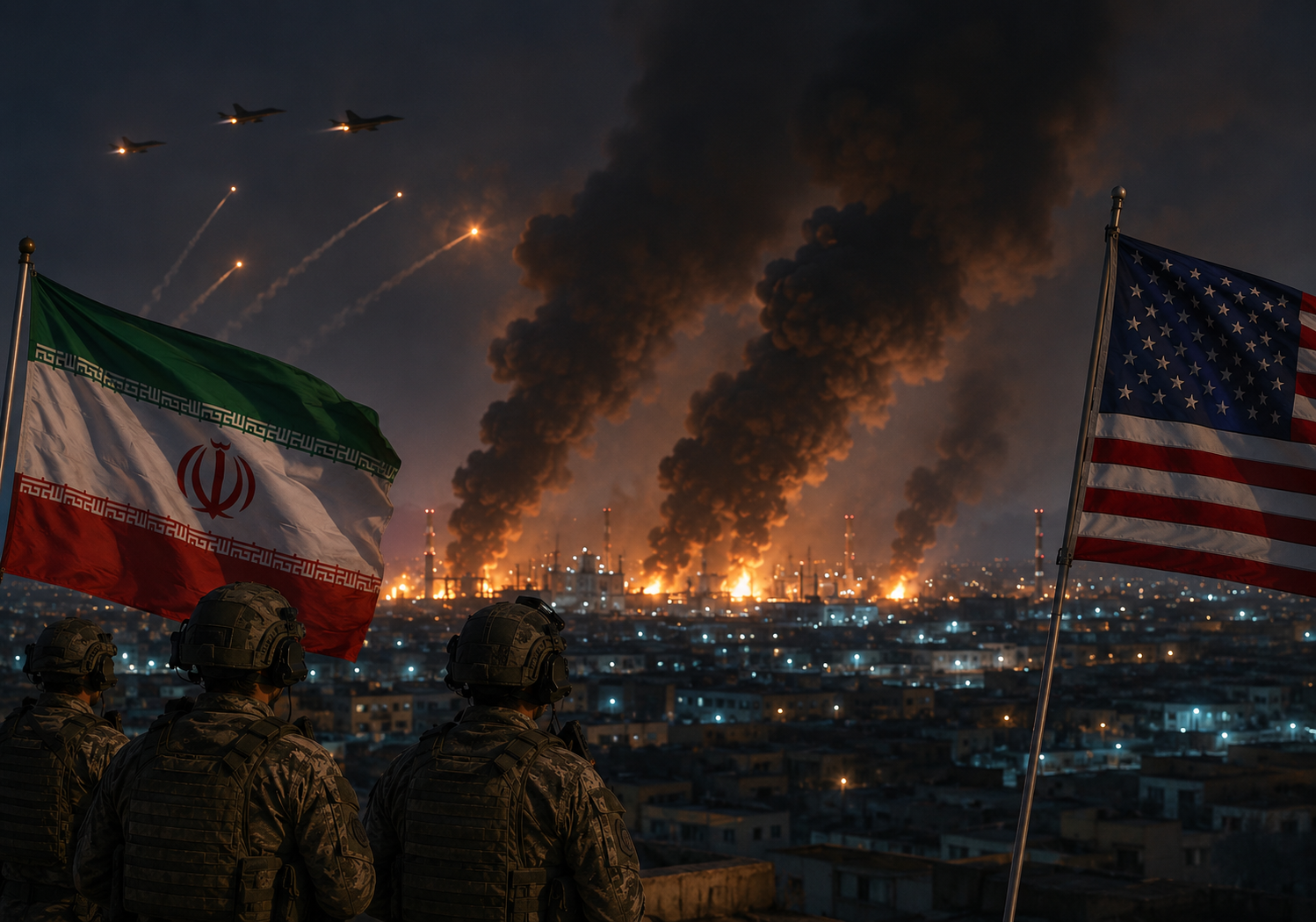
The deaths came during an intense two-hour American operation that struck dozens of Iranian military targets.
United States Central Command said the operation targeted IRGC command centres, air-defence positions, missile and drone capabilities, coastal surveillance installations and maritime defence facilities.
CENTCOM described the attacks as a “powerful response” to attempted Iranian strikes against American forces stationed across the Middle East.
US Strikes on Iran Follow Missile Attack
The latest American operation followed an attempted Iranian ballistic missile attack against US military positions on July 28.
According to CENTCOM, IRGC forces launched multiple ballistic missiles from Iran in what the command described as a surprise attack on American personnel in the region.
The missiles reportedly targeted bases in the Middle East, including a US position in Jordan. American and allied defensive systems intercepted the attack, and no significant casualties were initially reported from the attempted strike.
US President Donald Trump subsequently promised a severe response, saying American forces would hit Iran “very hard.”
The following night, US aircraft and other military assets attacked dozens of Iranian targets during a concentrated operation lasting approximately two hours.
The attacks marked a significant escalation following a period in which diplomatic efforts had raised cautious hopes of reducing the fighting. Those efforts now face renewed uncertainty as both governments accuse the other of provoking the latest confrontation.
Iran, meanwhile, continued firing missiles and drones toward countries hosting American forces.
Jordan reported intercepting Iranian ballistic missiles, while Kuwait said an attack caused a death and property damage at a facility in the north of the country.
The IRGC also claimed that it had launched a drone attack against the US-operated Ahmad Al Jaber Air Base in Kuwait. Independent confirmation of that claim remained limited.
Iranian officials warned that countries assisting American military operations could face retaliation. The warning heightened concern that the fighting could spread across several Gulf states and place more civilian and military installations at risk.
Zanjan Deaths Confirmed by IRGC
The provincial IRGC public relations office confirmed that the three men killed in Zanjan belonged to the Revolutionary Guards.
However, Iranian authorities released few details about their ranks, duties or the exact installation struck by American forces.
The announcement established that the operation had reached Zanjan, a northwestern province located well beyond Iran’s southern coastline and the Gulf region where many previous attacks had been concentrated.
The location suggests that the American target list extended across a broad geographical area. However, the United States did not publicly identify the specific Zanjan facility or confirm that the three named personnel were killed there.
Therefore, the casualty account currently rests on the IRGC’s official announcement and reports carried by Iranian and international media.
Separate strikes were reported on Qeshm Island and in Bushehr, where the United States targeted additional Iranian military infrastructure.
Iranian media said a couple and their two-year-old child were killed during an attack on Qeshm Island. The United States described the wider operation as a series of precision strikes against military capabilities, but Iranian authorities accused Washington of causing civilian deaths.
Regional Conflict Risks Wider Escalation
The renewed attacks have deepened fears that the conflict could draw additional regional governments into direct confrontation.
Iran has threatened countries that allow the United States to use their territory, airspace or military installations. Several Gulf states host American bases, aircraft and personnel, making them possible targets during any further Iranian retaliation.
At the same time, Washington has warned that additional attacks on American forces will trigger another military response.
The latest exchange also threatens diplomatic initiatives supported by regional mediators. Pakistan and other governments have encouraged Washington and Tehran to return to negotiations, but each new missile launch or airstrike makes a sustained ceasefire more difficult.
The violence has already affected Iraq, Jordan, Kuwait, Egypt and maritime routes used by commercial and energy vessels. A suspected drone attack also caused fires aboard vessels at Egypt’s Damietta port, although responsibility for that incident had not been conclusively established.
The deaths of Mollajabbari, Cheraghi and Amiri will likely increase pressure on the IRGC to respond.
However, another Iranian attack on American bases could produce a further round of US strikes on Iran, continuing a cycle of retaliation that increasingly threatens military personnel, civilians and critical infrastructure across the region.
With neither side showing a willingness to absorb attacks without responding, the Zanjan strike represents more than an isolated battlefield development. It underlines how quickly the conflict can move from attempted missile attacks to large-scale bombing operations spanning several Iranian provinces.