Bangladesh warned media against airing the Sheikh Hasina speech from India, while New Delhi denied organising or endorsing the event.
Bangladesh has warned media organisations against broadcasting a planned Sheikh Hasina speech from India, escalating an increasingly sensitive political dispute between Dhaka and New Delhi.
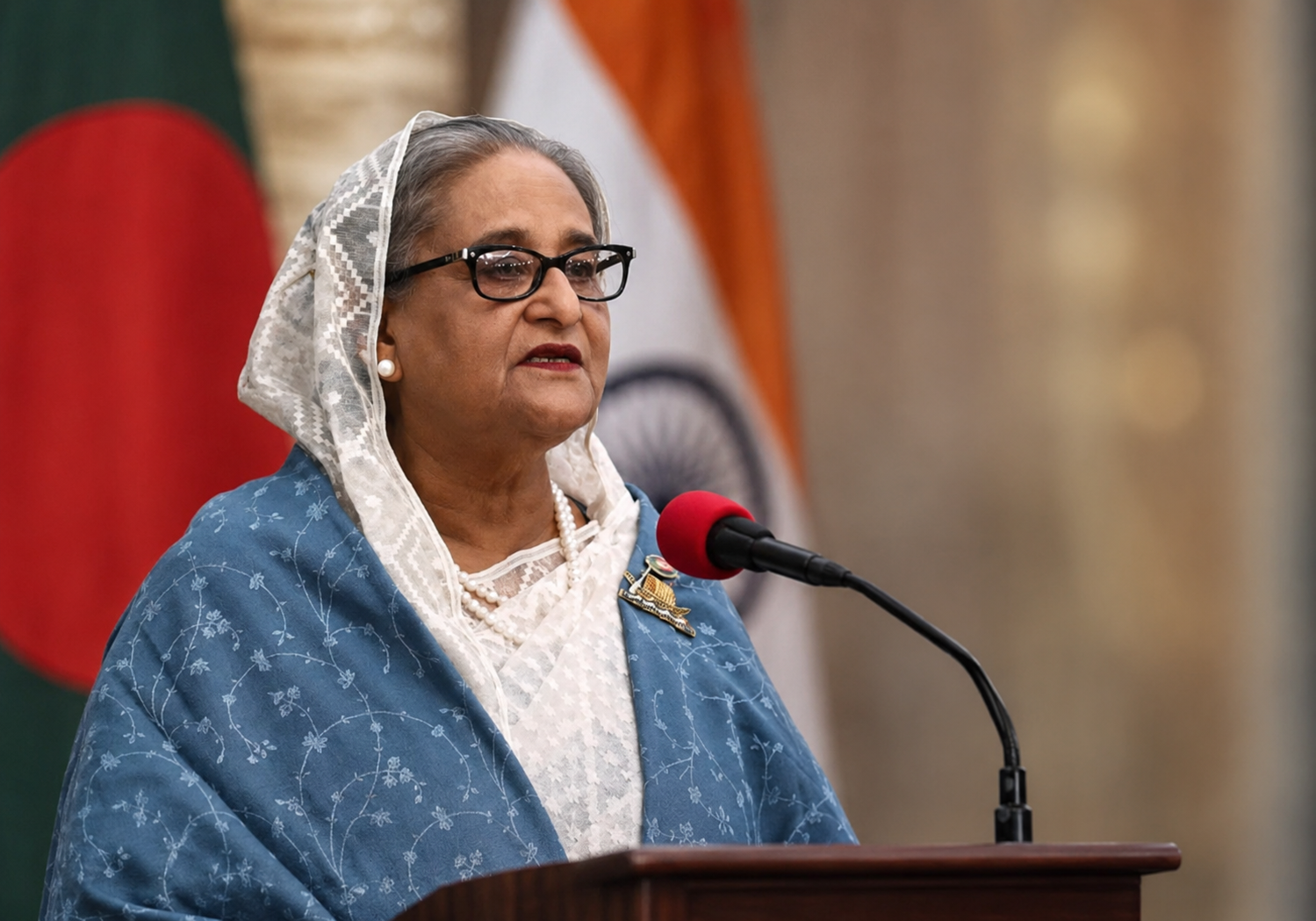
The former Bangladeshi prime minister is scheduled to address an event in New Delhi virtually on Wednesday, August 5, 2026. The programme falls exactly two years after the uprising that removed her from power and forced her to flee Bangladesh.
Bangladesh’s Ministry of Information urged local television stations, newspapers and online platforms not to broadcast, publish or promote Hasina’s remarks.
Officials argued that distributing the address could breach a December 2024 order issued by Bangladesh’s International Crimes Tribunal.
India, however, has distanced itself from the programme. Its Ministry of External Affairs said a private media organisation had arranged the event without government involvement.
Indian officials also said New Delhi did not endorse any views that Hasina might express during the address.

Bangladesh Warns Media Over Sheikh Hasina Speech
Bangladesh’s warning placed media organisations in a difficult position before the former leader’s first major public appearance since her removal.
The Information Ministry asked news outlets to respect the tribunal’s instructions and the “spirit” of the 2024 uprising.
Information Adviser Zahed Ur Rahman said broadcasting Hasina’s speech could violate the tribunal’s December 2024 order restricting the distribution of her statements.
The authorities have previously interpreted that order as covering Hasina’s speeches, interviews, recorded messages and political statements.
However, the tribunal’s chief prosecutor reportedly offered a more limited interpretation of the restriction.
Chief Prosecutor Aminul Islam said the order did not create a blanket ban on everything Hasina said. Instead, he indicated that media outlets could carry her remarks unless they contained hate speech.
That distinction creates uncertainty for editors and broadcasters. They must decide whether covering the address could expose them to legal action or government pressure.
It also raises wider concerns about political expression and media freedom in Bangladesh.
The government views Hasina’s public statements as politically inflammatory. Her supporters, however, accuse the authorities of attempting to silence the former prime minister and prevent the public from hearing her position.
India Denies Supporting New Delhi Event
The event is being hosted by the Foreign Correspondents’ Club of South Asia in New Delhi.
Hasina is expected to participate by video link alongside her son, Sajeeb Wazed Joy, and other speakers. Organisers promoted the programme as her first public appearance since she left Bangladesh in August 2024.
Bangladesh asked India to clarify whether its government supported the event or Hasina’s continued political activities from Indian territory.
India responded by separating itself from the programme.
Indian Ministry of External Affairs spokesperson Randhir Jaiswal said a private media entity had organised the event. He added that the Indian government had no role in it and did not endorse any views expressed there.
New Delhi’s clarification followed warnings from Dhaka that Hasina’s political activities in India could damage efforts to improve bilateral relations.
Although India denies organising the event, Hasina’s presence on Indian soil remains highly sensitive.
She maintained a close relationship with New Delhi during her years in power. Consequently, many of her opponents believe India continues to favour her Awami League over Bangladesh’s new political leadership.
India’s decision to host Hasina after her departure has therefore become a major source of tension between the neighbouring countries.
Hasina Prepares First Appearance Since Ouster
Hasina fled Bangladesh after a student-led uprising ended her government on August 5, 2024.
The demonstrations began over public-sector employment quotas but developed into a broader movement against her administration. The unrest eventually forced Hasina to leave the country and seek refuge in India.
Her planned appearance comes on the second anniversary of that political upheaval.
Bangladesh later prosecuted Hasina over the deadly crackdown on the protest movement. In 2025, a court sentenced her to death after convicting her of crimes against humanity.
Hasina rejected the judgment and described the proceedings against her as politically motivated and legally invalid.
Bangladesh has also sought her extradition from India. However, New Delhi has not returned her.
That unresolved extradition request remains one of the most serious obstacles in relations between the two governments.
Hasina has reportedly indicated that she and other Awami League leaders could return to Bangladesh and appear before the courts. Any return would create a major legal, political and security challenge for the Bangladeshi government.
Meanwhile, the Awami League continues to challenge the legitimacy of the cases against its leader.
The party has also criticised the warning issued to media organisations. It argues that the measure is intended to prevent Hasina from presenting her account of the uprising and the events that followed.
Speech Risks Deepening India-Bangladesh Row
The controversy extends beyond a single online address.
For Bangladesh, the event could provide Hasina with a powerful international platform from which to challenge the government, reject the criminal cases against her and discuss a possible political return.
For India, it presents a difficult diplomatic balancing act.
New Delhi must manage Hasina’s presence without appearing to interfere in Bangladesh’s domestic affairs. At the same time, India has historical, economic and security interests in maintaining stable relations with Dhaka.
Both countries have recently indicated that they want to improve ties. However, allowing Hasina to conduct political activity from India could undermine that effort.
The tone and content of the Sheikh Hasina speech will therefore be closely watched.
Any direct attack on Bangladesh’s government, rejection of the tribunal’s authority or announcement of a return could trigger a stronger response from Dhaka.
The media warning also creates a separate controversy inside Bangladesh.
Authorities say outlets must comply with the tribunal’s order. Yet the chief prosecutor’s statement suggests that journalists may legally report Hasina’s comments when they do not amount to hate speech.
As a result, Bangladeshi media organisations face competing legal and political messages ahead of the address.
India insists the programme is private and does not represent official support for Hasina. Nevertheless, the location, timing and political importance of the event mean that it is unlikely to remain merely a private media gathering.
The address could instead become another defining moment in the dispute over Hasina’s exile and the future of India-Bangladesh relations.