COLOMBO, Sri Lanka — Minister Nalinda Jayatissa says the sponsorship came from tourism-sector levies, while questions remain over the approved expenditure, the budget transfer and how Sri Lanka will measure the event’s promotional benefits.
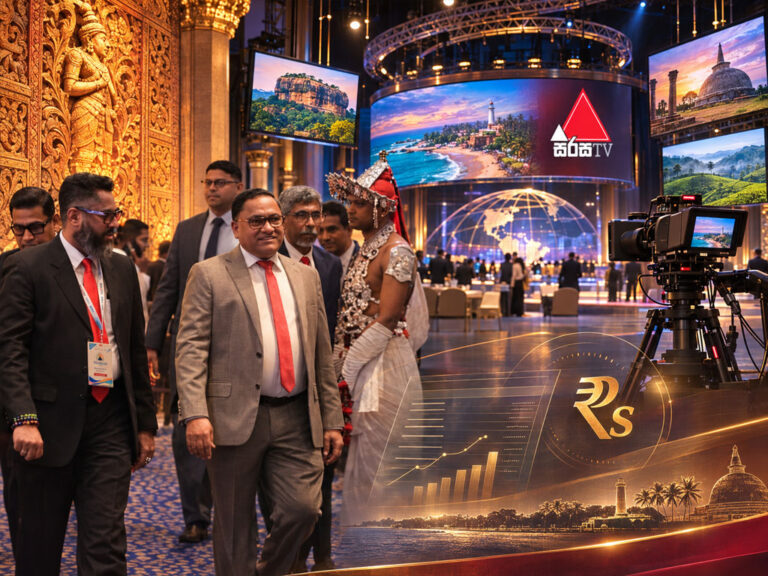
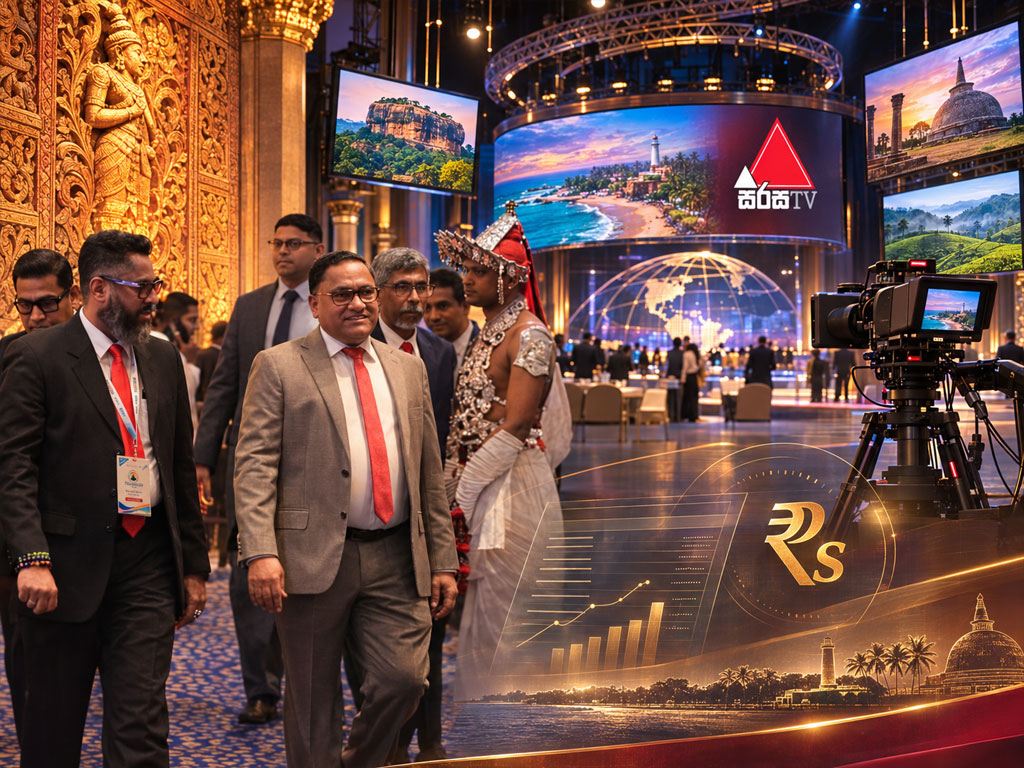
The government has defended a Rs. 104.6 million sponsorship granted through the Sri Lanka Tourism Promotion Bureau (SLTPB) for the Asia-Pacific Broadcasting Union’s (ABU) 63rd General Assembly, hosted in Colombo by MTV Channels (Pvt) Ltd, part of the Maharaja Media Network associated with Sirasa.
The explanation follows public scrutiny of the allocation, which was approved by the Cabinet following a proposal submitted by Foreign Affairs, Foreign Employment and Tourism Minister Vijitha Herath.
The amount involved is Rs. 104,603,876, approximately Rs. 104.6 million, rather than the Rs. 1.04 billion stated in some descriptions of the controversy.
The central question is whether the sponsorship represents a justified international tourism promotion investment and whether the terms, expenditure and expected benefits have been adequately disclosed.

Government Says Funds Came From Tourism Levies
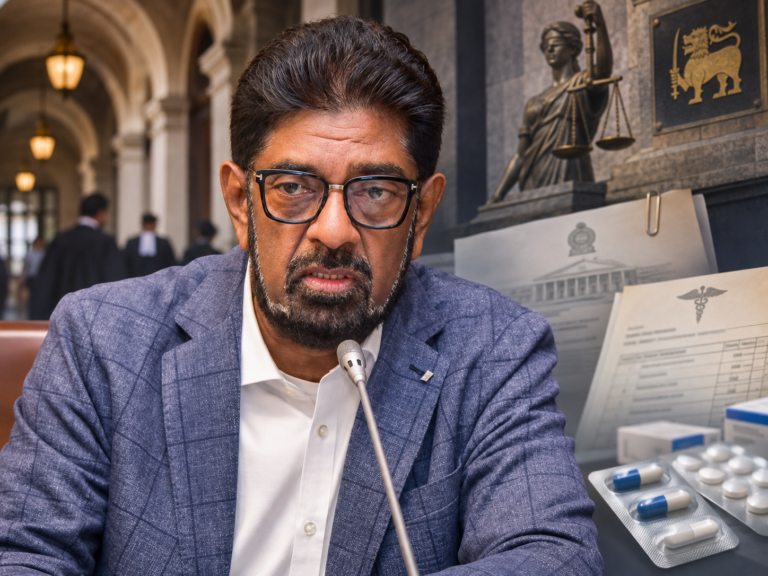
Responding to questions at the Cabinet decisions media briefing on 3 November, Health and Mass Media Minister Nalinda Jayatissa said the sponsorship did not come through a direct Treasury allocation.
Instead, he said, the money was provided by the SLTPB, which receives income from tourism-related charges, including a US$5 levy associated with tourist arrivals and a contribution linked to hotel-sector revenue.
Jayatissa argued that supporting events capable of generating international exposure falls within the bureau’s tourism promotion responsibilities.
He cited previous sponsorships of sporting and promotional activities as examples of expenditure undertaken for similar purposes.
The Minister also explained that the ABU, rather than the Sri Lankan government, selected MTV Channels to host the General Assembly.
That distinction is important. The selection of a broadcaster to host an international industry conference is separate from the government’s subsequent decision to support the event financially.
However, the fact that the sponsorship came from the SLTPB rather than a direct Treasury allocation does not eliminate the need for accountability.
Funds collected under statutory tourism-sector charges remain resources administered by a public institution and should be subject to appropriate financial controls, authorisation and scrutiny.

Rs. 104 Million Tourism Funds to Sirasa: A Violation of State Procurement Rules?
Documents cited in a report on the 63rd Asia-Pacific Broadcasting Union General Assembly indicate that public tourism promotion funds were earmarked for a Rs. 104.6 million sponsorship, prompting questions about budget priorities, procurement procedures and measurable benefits to Sri Lanka.
READ FULL INVESTIGATION →How the Rs. 104.6 Million Was Approved
According to details reported from Cabinet and SLTPB documentation, the proposal originated in a memorandum submitted by Minister Vijitha Herath on 17 September 2026.
Cabinet reference CP 26/1947/807/035 has been identified in reporting concerning the allocation.
The proposal was considered on 28 September, with the funding subsequently approved for activities connected to the ABU General Assembly.
These included conference meetings, associated programmes, a musical event and excursions organised for participants.
The reported payment arrangement divided the total allocation into two instalments:
- 60%, or Rs. 62,762,326, scheduled as an advance.
- 40%, or Rs. 41,841,550, scheduled for a subsequent payment in November 2026.
Together, those amounts equal Rs. 104,603,876.
The original documentation cited in reports contains differing references to the deadline for the final instalment. That date should be confirmed against the authenticated approval and payment records.
The existence of an approved schedule does not, by itself, establish precisely when the money was disbursed or whether all proposed expenditure was incurred.
Why the Tourism Budget Transfer Matters
The funding arrangement has attracted attention because reports indicate that the sponsorship was financed through a transfer within the SLTPB’s 2026 budget.
The original allocation was reportedly associated with an international television advertising programme intended to promote Sri Lanka as a destination.
A budget of Rs. 350 million has been cited for that programme.
The reported transfer of Rs. 104.6 million would therefore represent approximately 29.9% of that allocation.
The money was said to have been reassigned to a local-media expenditure category covering familiarisation activities and media gatherings.
An internal budget transfer is not inherently unlawful. Whether it was permissible depends on the bureau’s financial powers, applicable approvals and the purpose of the expenditure.
The more important policy question is whether sponsoring an international broadcasting conference offered better promotional value than the overseas advertising activities for which the funds had originally been earmarked.
Answering that question requires evidence of the benefits the sponsorship was expected to purchase.
Breakdown of the Reported Expenditure
The translated account underlying the controversy contains a detailed list of proposed expenses.
Those figures have not all been independently verified against the original invoices, contracts and approved budget schedules.
The reported items include:
- Hotel facilities, food and beverages: Rs. 46,542,180 for venue and hospitality expenses associated with Cinnamon Life, City of Dreams.
- Delegate welcome packs: Approximately Rs. 4 million for bags, pens and souvenirs.
- Production, sound and lighting: Rs. 24,658,254, including activities associated with Stein Studios.
- Reception and entertainment: More than Rs. 5 million for a cocktail reception and dinner programme.
- Delegate excursion: Rs. 12,618,000 for activities connected to a Galle and Bentota visit.
- Taxes: Rs. 18,270,890 identified in the supplied account in connection with VAT and the Social Security Contribution Levy.
The excursion estimate reportedly includes expenditure on water sports, meals and a visit to Galle Fort.
Several of these items warrant a closer examination, particularly where payments may involve businesses associated with the host broadcaster or where costs are difficult to reconcile with conventional event sponsorship.
At the same time, the supplied figures should not simply be added together and described as the final cost.
Their aggregate exceeds the reported sponsorship amount, suggesting that some items may overlap, include taxes already counted elsewhere, or relate to a broader event budget.
A complete, authenticated cost schedule is needed before a reliable conclusion can be reached.
Tourism Authorities Project More Than Rs. 250 Million in Promotional Value
Sri Lanka Tourism has presented a commercial justification for the sponsorship.
In a statement issued on 2 November, the tourism authorities said the ABU General Assembly was expected to generate promotional media exposure worth more than Rs. 250 million.
That estimate would place the anticipated promotional value above the Rs. 104.6 million sponsorship.
The event attracted hundreds of broadcasting executives, media representatives and industry participants from across the Asia-Pacific region and beyond.
Sri Lanka Tourism argued that their presence offered opportunities to promote the country as a destination for leisure travel, international conferences, weddings and wellness tourism.
The ABU confirmed that MTV Sri Lanka hosted the gathering at Cinnamon Life in Colombo from 30 October to 3 November 2026.
President Anura Kumara Dissanayake attended the inauguration on 1 November.
Nevertheless, estimated media exposure is not equivalent to realised financial returns.
The value of the sponsorship would be more convincingly established through independently assessed coverage, international audience reach, confirmed promotional placements and measurable tourism outcomes.
Did the Government Select Sirasa?
One allegation surrounding the controversy is that the government deliberately favoured a private media institution over a state broadcaster.
The available evidence does not establish that conclusion.
Minister Jayatissa has said the host broadcaster was selected through the ABU’s own decision-making process.
The ABU’s published announcements independently identify MTV Channels as the host of the 2026 General Assembly.
A separate claim in the supplied account maintains that Sri Lanka’s national broadcaster had previously declined the opportunity because it lacked the necessary resources.
That assertion requires confirmation from the relevant state broadcasting institution and the ABU.
Even if an earlier broadcaster had declined to host the event, such a decision would not automatically establish improper conduct in the later sponsorship arrangement.
However, the government can reasonably be asked to explain why the full level of sponsorship was necessary, what contractual benefits were secured and how the amount compared with other available promotional opportunities.
President’s Finance Ministry Observations
The reported Cabinet documentation also refers to observations issued by the Ministry of Finance, Planning and Economic Development on 28 September 2026.
President Anura Kumara Dissanayake holds the finance portfolio, making the ministry’s role in the approval process relevant to public scrutiny.
The submission and consideration of official financial observations are normal elements of Cabinet decision-making.
They do not, without additional evidence, establish misconduct by the President or any other Minister.
The question for public accountability is whether the appropriate approvals were obtained and whether decision-makers had sufficient information to assess the costs, alternatives and expected public benefits.
What Remains to Be Explained?
The government’s response has clarified the broad source of the sponsorship and the process through which MTV Channels became the host broadcaster.
Several questions nevertheless remain open:
- What were the exact terms of the agreement between the SLTPB and MTV Channels?
- Which expenses were covered by the Rs. 104.6 million sponsorship?
- Were related-party services or facilities assessed against independent market prices?
- What procurement or sponsorship procedures applied to the transaction?
- What was the basis for transferring money from the international advertising allocation?
- How was the estimate of more than Rs. 250 million in promotional value calculated?
- Will the SLTPB publish a post-event report identifying the actual expenditure and measurable results?
These are questions about transparency, value for money and the management of publicly administered resources.
They do not establish that bribery occurred or that any named individual acted for an improper political purpose.
Accountability Requires Both Evidence and Results
Hosting an international broadcasting conference can deliver legitimate benefits for Sri Lanka’s tourism industry.
The gathering provided an opportunity to introduce the country to senior media professionals with the capacity to influence international audiences.
But the existence of potential benefits does not remove the obligation to demonstrate that the sponsorship was properly approved and reasonably priced.
Equally, political criticism of the expenditure cannot substitute for proof of unlawful conduct.
The most useful next step would be for the SLTPB to publish the relevant approval documents, the sponsorship agreement, an independently reconcilable expenditure statement and a post-event assessment of the promotional value delivered.
Those records would allow the public to judge the Rs. 104.6 million decision on evidence rather than competing political claims.