IMF approves US$ 695 million for Sri Lanka despite two missed conditions, warning growth may slow to 3% in 2026.
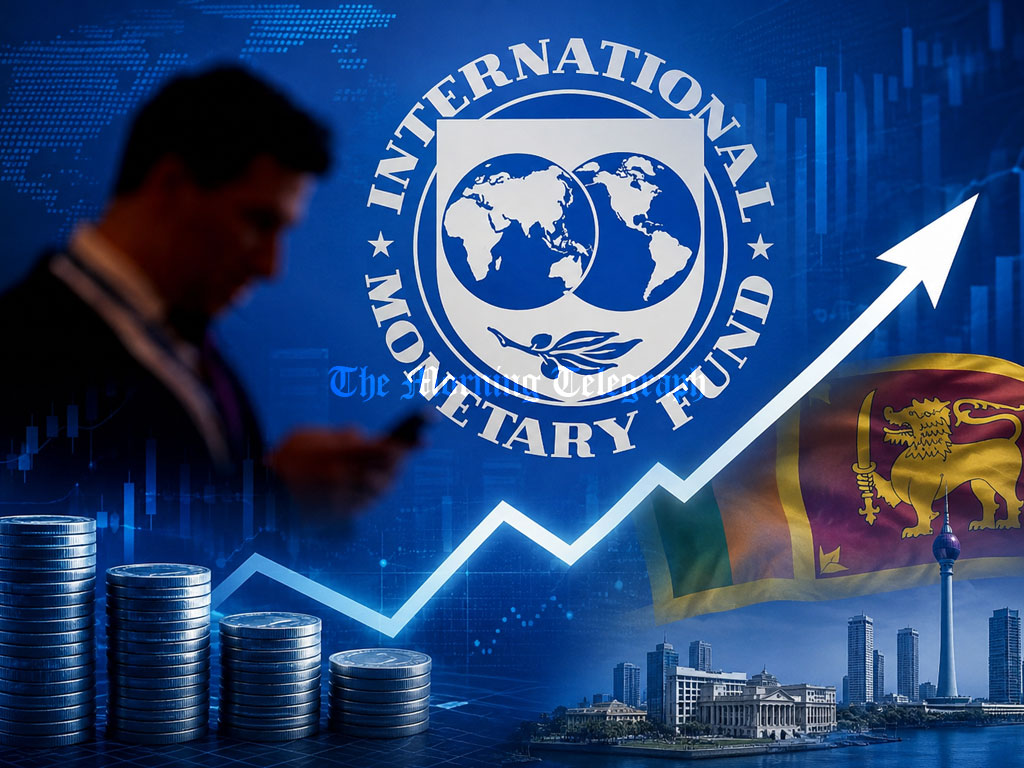
IMF approval for Sri Lanka has been granted for a US$ 695 million tranche despite the country failing to meet two relevant programme conditions.
The decision was taken by the International Monetary Fund’s Executive Board after the successful completion of the combined fifth and sixth reviews under Sri Lanka’s 48-month Extended Fund Facility.
However, the IMF noted that Sri Lanka had failed to meet the continuous performance criteria on avoiding new external payment arrears.
It also noted that the country had not fully met the condition relating to not imposing or intensifying import restrictions.

Background to the Facility
The IMF Executive Board approved a US$ 3 billion Extended Fund Facility for Sri Lanka on March 20, 2023.
With this latest tranche, the total financial assistance provided by the IMF to Sri Lanka so far has risen to US$ 2.4 billion.
Sri Lanka has generally shown strong performance under the EFF programme.
The country has also completed prior actions, including adjusting electricity prices to cover fuel and other costs.
The IMF statement noted that Sri Lanka met all quantitative performance criteria scheduled for the end of December 2025.
It also said most structural benchmarks had been implemented on time or with minor delays.
Despite adverse economic conditions caused by the ongoing Middle East war and the impact of Cyclone Ditwa, the Fund expects Sri Lanka’s economic resilience to continue.
The IMF said the achievements made through difficult reforms have given the government space to support the economy and act quickly to protect vulnerable communities.
IMF Deputy Managing Director’s Comments
Commenting on the decision, IMF Deputy Managing Director and Acting Chair Kenji Okamura said rising crude oil prices in the global market could increase inflation.
He also warned that higher oil prices could negatively affect the external current account.
In addition, he said a decline in tourism earnings would further damage the external current account.
Although programme progress has generally been good, Okamura said stronger efforts are still needed to complete public financial management, investment management, and electricity sector reforms.
He also pointed out that continued government revenue mobilization remains essential.
He said the tax system must be made more efficient to support economic growth.
Okamura further noted that although Sri Lanka’s debt restructuring process is nearing completion, debt sustainability risks remain high.
Despite several challenges, Sri Lanka has succeeded in keeping the EFF programme on a strong track.
The benefits received through the programme have helped preserve economic resilience and manage the effects of Cyclone Ditwa and the Middle East war.
However, the ongoing conflict in the Middle East has created serious risks for Sri Lanka’s future economic path.
Because of these risks, Sri Lanka’s economic growth is forecast to slow to 3% in 2026.
The severity of the conflict and uncertainty over how long it will continue have further weakened the country’s economic outlook.
Policy Recommendations
Okamura said loosening fiscal policy would be appropriate in 2026 in response to economic shocks.
However, he emphasized that monetary policy should continue to focus on preserving price stability.
He also said improving exchange rate flexibility and gradually dismantling balance of payments measures would be crucial.
These steps, he noted, are necessary to rebuild external sector resilience and safeguards.
Okamura further highlighted the importance of well-designed structural reforms.
He also stressed the need for a modernized public infrastructure system to improve the investment climate and raise Sri Lanka’s long-term economic growth potential.