By Roy Denish.
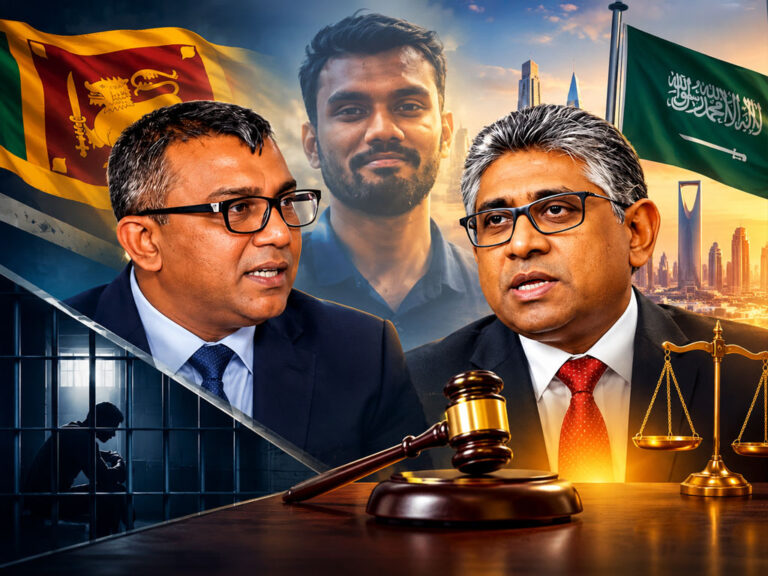
The Lasantha murder complaint filed against Attorney General Parinda Ranasinghe has placed Sri Lanka’s top legal officer under fresh scrutiny over the long-delayed investigation into the 2009 assassination of journalist Lasantha Wickrematunge.
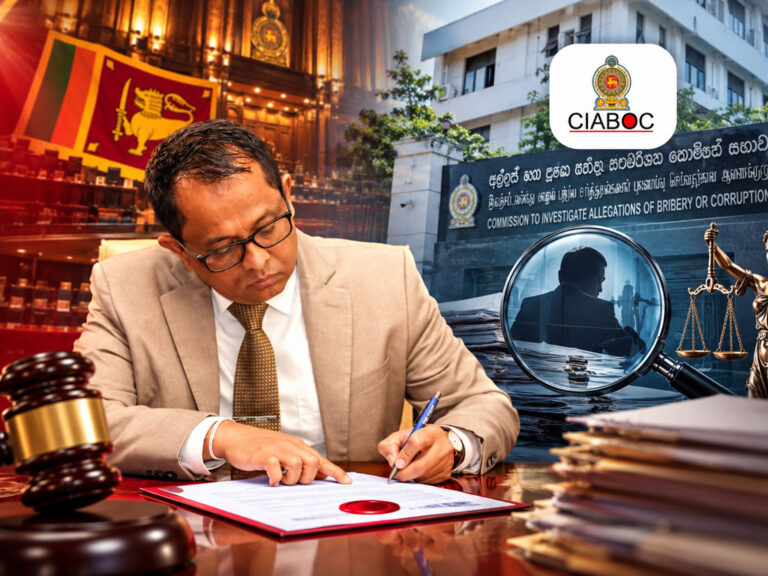
A formal corruption complaint has been lodged with the Commission to Investigate Allegations of Bribery or Corruption, known as CIABOC, against the incumbent Attorney General. Nagananda Kodituwakku, General Secretary of the Vinivida Foundation, submitted the complaint on July 6, 2026.
The filing accuses Ranasinghe of abusing his office in connection with the unresolved murder of Wickrematunge, the founding editor of The Sunday Leader and one of Sri Lanka’s most prominent investigative journalists.

Lasantha Murder Complaint Targets AG Directive
At the centre of the Lasantha murder complaint is an alleged directive issued by Attorney General Ranasinghe on January 27, 2025.
According to the complaint, Ranasinghe ordered the Sri Lanka Police Criminal Investigation Department to release three suspects who were then in custody over Wickrematunge’s killing.
The filing claims the directive sought to provide an unlawful benefit to those suspects. It also alleges that the move indirectly benefited the principal suspect in the case, former President Gotabaya Rajapaksa.
However, after strong public criticism, Ranasinghe reversed the order on February 12, 2025. He then instructed police to keep the individuals in custody.
The 2009 Assassination That Still Haunts Sri Lanka
The case goes back to the morning of January 8, 2009. Wickrematunge was driving to his office in Colombo when attackers intercepted his vehicle on Attidiya Road in Ratmalana.
The busy road was located near a primary school and close to a local military base. The attackers arrived on four motorcycles. Eight helmeted men dressed in black fatigues forced Wickrematunge’s vehicle off the road.
They then shattered the car glass and attacked him in broad daylight.
Early reports, along with an initial and disputed medical review, suggested that Wickrematunge had been shot. However, a later exhumation and second autopsy found a different cause of death.
That autopsy concluded that he died from severe head injuries caused by heavy blows from a sharp, pointed blunt object.
Wickrematunge was taken to the Colombo South Teaching Hospital in Kalubowila. He died from his injuries a few hours later.
A Journalist Who Challenged Power
The assassination took place during a period of intense tension between Wickrematunge and senior government figures.
Through The Sunday Leader, he exposed alleged high-level corruption and abuse of power. His reporting included the controversial MiG aircraft procurement scandal, which directly implicated then-Defense Secretary Gotabaya Rajapaksa.
Because of his work, Wickrematunge faced repeated intimidation, threats, and physical attacks over several years.
Before his death, he wrote a powerful editorial titled “And Then They Came For Me.” His editorial team published it after his assassination.
In that essay, Wickrematunge predicted that the state would be responsible for his killing. He also warned that future government inquiries would become a cover-up rather than a genuine search for justice.
Later CID investigations linked the logistics of the surveillance and attack to a military intelligence unit known as the Tripoli Platoon. However, legal accountability for the mastermind of the killing remains unresolved.
RTI Battle Adds Pressure On Attorney General
In February 2025, the Vinivida Foundation requested certified copies of the January 27 directive in the public interest. Ranasinghe refused the request, citing “privileged communication.”
The foundation then took the matter to the Right to Information Commission of Sri Lanka.
After an inquiry, the RTI Commission issued a definitive order on February 25, 2026. It directed the Attorney General to release the requested documents so the foundation could assess possible proceedings under the Anti-Corruption Act No. 9 of 2023.
The complaint alleges that Ranasinghe did not comply with that lawful order.
Instead, he challenged the ruling by filing a petition in the Court of Appeal on March 24, 2026. The complaint also alleges that he supported the application on an ex parte basis, without notifying the complainant, until formal notice was served in June 2026.
The Vinivida Foundation argues that the Attorney General’s actions amount to “corruption” under Section 111 of Sri Lanka’s Anti-Corruption Act No. 9 of 2023.
The complaint asks CIABOC to open an independent and impartial investigation into the alleged abuse of office.
As a result, the case now places CIABOC under intense public attention. The institution has long faced criticism over executive interference and perceived bias. Its response to the Lasantha murder complaint may now test whether it can investigate the country’s top legal authority without fear or favour.
Credit: This article is a rewrite of original reporting by Colombowire.com.