By Roshan Jayasinghe
When Power Becomes Separated from Conscience
Every now and then, I come across a word that does more than add something new to my vocabulary. It gives a name to something I have been observing, feeling and trying to understand for years. Kakistocracy is one of those words.
Its dictionary meaning is brutally simple: government by the worst people. The word comes from the Greek kakistos, meaning the worst, combined with the familiar idea of government or rule. Yet that definition immediately raises a more difficult question. Who exactly are the worst?
They are not necessarily the least educated, the least intelligent or those whose politics differ from mine. Some may be highly educated, clever, charismatic and exceptionally skilled at acquiring power. What makes them the worst is something deeper. It is their moral unfitness to hold the trust of other human beings. They may be dishonest without shame, corrupt without remorse, cruel without compassion and so consumed by personal ambition that the country they govern becomes little more than an instrument for protecting themselves, their families, their wealth or their place in history.

A kakistocracy is therefore more than an incompetent government. Incompetence can exist without corrupt intention, and honest people can make serious mistakes. Kakistocracy begins when the qualities that should disqualify a person from power become the very qualities that help that person acquire it. Shamelessness is mistaken for courage. Cruelty is presented as strength. Deception becomes political skill. Revenge is renamed justice. Personal loyalty is valued above competence, and anyone who speaks an uncomfortable truth is treated as an enemy.
I once assumed that this form of government belonged mainly to poorer countries with weak institutions, fragile economies and long histories of political corruption. But the more I have observed the world, the more I have understood that kakistocracy has no respect for national wealth, military power, education, religion or constitutional history. It can emerge in one of the smallest and most economically vulnerable nations, and it can take hold within the most powerful country on Earth.
It simply dresses differently.
In one country it may appear as a family dynasty. In another it may arrive through a military uniform, a religious movement, a nationalist flag or a wealthy man promising to run government like his personal business. In some places elections are removed altogether. In others, elections remain, but the institutions surrounding them are gradually weakened, intimidated or filled with people whose first qualification is loyalty to one leader.
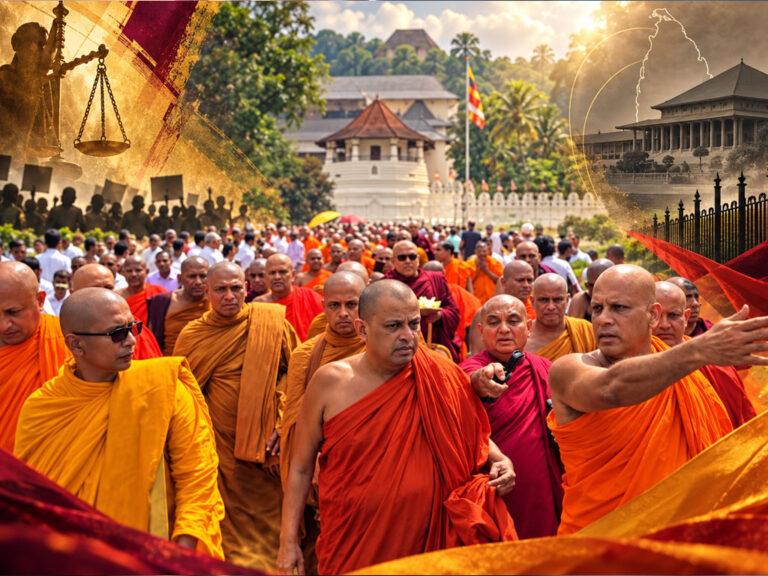
Being born in Sri Lanka, I had lived close to the consequences of kakistocracy long before I learned the word. Under the Rajapaksa regime, public power became deeply entangled with family power. Loyalty frequently appeared more valuable than ability, nationalism became a shield against accountability, and the trust placed in government was treated almost as a family inheritance.
The consequences were not experienced by ordinary Sri Lankans as an abstract political argument. They were felt while waiting for fuel, searching for cooking gas and medicine, living through power cuts and watching the value of their earnings disappear. Families who had played no role in creating the crisis were required to carry its heaviest burden.
In 2023, Sri Lanka’s Supreme Court gave legal weight to what the public had already experienced. It held that the actions, omissions and decisions of Mahinda Rajapaksa, Gotabaya Rajapaksa, Basil Rajapaksa and several senior officials had contributed to the economic crisis, violated the public trust placed in them and breached the fundamental right to equal protection of the law.
That judgment matters because it reminds us that public office is not personal property. Power is held in trust. When leaders use it without responsibility, the damage does not remain inside government buildings. It reaches the kitchen table, the hospital, the school, the workplace and eventually the dignity of an entire population.
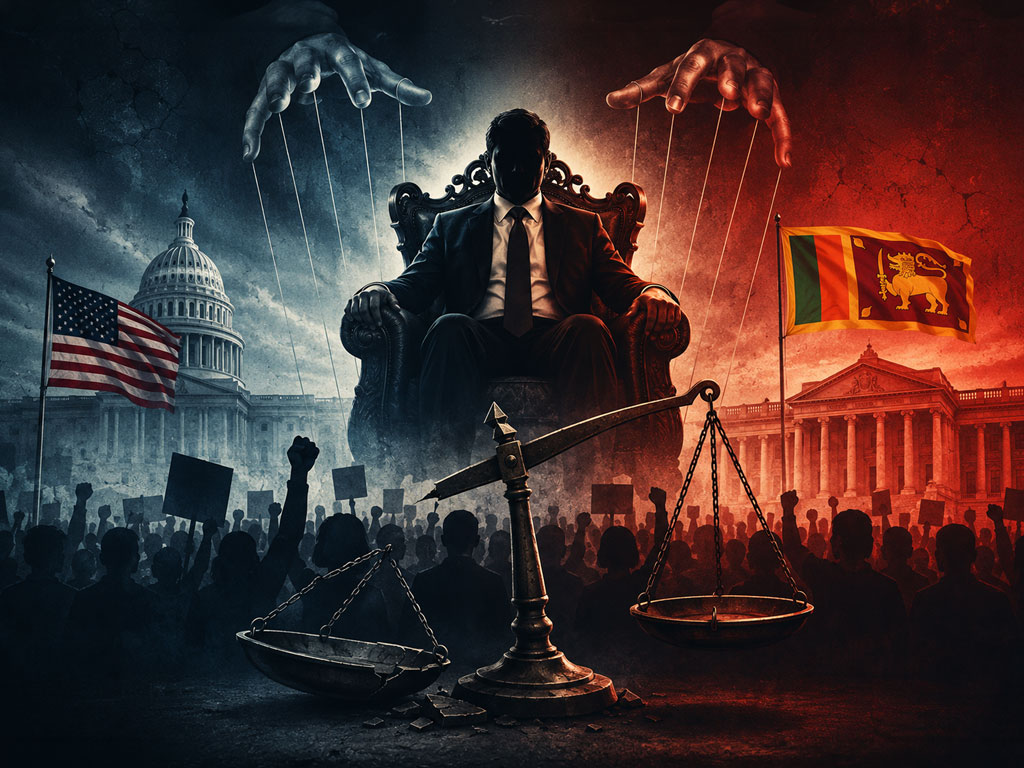
Years later, living in America, I began recognizing elements of the same human pattern in a very different setting. America under Donald Trump is not Sri Lanka under the Rajapaksas, and the two countries and their histories should not be carelessly equated. Yet the emotional architecture of kakistocracy can be recognizable even when the surroundings are different.
I see it when personal loyalty is placed above institutional duty, when repeated dishonesty is accepted as political strategy, when qualified people are rejected because they will not surrender their judgment, when critics are described as enemies and when humiliation becomes a form of public entertainment. I see it when compassion is mocked as weakness and when the suffering of immigrants, minorities, the poor or political opponents becomes acceptable because they have first been separated from our idea of who deserves humanity.
This concern is no longer only a personal impression. The Varieties of Democracy Institute’s 2026 Democracy Report described Trump’s second term as a rapid concentration of presidential power and reported a severe decline in legislative restraints, civil rights, equality before the law and freedom of expression. That is one research institution’s assessment, but it gives measurable form to a danger many people have been sensing.
To acknowledge this does not require us to condemn every person who voted for Trump or supported the Rajapaksas. Many people turn toward such leaders because they feel economically abandoned, culturally displaced, frightened, unheard or betrayed by the political establishment. Kakistocracy is dangerous precisely because it enters through genuine human pain. It identifies a wound, gives the public someone to blame and then offers one powerful personality as the only possible cure.
People rarely vote consciously for corruption or cruelty. They vote for protection, belonging, order, national pride or the hope of restoring something they believe has been taken from them. But when fear becomes stronger than judgment, people can begin excusing in their chosen leader the same behavior they would condemn in anyone else. The first lie is overlooked because the leader is fighting the other side. The first abuse of power is justified because the cause is considered important. The first act of cruelty is applauded because its victims have been portrayed as undeserving. Gradually, conscience gives way to tribe.
This is how kakistocracy becomes more than the failure of one leader. It becomes a failure within the society that continues to reward him.
It needs political allies who remain silent, officials willing to abandon their professional duty, wealthy interests prepared to finance it, religious leaders willing to give it moral cover and media personalities who learn that anger is more profitable than truth. Most of all, it needs ordinary people to become so emotionally attached to one side that character no longer matters as long as their side continues to win.
This pattern belongs to no single ideology. Kakistocracy can speak the language of capitalism or socialism, nationalism or revolution, religion or secular progress. The flag changes, but the appetite remains the same. It concentrates power, weakens accountability, discredits independent knowledge and teaches the population to distrust anyone who can expose its failures.
The greatest danger is not merely that bad people enter government. Bad people have always desired power. The greater danger arrives when a society begins changing its definition of goodness in order to keep supporting them. When dishonesty becomes cleverness, corruption becomes business, cruelty becomes toughness and the absence of compassion becomes leadership, kakistocracy is already at work.
Learning this word did not make me feel more intellectually informed. It made me uncomfortable, because it asks something of all of us. It asks not only who is governing, but what we have become willing to accept from those who govern us.
From Sri Lanka, the country of my birth, to America, the country in which I now live, I see the same warning expressed through different histories and different forms of power. A nation begins losing its humanity before it finally loses its democracy. Its constitution may still exist, its flag may still fly and elections may still be held, but the moral foundation underneath them can already be disappearing.
The answer to kakistocracy is not simply replacing one political party with another. It is rebuilding a culture that values character above charisma, truth above tribe, competence above loyalty and compassion above conquest. We must once again expect leaders to accept limits, admit mistakes, appoint people more capable than themselves and recognize the humanity even of those who cannot offer them money, praise or votes.
Power must become stewardship again.
Otherwise, kakistocracy will remain waiting behind the next flag, the next grievance and the next promise of greatness, ready to return whenever we become willing to surrender our conscience in exchange for the comforting illusion of strength.
Author’s Note
I write this not as a political scholar, but as a Sri Lankan by birth and as someone who now lives in America. I have observed how power without conscience can take hold in very different countries and political systems. The Rajapaksa regime and Donald Trump are not identical, nor are Sri Lanka and America. What concerns me is the human pattern that can be recognized in both: the elevation of loyalty above competence, personality above institutions and power above responsibility.
My purpose is not to tell readers which political party they should support. It is to ask whether we are still willing to judge leadership by character, truth, compassion and respect for the public trust. We cannot condemn dishonesty, corruption or cruelty in one leader while excusing the same qualities in another simply because that person represents our side.
If kakistocracy means government by the worst among us, its prevention must begin with our refusal to reward the worst qualities in those who seek to lead us.
About the Author
Roshan Jayasinghe is a writer and observer of human systems. His work explores the gap between man made constructs and lived humanity, with a focus on how economics, trade and everyday choices intersect with questions of fairness, responsibility and inner alignment. Through essays for publications in The Morning Telegraph, he aims to remind readers that they are not passengers in a fixed machine, but active custodians of a shared world.