By Dwayne Ferreira.
The US Open has partnered with Oura months after Carlos Alcaraz and Aryna Sabalenka were told to remove wearable trackers at the Australian Open.
The US Open Oura partnership marks a striking shift for Grand Slam tennis, coming only months after Carlos Alcaraz, Aryna Sabalenka and Jannik Sinner were told to remove wearable fitness trackers during matches at the Australian Open.
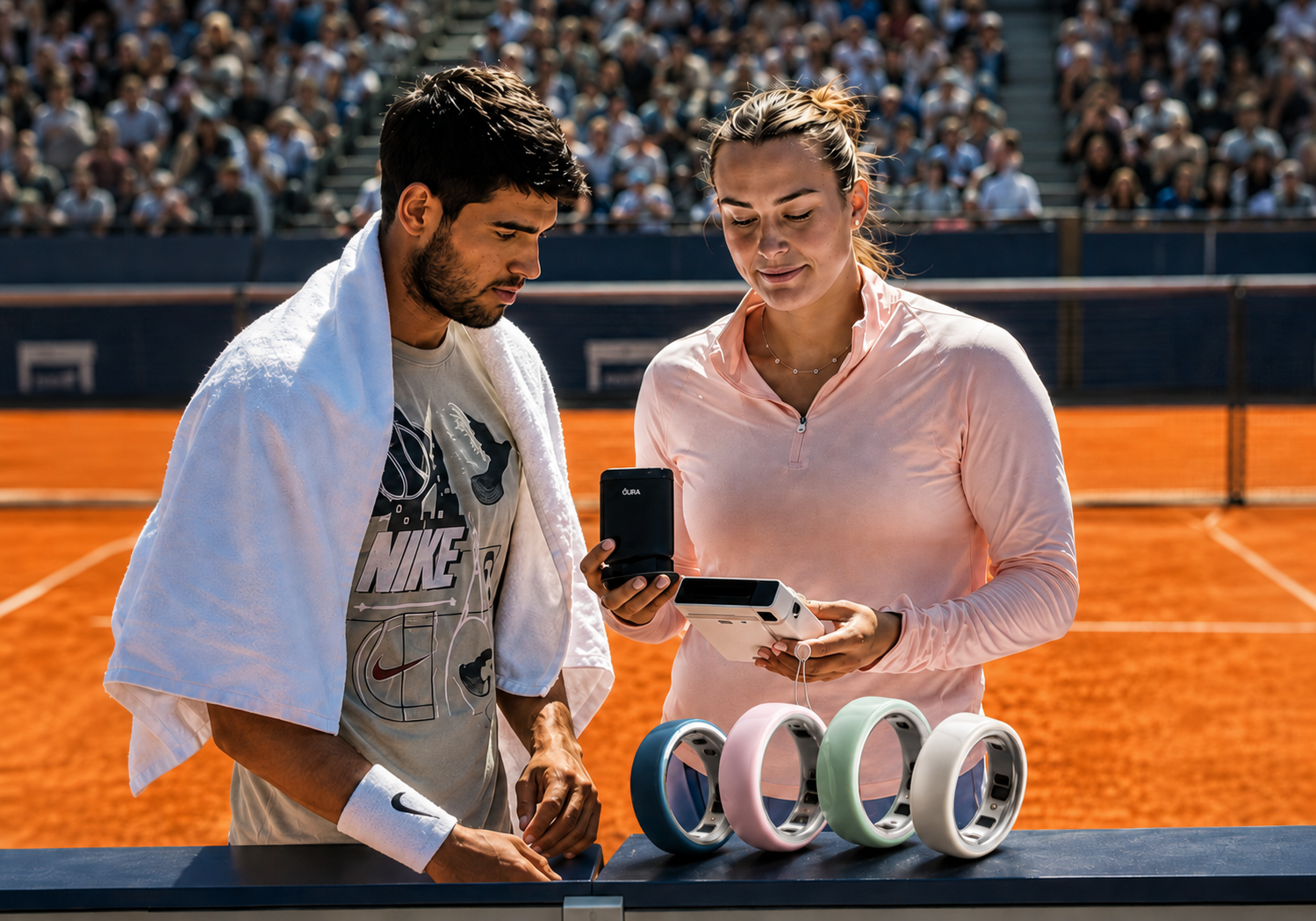
Under a new five-year agreement, Oura has become the USTA’s first official wearable partner, with Oura Rings to be offered to every player competing in the US Open main draw at Flushing Meadows.

The deal gives Oura a major platform inside professional tennis and comes as the Finnish smart-ring company reportedly prepares for a closely watched IPO that could value it at around $16 billion.
The timing is particularly significant because wearable technology became a major talking point at the Australian Open earlier this year.
Alcaraz, Sabalenka and Sinner were all instructed to remove WHOOP devices during matches, despite such technology being approved for use on parts of the ATP and WTA Tours.
The issue exposed an unusual divide in tennis. While wearable devices capable of tracking heart rate, physical load and recovery data had become increasingly accepted on the regular professional tours, the Grand Slams continued to operate under separate rules.
WHOOP publicly criticised the Australian Open decision, arguing that players should be entitled to collect their own physiological data.
Now, only months later, the US Open is moving in a very different direction.
Oura Rings will be made available to players, with on-site fittings and education focused on sleep, recovery and readiness. The partnership will also extend beyond the tournament into USTA programmes and future performance initiatives.
From 2027, Oura is also set to become a founding partner of the US Open’s Player Performance Center.
However, one important distinction remains.
The USTA announcement confirms that players will receive and use Oura technology around the tournament, but it does not clearly state that competitors will be permitted to wear the rings during live US Open matches.
That means the partnership should not yet be described as the first Grand Slam approval of smart rings for in-match use.
Nevertheless, the contrast is difficult to ignore.
In January, some of the biggest names in tennis were being told to remove biometric trackers.
By August, one of the sport’s four Grand Slams had signed a five-year agreement with a wearable technology company.
For Oura, the deal provides global exposure at exactly the moment the company is trying to prove that its ring is more than a fashionable fitness accessory.
For tennis, it may signal that the wearable debate is moving rapidly from resistance toward acceptance.