Colombo Stock Exchange settlement of Rs. 188.1 million raises questions over market transparency, investor protection and the undisclosed party involved.
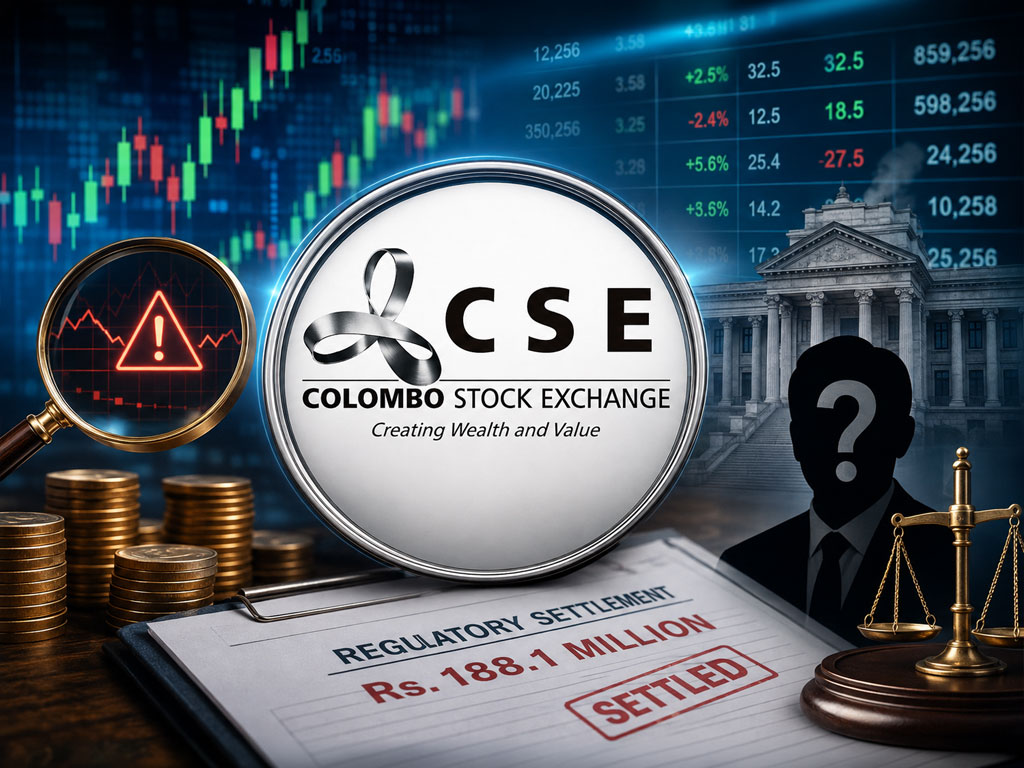
A Colombo Stock Exchange settlement worth Rs. 188.1 million has triggered fresh debate over transparency, accountability and investor protection in Sri Lanka’s capital market.
The payment is described in regulatory documents as the largest financial settlement recorded in the history of the Colombo Stock Exchange.
However, the identity of the investor or party responsible for making the payment has not been publicly disclosed.
According to the documents, the Securities and Exchange Commission reached the settlement in relation to an alleged financial irregularity involving trading on the Colombo Stock Exchange.
The size of the payment has therefore raised questions among investors over whether major market offences should be resolved financially without publicly identifying the parties involved.

Colombo Stock Exchange Settlement Linked to False Trading Claims
The central allegation concerns “False Trading” and the artificial manipulation of share prices.
Such activity can create a misleading impression that demand for a particular company’s shares is stronger than it actually is.
Artificial transactions may therefore cause other investors to believe a share has greater market value or buying interest than genuine trading conditions support.
Ordinary retail investors can then purchase those shares at inflated prices.
If the artificial activity stops suddenly, the share price can fall sharply, leaving unsuspecting investors to absorb the losses.
The conduct described in the documents falls under Section 128(1) of the Securities and Exchange Commission Act No. 19 of 2021.
The concern is therefore not simply about a technical market violation.
False trading can undermine confidence in price discovery and expose smaller investors to losses caused by activity they cannot easily detect.
Monetary Settlement Instead of Criminal Proceedings
The most controversial aspect of the case is how the alleged offence was resolved.
Instead of proceeding through a criminal trial, the matter was concluded through a financial settlement.
Section 152 of the Securities and Exchange Commission Act provides a legal mechanism for compounding certain offences through an agreed payment.
From a regulatory perspective, such settlements can resolve cases without lengthy court proceedings and allow authorities to recover substantial sums more quickly.
However, critics and market observers have raised concerns about accountability.
They question whether justice is fully served when a large settlement is accepted but the identity of the party involved remains undisclosed.
The concern is that wealthy market participants could potentially resolve serious regulatory breaches through payment, while ordinary citizens may face more visible legal consequences.
Those concerns do not establish that the settlement was unlawful. However, they highlight the importance of transparency in maintaining public confidence in market regulation.
Foreign Accounts Referred to CID
The regulatory documents also refer to a separate matter involving funds allegedly diverted to foreign bank accounts.
According to the information cited, individuals were allegedly misled through a closed-shell trading application before money was transferred overseas.
Authorities have referred that matter to the Police Criminal Investigation Department for further investigation.
However, no direct connection has yet been established between that CID investigation and the Rs. 188.1 million stock market settlement.
That distinction remains important.
The Colombo Stock Exchange settlement may represent a major regulatory recovery, but the continuing secrecy over the identity of the person or entity involved has left investors asking whether financial penalties alone provide sufficient accountability.
With more than Rs. 18 crore paid to conclude the matter, the unresolved question is no longer only how much was recovered, but why the market still does not know who paid it.