S. Thomas’ College Mount Lavinia partners with SportUnleash to provide annual Sports Talent Identification Reports aimed at identifying students’ sporting potential.
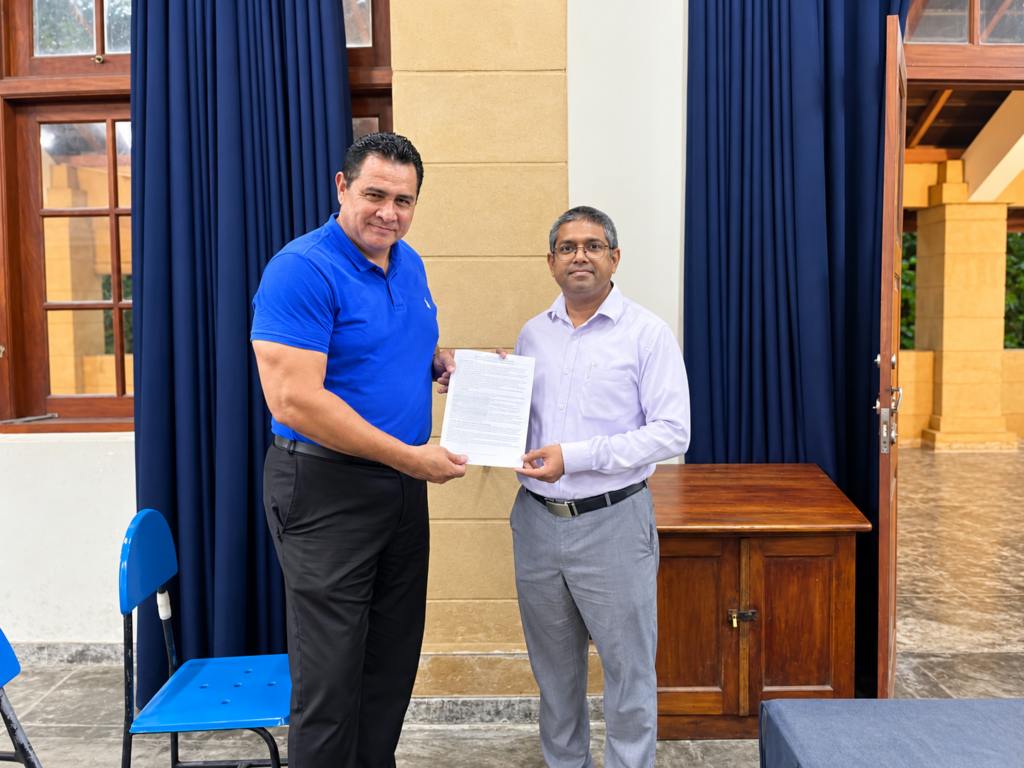
COLOMBO – S. Thomas’ College, Mount Lavinia has signed a Memorandum of Understanding with SportUnleash to introduce annual sports talent identification assessments for Grade 5 students, creating a structured system to help identify sporting potential at an early stage.
Under the partnership, each new group of Grade 5 students will undergo assessments designed to identify the sports, positions or events that may best correspond with their physical attributes.
SportUnleash will provide individual reports intended to help coaches, parents and students make more informed decisions about sporting development, including consideration of disciplines a student may not previously have explored.
The initiative adds a data-led element to the College’s existing sporting structure and is intended to complement, rather than replace, the observations and expertise of coaches and physical education staff.
Assessing Physical and Sporting Attributes
According to SportUnleash Founder and Chairman Talavou Alailima, a former Sri Lanka national shot put and discus record holder, the system uses a combination of physical measurements and performance indicators to assess a student’s sporting attributes.
Measurements such as height and weight are considered alongside indicators including speed, strength, endurance, jumping ability and throwing performance.
Using those results, students may be matched with several sports and, in some cases, particular positions or events that appear suited to their physical characteristics.

The resulting report is intended to serve as an advisory tool, giving students, parents and coaches additional information when considering sporting pathways.
Importantly, the assessment is not designed to restrict a student to a single sport. Instead, it can highlight several disciplines in which the student may possess favourable physical characteristics, including sports he may never previously have considered.
Grade 5 Assessments to Take Place Annually
A central feature of the agreement is its annual structure.
Rather than repeatedly assessing the same group of students, SportUnleash will evaluate each new intake of Grade 5 students, allowing the College to introduce talent identification at a relatively early stage of a student’s school career.
That approach could help uncover physical attributes before potential sporting ability is overlooked or before students become committed exclusively to disciplines selected through personal preference, family influence or existing school participation.
Early identification may also give coaches more time to expose students to suitable sports and monitor their development over subsequent years.
For students, the process could broaden the range of sporting opportunities available to them by identifying potential outside the sports they already know or play.
A Connection Dating Back to 2014
SportUnleash was introduced in Sri Lanka in 2014 by Alailima, who previously competed nationally in the shot put and discus.
S. Thomas’ College has had a connection with the initiative since its introduction, with the College’s then Warden attending its launch.
The latest MOU places that earlier association on a more formal and long-term footing by incorporating the assessment programme into the College’s annual Grade 5 intake.
The partnership also reflects a wider shift in sport towards combining traditional coaching judgement with measurable physical and performance data when identifying young talent.
Supporting a Strong School Sporting Tradition
S. Thomas’ College has a longstanding sporting tradition across cricket, rugby, athletics, swimming and several other competitive disciplines.
Within that environment, the SportUnleash programme could provide another mechanism for identifying students whose natural physical qualities may be suited to particular sports, positions or events.
A student who has never considered athletics, for example, may demonstrate speed, explosive power or throwing ability that suggests potential in a particular event. Another may display endurance or physical characteristics that point towards a different sporting pathway.
Such assessments do not guarantee future sporting success. Coaching, training, opportunity, technical development, motivation and long-term commitment remain central to an athlete’s progress.
Their value instead lies in providing an additional source of information at a stage when students are still developing and exploring their sporting abilities.
By assessing each new Grade 5 intake annually, S. Thomas’ College and SportUnleash aim to create a continuing process through which sporting potential can be identified earlier and students can be given opportunities to explore disciplines that may best suit their physical attributes.
For a school with a deep competitive sporting tradition, the partnership represents an effort to ensure that potential talent is not simply noticed by chance, but identified through a more systematic process.