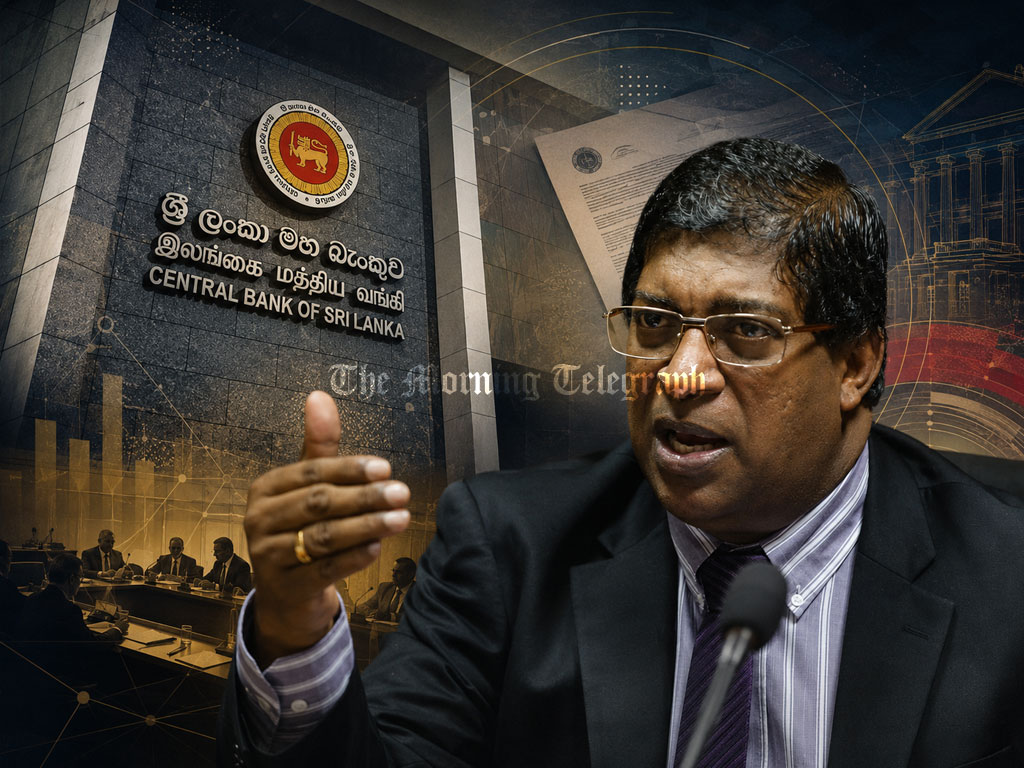
Central Bank Act review proposal by 40 opposition MPs seeks stronger parliamentary oversight, transparency, and institutional reform.
The Central Bank Act is facing a major opposition challenge after 40 parliamentarians proposed stronger parliamentary oversight and institutional restructuring.
Forty opposition Members of Parliament have presented a proposal calling for the appointment of a special Parliamentary Select Committee to review the functioning of the Sri Lanka Central Bank Act, No. 16 of 2023.
The proposal seeks to strengthen parliamentary supervision over the Central Bank while also examining possible reforms to its institutional structure.
According to the parliamentarians, the main objective is to ensure greater transparency, democratic accountability, and alignment with national economic goals, while preserving the professional independence of the Central Bank.

Why A Review Is Being Sought
The proposal states that although the Central Bank must remain an independent institution, the current legal framework has allowed it to become detached from wider national economic objectives.
It also argues that parliamentary oversight has been weakened under the existing structure.
The opposition MPs point to several issues that they say justify a review.
These include supervisory weaknesses allegedly revealed through reported frauds such as the NDB Bank fraud, international payment errors such as the US$ 2.5 million misdirection in 2025, instability in exchange rates, and failure to achieve accountability to Parliament and financial objectives.
The proposal argues that these issues show the need for a stronger system of oversight, without turning the Central Bank into a politically controlled institution.
Proposed Institutional Restructuring
The proposal further states that the Select Committee should examine the feasibility of dividing the Central Bank into four separate institutions to make its structure more efficient.
The suggested institutions are the Sri Lanka Monetary Authority, the Prudential Regulation Authority, the Financial Conduct Authority, and the National Investment and Supply Growth Council.
According to the proposal, each of these institutions should submit reports to Parliament on a quarterly basis.
The opposition MPs argue that this would allow Parliament to monitor performance more closely while giving each institution a clearer mandate and measurable responsibilities.
Policy Direction And Future Reform
The proposal also includes governance-related changes aimed at balancing Central Bank independence with public accountability.
It suggests including representatives of the Minister of Finance on the Board of Governors.
It also proposes appointing two Deputy Governors from outside the institution.
The parliamentarians have also emphasized the need for a monetary policy framework that does not focus only on controlling inflation.
They argue that Sri Lanka also needs a monetary policy approach that targets job creation and long-term economic growth.
The proposal further states that reforms agreed with the International Monetary Fund must be adapted to fit Sri Lanka’s constitutional and practical realities.
This task, according to the MPs, should also fall within the responsibility of the proposed Select Committee.
“Independence without accountability is dangerous. Accountability without professionalism is political. Professionalism without measurable performance is inefficient. Sri Lanka needs all three,” the parliamentarians who submitted the proposal stated.