By Dwayne Ferreira.
IRGC US base attacks on Bahrain and Kuwait raise fears of wider Gulf escalation as Iran warns that further military targets could be hit.
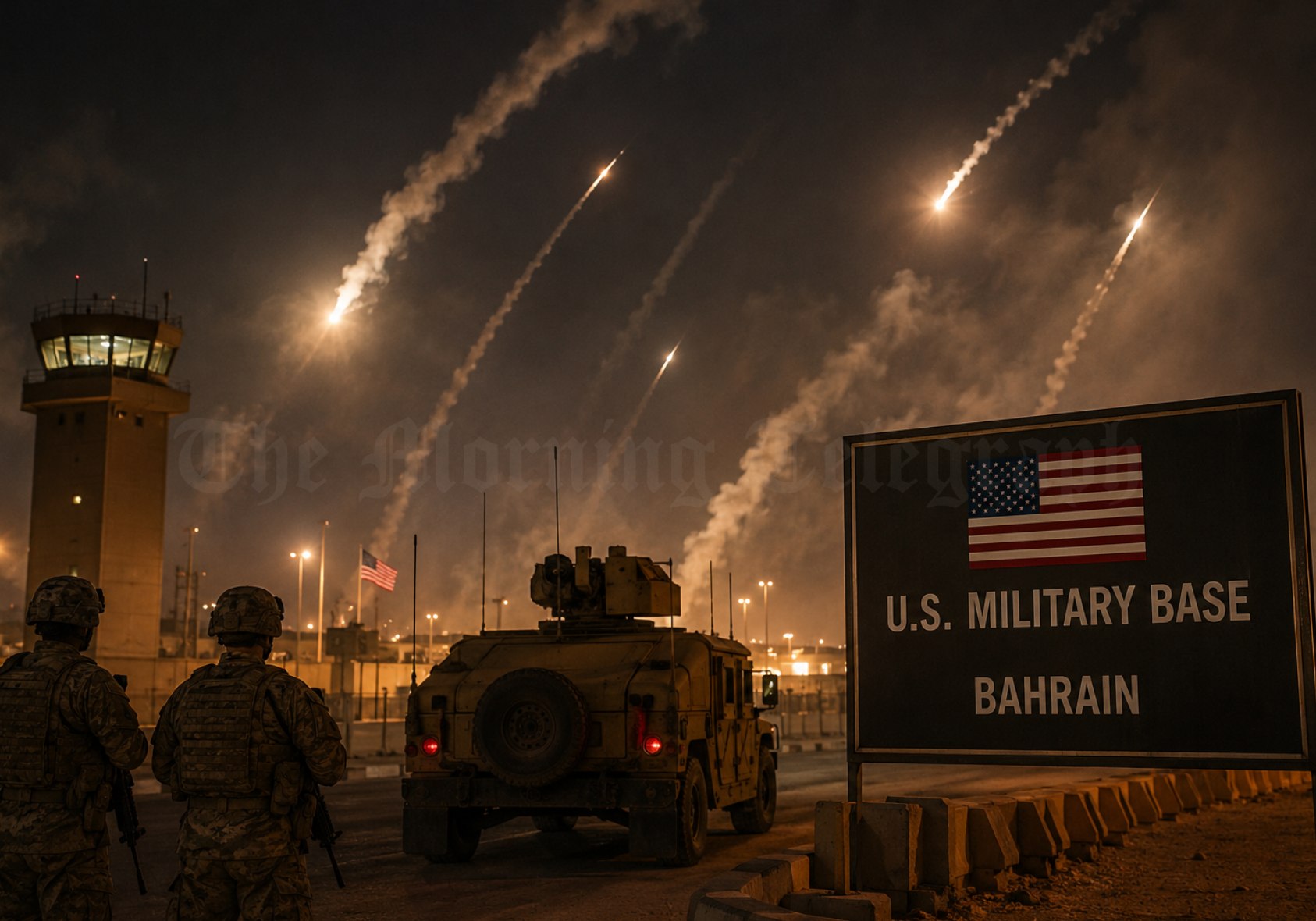
Iran’s Islamic Revolutionary Guard Corps has warned that the IRGC US base attacks could expand across the Middle East after Tehran struck American military infrastructure in Bahrain and Kuwait.
The warning marks a dangerous new escalation in the renewed conflict between the United States and Iran. It also raises fears that Gulf countries hosting American forces could become increasingly exposed as the regional confrontation expands.
The IRGC said its latest operations targeted US military facilities in Bahrain and Kuwait. Tehran described the attacks as retaliation for a fresh wave of American strikes against Iran.
Iranian state media reported that the Revolutionary Guards had attacked what they described as American military infrastructure. The IRGC also warned that it could widen the scope of its operations if US attacks on Iranian territory continue.
The threat has renewed attention on America’s extensive military presence across the Gulf. Thousands of US personnel operate from bases, logistics centres and naval facilities in countries including Bahrain, Kuwait and Qatar.

Bahrain and Kuwait Confront a Renewed Military Threat
Bahrain holds major strategic importance for the United States because it hosts the headquarters of the US Navy’s Fifth Fleet. The command plays a central role in American maritime operations across the Gulf, Arabian Sea and surrounding waterways.
Kuwait also hosts significant American military infrastructure and personnel. As a result, the country serves as an important logistics and operational centre for US forces across the Middle East. The wider US-Kuwait security relationship remains an important part of Washington’s regional defence partnerships.
The IRGC has sought to present its latest attacks as operations against American military facilities. It has not framed them as unrestricted attacks against Bahrain and Kuwait themselves.
However, US military facilities operate inside sovereign Gulf states. Therefore, any Iranian missile or drone attack carries the risk of casualties, damage to surrounding infrastructure and a wider military response.
The latest escalation followed another wave of American airstrikes against Iran. The US military said it struck more than 90 Iranian targets, including military infrastructure supporting missile, drone and other offensive operations.
Washington said it launched the strikes after Iranian attacks against commercial shipping in and around the Strait of Hormuz.
The renewed fighting has effectively shattered the fragile calm that followed earlier attempts to halt the conflict. Meanwhile, the latest exchange has increased fears that more Gulf states could face direct consequences from the confrontation.
IRGC US Base Attacks Could Expand Across the Region
The most significant development is the IRGC’s warning that its attacks could expand beyond facilities already targeted.
The statement raises questions about which American military installations could become potential targets if the confrontation continues to escalate.
The United States maintains a broad military network across the Middle East. It includes air bases, naval facilities and logistics centres. Several operate in Gulf countries that have tried to avoid becoming direct participants in the confrontation between Washington and Tehran.
Iran’s latest warning threatens to make that position increasingly difficult to maintain.
Gulf states have repeatedly faced the challenge of maintaining security partnerships with Washington while trying to keep their territory out of conflicts involving Iran.
The attacks involving Bahrain and Kuwait show how difficult that balance is becoming. Even countries seeking to limit regional tensions could face growing risks because of the presence of American forces and infrastructure on their territory.
The IRGC US base attacks also send a wider message to Washington. Tehran is signalling that American military facilities across the region could remain exposed if US operations against Iran continue.
Gulf Conflict Enters a More Dangerous Phase
The renewed exchange of attacks comes as the wider confrontation increasingly moves beyond Iran’s borders.
Commercial vessels in the Strait of Hormuz have come under attack. US forces have resumed large-scale strikes against Iranian targets, while Tehran is again directing military retaliation towards American-linked facilities across the Gulf.
The latest fighting has also raised fears about the security of one of the world’s most important energy corridors.
The Strait of Hormuz remains critical to global oil and gas supplies. Any prolonged disruption to shipping through the waterway could have major consequences for energy prices and the wider global economy.
Oil markets have already reacted sharply to renewed fears of disruption and further military escalation.
The attacks also place additional pressure on Gulf states. Their governments have spent years trying to reduce regional tensions while protecting critical infrastructure from the consequences of confrontation between Iran and the United States.
For Bahrain and Kuwait, the immediate challenge is both military and diplomatic.
Their air defence systems must respond to incoming threats. At the same time, their governments face the broader challenge of preventing attacks on US facilities from developing into direct confrontation with Iran.
That task could become increasingly difficult if Washington and Tehran continue exchanging strikes.
Washington and Tehran Exchange New Warnings
The escalation follows a breakdown in the fragile diplomatic framework that had temporarily reduced direct hostilities.
US President Donald Trump has warned Iran against further attacks. He has also indicated that additional American military action could follow if Tehran continues targeting commercial shipping or US interests.
Iran, meanwhile, has accused Washington of aggression. Tehran has presented its latest operations as retaliation for American attacks.
The competing warnings have created a dangerous cycle. Each side describes its military action as a response to the previous attack, increasing the possibility of further escalation.
That pattern also raises the risk of miscalculation.
A strike causing significant American casualties could trigger a much larger US response. At the same time, expanded American attacks inside Iran could push Tehran to target additional US facilities across the region.
The consequences would extend far beyond Washington and Tehran.
Countries hosting American forces could find themselves increasingly exposed to missile and drone attacks, even if their governments have no intention of entering the conflict directly.
For Gulf states, this creates a growing security dilemma. Their partnerships with Washington remain central to national defence, but the presence of US forces can also make military facilities inside their borders potential targets during a confrontation with Iran.
More American Military Facilities Could Become Targets
The IRGC’s latest warning signals that Tehran wants Washington to understand that American military facilities across the region remain vulnerable to retaliation.
Whether Iran follows through with additional strikes will depend heavily on the scale and location of future US military operations.
However, the immediate danger is clear.
The battlefield is widening from Iranian territory and the Strait of Hormuz towards a network of military facilities spread across the Gulf.
For Bahrain and Kuwait, the latest attacks are another reminder that hosting strategic American military infrastructure places them close to the centre of any confrontation between the United States and Iran.
For Washington, the challenge is to protect its regional forces while deciding how far to continue its campaign against Iranian targets. Official updates on US regional military operations are published by US Central Command.
For Tehran, the threat of additional attacks on US bases represents both a military warning and an attempt to increase the cost of further American strikes.
With both sides threatening further action, the Gulf is entering another highly unstable phase.
The next round of attacks, and the targets chosen, could determine whether the confrontation remains a limited exchange between the United States and Iran or develops into a much broader regional conflict.