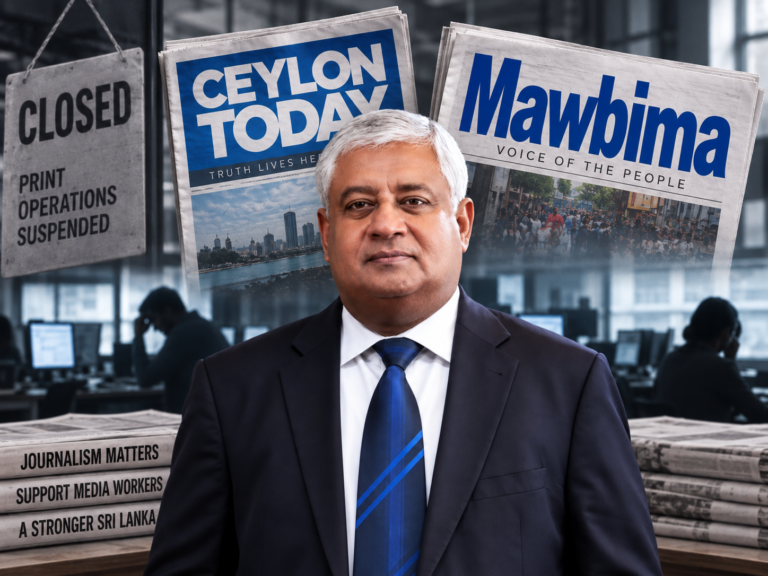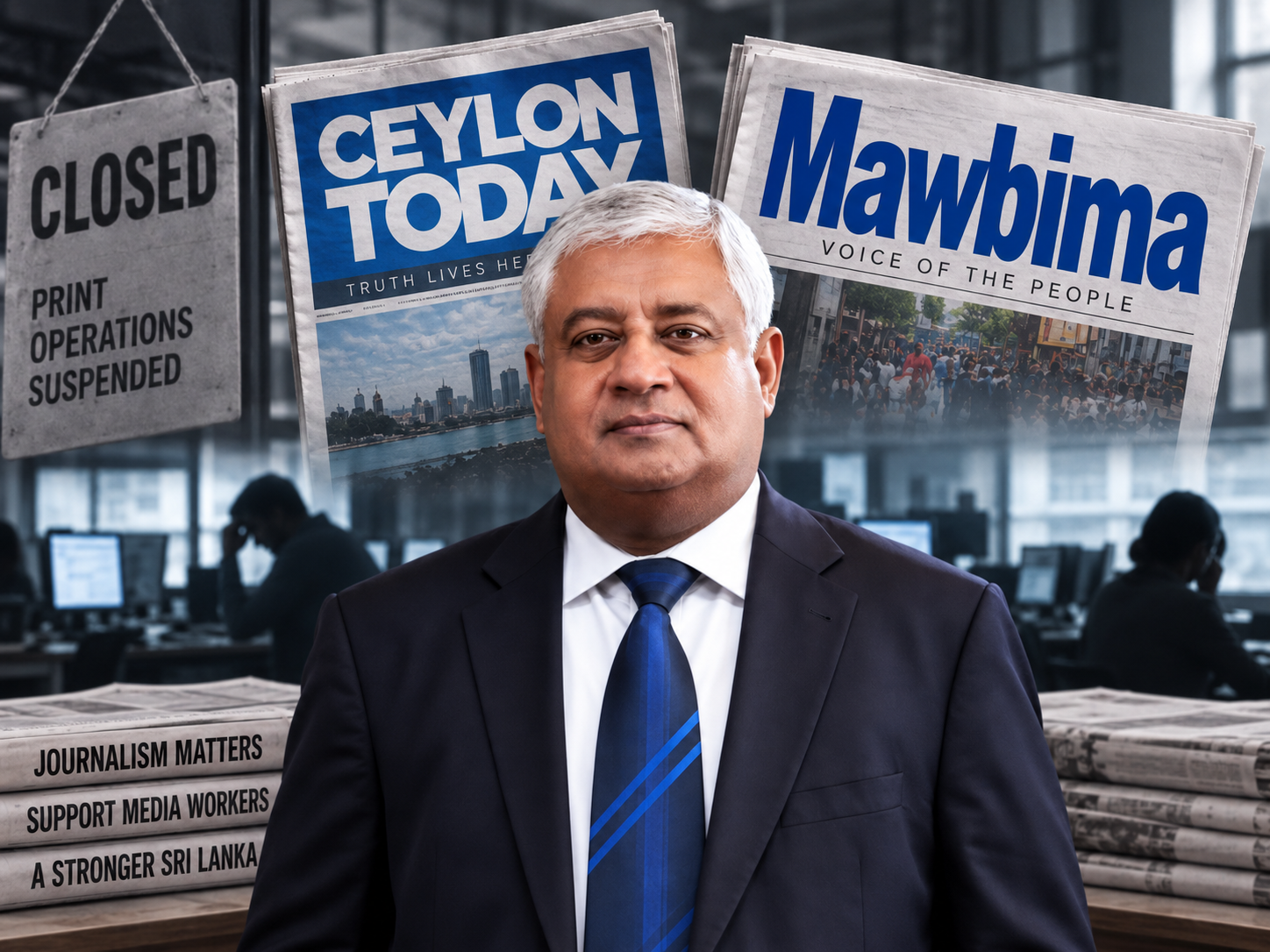
Ceylon Newspapers salary dispute leaves Ceylon Today and Mawbima staff seeking answers over unpaid dues, job security and print operations.
COLOMBO — Six officials from the Department of Labour visited the offices of Ceylon Newspapers (Pvt) Ltd on Friday, September 18, as scrutiny continues over complaints concerning unpaid salaries and other employment-related dues, The Morning Telegraph understands. Although the company had reportedly been informed in advance of the visit, representatives of its Human Resources and Accounts departments were not present at their offices when the Labour officials arrived, according to information obtained by The Morning Telegraph.
The latest development adds another dimension to the continuing uncertainty surrounding Ceylon Newspapers, publisher of Ceylon Today and Mawbima, as employees await answers over salary payments, employment security and the future direction of the two publications.
Ceylon Newspapers, owned by former Minister Tiran Alles, has been the subject of complaints from employees relating to alleged non-payment of salaries, Employees’ Provident Fund (EPF) and Employees’ Trust Fund (ETF) contributions, gratuity payments and other employment-related matters.

Friday’s visit is particularly significant because the issue has already moved beyond an internal dispute between employees and management.
In July, the Ministry of Labour publicly confirmed that Deputy Minister of Labour Mahinda Jayasinghe had instructed the Commissioner General of Labour to conduct a comprehensive investigation into complaints made against Ceylon Newspapers.
According to the Ministry statement, the investigation was directed at examining allegations concerning unpaid salaries, EPF and ETF contributions, gratuity payments and the alleged termination of employees.
The presence of six Labour Department officials at the company’s offices on September 18 therefore raises fresh questions about the progress of that investigation and what steps may follow.
It also raises the question of why officials from the HR and Accounts departments were reportedly unavailable when Labour officials arrived, despite the company having been informed of the visit beforehand.
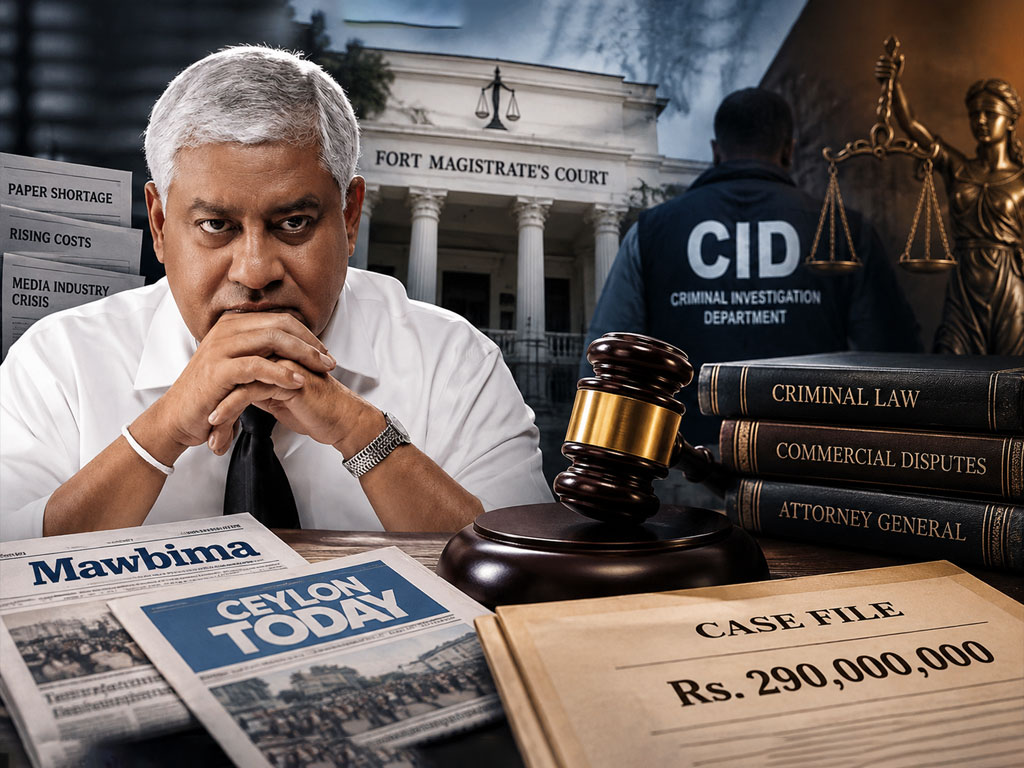
Tiran Alles CID Case: Magistrate Demands Clarity From CID
The Tiran Alles CID case over a Rs. 290 million business dispute has taken a new turn, with the Fort Magistrate seeking clarity on criminal charges.
The Morning Telegraph • September 17, 2026 • 5 min readThe reason for their absence was not immediately known, and no conclusion should be drawn without an explanation from the company.
For employees awaiting money they say is owed to them, however, the central questions remain simple:
When will outstanding salaries be settled?
What is the future of their employment?
And what future, if any, has been determined for the print operations of Ceylon Today and Mawbima?
Print Operations Cut Back
The daily print editions of Mawbima and its English-language sister newspaper, Ceylon Today, ceased publication in March 2026.
Notices published at the time announced that the newspapers would shift their daily news operations into the digital space, while their weekend print editions would continue.
The transition came amid wider concerns among employees over delayed remuneration and the financial condition of the newspaper company.
Workers who have spoken about the situation have described increasing uncertainty over their livelihoods, with some employees reportedly leaving while others continue to await clarity from management.
What remains particularly troubling for those affected is the absence of a publicly communicated timetable setting out when disputed salary arrears and other employment-related payments will be resolved.
The September 18 visit by Labour officials now places renewed attention on that question.
Labour Ministry Investigation Already Underway
The Government is already formally aware of the dispute.
On July 3, the Labour Ministry confirmed that Deputy Minister Mahinda Jayasinghe had directed the Commissioner General of Labour to conduct a full investigation into complaints lodged against Ceylon Newspapers.
Those complaints included allegations concerning unpaid salaries, EPF and ETF contributions, gratuity payments and employee terminations.
Separate reports in July also said labour officials were considering legal proceedings relating to alleged salary arrears after a period reportedly granted to the company to address certain outstanding payments.
Those matters must be allowed to proceed through the relevant labour and judicial processes without prejudging their outcome.
That distinction is important.
The existence of employee complaints and the Labour Ministry’s investigation is documented.
Whether every allegation made by individual employees will ultimately be established remains a matter for the appropriate authorities.
However, Friday’s visit by six Labour Department officials demonstrates that questions surrounding the company’s employment practices have not simply disappeared.
It now becomes important to establish what the officials sought during the visit, whether the information they required was available and what further steps, if any, will follow.
The length of time workers say they have been waiting for remuneration also raises a wider public-interest question about the effectiveness and speed of enforcement when employees seek assistance from the State.
What Does the Media Ministry Know?
There is also a broader question for the Ministry of Mass Media.
Sri Lanka’s Minister of Health and Mass Media is Dr. Nalinda Jayatissa, while Dr. Kaushalya Ariyarathne serves as Deputy Minister of Mass Media. The Ministry describes its mission as including the creation of a free and responsible media culture.
Ceylon Today and Mawbima are privately owned media organisations, and responsibility for enforcing employment law rests principally with the labour authorities rather than the Media Ministry.
Nevertheless, when journalists and other media workers face prolonged employment uncertainty, the issue becomes relevant to the broader health of Sri Lanka’s media industry.
Has the Media Ministry sought information about the situation?
Has it engaged with the Labour Ministry concerning the welfare of the affected media workers?
Has it sought clarification from the company regarding the future of two established national publications?
And is the Ministry aware of the latest Labour Department visit to Ceylon Newspapers?
Those are legitimate questions that deserve clear answers.
Supplier Dispute Adds to Company’s Challenges
Ceylon Newspapers has also been involved in a separate legal dispute concerning its newsprint supplier.
A Court of Appeal case reported in July involved Ceylon Newspapers seeking protection against arrests connected to an investigation concerning allegedly dishonoured cheques issued to LPL Kesara Lanka (Pvt) Ltd., a longstanding supplier of newsprint.
Ceylon Newspapers has disputed allegations of criminal wrongdoing and maintained before court that the disagreement concerns a commercial arrangement and is civil in nature.
The litigation remains a matter for the courts and should not be interpreted as establishing liability against either party.
Nor should the commercial dispute automatically be linked to the complaints raised by employees. They are separate matters involving different legal questions.
Nevertheless, taken together, the developments have placed increasing public attention on the company and its operations.
Labour Visit Raises Fresh Questions
The latest visit by Labour Department officials makes clear communication increasingly important.
What should not be assumed is why management has remained publicly restrained about the company’s longer-term employment and publication plans.
It would be inappropriate, without evidence, to conclude that employees are deliberately being encouraged to resign in order to avoid compensation, or that management is intentionally attempting to force workers into litigation.
Likewise, the reported absence of HR and Accounts personnel during Friday’s Labour Department visit should not, without further evidence, be interpreted as an attempt to evade officials.
There may be an explanation, and Ceylon Newspapers should be given the opportunity to provide one.
But prolonged uncertainty inevitably creates questions among employees.
That is precisely why clear communication is necessary.
If the publications are to continue, workers deserve to know the plan.
If restructuring is under consideration, employees deserve to know how they will be affected.
If positions are to be discontinued, the process should take place in accordance with Sri Lankan labour law and employees’ contractual and statutory entitlements.
And if outstanding salaries or other employment benefits are legally due, workers are entitled to pursue those claims through the appropriate mechanisms.
More Than an Employer-Employee Dispute
Ceylon Today was launched in 2011 and has operated alongside Mawbima under Ceylon Newspapers, becoming part of Sri Lanka’s established national media landscape.
The current difficulties therefore extend beyond the future of two newspaper titles.
Journalists form part of the institution commonly described as the Fourth Estate, tasked with scrutinising governments, businesses and other centres of power.
When those same journalists find themselves seeking answers over their own employment rights, the institutions responsible for enforcing those rights should demonstrate the same transparency and accountability that the media routinely demands from others.
The Labour Ministry has already taken the important step of acknowledging the complaints and ordering an investigation.
The arrival of six Labour Department officials at Ceylon Newspapers on September 18 suggests that official scrutiny is continuing.
What affected workers now require is clarity over what comes next.
That includes clarity from the Labour Department regarding the progress of its investigation, clarity from management regarding outstanding payments and employment, and an explanation as to why the relevant HR and Accounts personnel were reportedly unavailable during Friday’s pre-notified visit.
From the Media Ministry, at the very least, there should also be an awareness that the weakening of established newsrooms and prolonged insecurity faced by working journalists are matters worthy of attention.
For the employees of Ceylon Today and Mawbima, however, the matter is far less philosophical.
They want to know when their outstanding dues will be resolved.
They want to know whether they still have jobs.
And following Friday’s visit by Labour officials, they want to know what happens next.