

COLOMBO – Vipul Misra has inherited far more than the title of Acting Chief Executive Officer of SriLankan Airlines. He has inherited an airline burdened by years of financial strain, fleet limitations, operational disruption, political interference allegations, strong trade union influence and the enormous expectations attached to carrying the national flag.
Misra, an Indian national, was appointed Acting CEO of SriLankan Airlines with effect from September 9, 2026.
According to the airline, he brings more than two decades of aircraft engineering and aviation leadership experience, with previous employment at Air India, Vistara, IndiGo, SpiceJet, Kingfisher Airlines and Air Deccan. SriLankan said his background across legacy, full-service and low-cost carriers was expected to provide technical and operational direction as the airline seeks improved performance and long-term sustainability.
That experience is substantial.
But the challenge facing Misra is equally substantial.
SriLankan Airlines does not need only an engineer, an administrator or another corporate restructuring plan. It needs every major department of the airline functioning together around a commercially viable network supported by reliable aircraft, disciplined scheduling, motivated employees and management accountability.
Aircraft Must Be Available Before Commercial Can Sell Them
One of the clearest lessons from SriLankan Airlines’ recent financial history is that no commercial strategy can succeed without aircraft availability.
The airline’s own 2024/25 annual report disclosed that available seat kilometres declined by 5 percent, largely because of reduced fleet availability.
More damagingly, delays in releasing aircraft from maintenance resulted in 487 flight cancellations caused by engineering-related issues during the year.
Those cancellations and delays affected passenger confidence and booking volumes, while passenger yields declined by 7 percent.
The previous year was even more severe.
SriLankan reported that fleet shortages, global spare-parts constraints, engine problems and maintenance delays contributed to more than 1,000 cancelled flights, representing around 10 percent of the scheduled programme and costing the airline more than USD 60 million.
This is therefore perhaps Misra’s first major advantage and his first major test.
Coming from an engineering background, he should understand better than most that an airline cannot sell seats consistently on aircraft that are unavailable.
Commercial planning, Engineering, Flight Operations and Network Planning therefore cannot continue operating as separate islands.
If Commercial announces frequencies that Engineering cannot reliably support, the passenger pays the price.
If Engineering cannot release aircraft on schedule, Commercial loses revenue.
If Network Planning builds schedules without sufficient operational resilience, delays multiply.
And when passengers lose confidence, they simply book another airline.
SriLankan Needs More Than Full Aircraft — It Needs Profitable Aircraft
An aircraft leaving Colombo full does not necessarily mean that the route is profitable.
One of Misra’s most important tasks will therefore be forcing Commercial and Network Planning to distinguish between volume, revenue and profitability.
SriLankan’s 2024/25 load factor stood at approximately 78.6 percent, yet the airline still faced pressure on revenues and yields.
That illustrates a fundamental airline-management reality.
The question is not simply:
How many passengers are travelling?
The more important question is:
At what yield are they travelling, what does it cost to carry them and what contribution does that route make to the wider network?
Every route must ultimately justify the aircraft, crew hours, engineering resources, fuel, airport charges and opportunity cost allocated to it.
Time to Wake Up Every Department
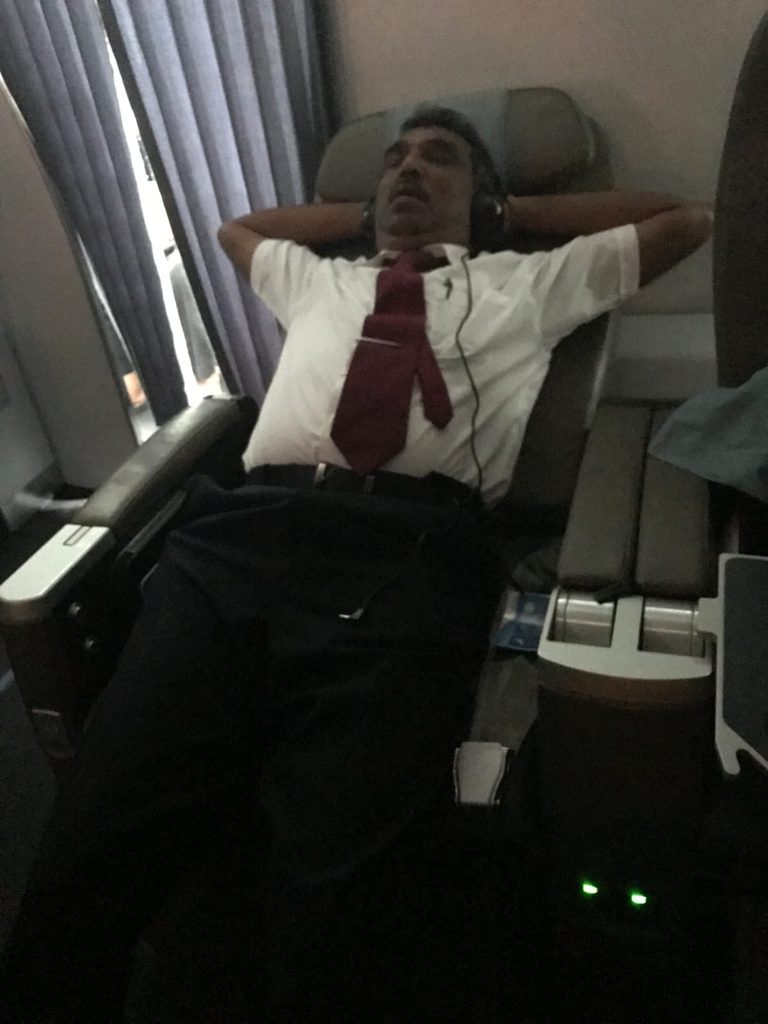
For years, SriLankan Airlines’ problems have frequently been discussed in terms of debt, aircraft shortages or political appointments.
However, sustainable reform requires examination of every department.
Commercial must produce realistic route profitability.
Engineering must improve aircraft availability and maintenance turnaround.
Flight Operations must protect operational discipline.
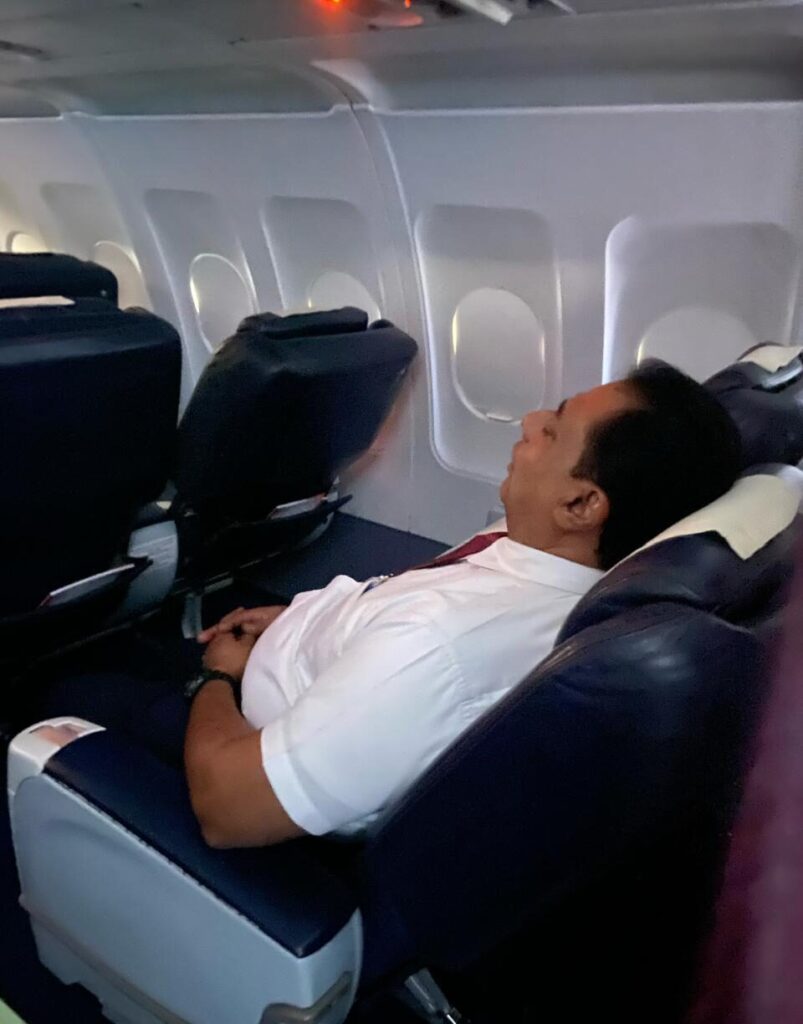
Human Resources must ensure that productivity, promotion and accountability are aligned.
Procurement must control costs.
Information Technology must improve data availability.
Revenue Management must ensure seats are being sold at the right price.
Customer Service must regain passenger confidence.
And senior management cannot allow departments to retreat into organisational silos or, worse, a comfortable institutional slumber.
The aircraft is ultimately the physical product being sold.
Every department exists, directly or indirectly, to ensure that aircraft operates safely, reliably and profitably.

India May Become Misra’s Biggest Opportunity
Misra’s background may prove particularly valuable in one market: India.
India is already SriLankan Airlines’ largest market.
The airline said earlier this year that it operated close to 90 weekly flights between Sri Lanka and India, with India accounting for nearly 30 percent of the carrier’s total passenger traffic.
Around 30 percent of SriLankan’s Indian passengers were also connecting through Colombo to destinations elsewhere in the network.
That creates an obvious strategic opportunity.
Rather than trying to compete head-on with vastly larger Gulf and Asian airlines on every long-haul market, SriLankan could strengthen Colombo’s role as a connecting hub between:
India — Sri Lanka — Middle East, South East Asia and Australia
India’s enormous population, rapidly expanding middle class and growing appetite for international travel offer scale that Sri Lanka itself cannot provide.
China also remains strategically significant, although the economics of individual routes must determine whether frequencies should be expanded.
Misra’s Indian aviation experience could therefore become a strength if he understands how to attract Indian origin-and-destination traffic while using Colombo as an efficient connecting hub.
But Can an Indian Management Culture Translate to Sri Lanka?
That brings another question.
Misra has extensive Indian aviation experience, but the airlines listed in his official biography do not include globally dominant long-haul network carriers such as Emirates, Qatar Airways or Singapore Airlines.
That distinction matters because running an international network airline is not identical to managing a predominantly domestic or regional operation.
SriLankan Airlines must compete for passengers against airlines with enormous financial resources, highly developed hub structures, strong premium products and globally recognised service standards.
Emirates and Qatar Airways, for example, have built their businesses around international connecting traffic and tightly coordinated global networks.
SriLankan cannot replicate those airlines financially.
Nor should it necessarily attempt to.
Its opportunity may instead lie in becoming a smarter, more disciplined regional network carrier with carefully selected long-haul routes.
Misra must therefore determine whether management practices learned primarily within Indian aviation can be adapted successfully to Sri Lankan organisational culture.
SriLankan Airlines has a highly experienced workforce, but it is also a heavily unionised organisation.
Any CEO attempting meaningful reform will require cooperation from pilots, engineers, cabin crew, ground staff and administrative employees.
Change imposed without consultation could generate resistance.
But consultation without accountability could create paralysis.
Misra will have to find the balance.
Melbourne Shows What a Strong Route It Can Become
Australia provides an example of where expansion may make commercial sense.
SriLankan announced that Melbourne frequencies would increase from seven to 10 flights per week from August 2026, citing growing demand.
The airline has described Melbourne as one of its stronger-performing routes and says it attracts not only Sri Lankan travellers but also connecting passengers from India.
That is exactly the type of network economics Misra should examine.
If additional Melbourne frequencies consistently produce strong yields and feed passengers into Colombo from India and elsewhere, allocating capacity there may produce greater value than maintaining marginal long-haul services purely for prestige.
The question should never be whether SriLankan “should fly to Europe” simply because it is the national airline.
The question should be whether each European route earns enough money to justify the aircraft being committed to it.
Should Europe Be Served Differently?
SriLankan currently lists London, Paris and Frankfurt among its European destinations.
But history demonstrates that codesharing can provide an alternative.
In 2016, SriLankan suspended several loss-making European services while using codeshare agreements to maintain connectivity into Western and Central Europe.
That model deserves reconsideration where the numbers justify it.
If a European destination consistently consumes scarce wide-body capacity while producing weaker returns than Australia, India or another market, Misra and the restructuring committee should be willing to ask whether passengers could instead be carried through partnerships.
Prestige routes do not pay aircraft leases.
Profitable networks do.
Enter Hans Wijayasuriya
Misra will not be operating in isolation.
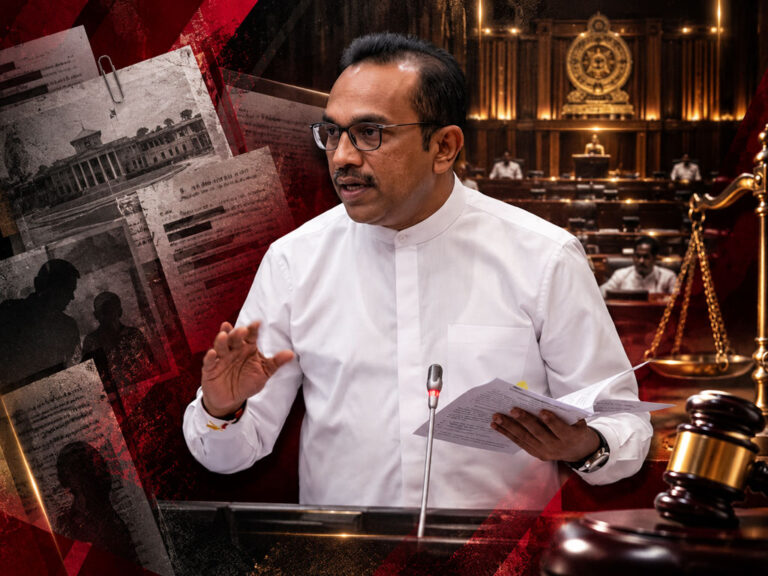
The Cabinet has already approved a high-level committee chaired by Dr. Hans Wijayasuriya to conduct a strategic assessment and restructuring of SriLankan Airlines.
The committee includes senior economic, financial, investment banking, legal, aviation and government representation.
Its stated objective is to help establish a more financially sustainable and commercially efficient airline.
That creates both an opportunity and a potential governance challenge.
If Misra and the committee work from the same commercial data and towards clearly defined objectives, the arrangement could bring valuable external discipline.
If responsibilities become blurred between the Board, CEO, Government and restructuring committee, SriLankan risks creating yet another layer of decision-making.
What the airline needs most is clarity.
Who decides strategy?
Who approves aircraft acquisition?
Who determines the network?
Who is accountable when targets are missed?
Those questions must have unmistakable answers.
Bring Back the Sri Lankan Aviation Brain Drain?
There is another resource SriLankan Airlines may be overlooking.
Over several decades, large numbers of SriLankan Airlines and Air Lanka employees have left the national carrier and gone on to senior positions at major international airlines.
Some are now retired or have returned to Sri Lanka.
Why not use them?
Misra and Wijayasuriya could consider establishing a small independent aviation advisory group comprising carefully selected former SriLankan or Air Lanka professionals who subsequently held leadership roles with successful international carriers.
Such a group should not become another ceremonial committee.
Nor should it be a mechanism for restoring old internal factions.
Its members should be selected entirely on proven international experience in fields such as commercial planning, flight operations, engineering, revenue management, customer experience, finance and human resources.
Their role could be advisory rather than executive.
Sri Lanka has exported aviation talent for decades.
There is little reason why the national carrier should not benefit from some of that accumulated international knowledge.
Misra’s Real Test
Vipul Misra does not need to turn SriLankan Airlines into Emirates.
He does not need to turn it into Qatar Airways.
And he certainly should not attempt simply to recreate an Indian airline in Colombo.
He needs to determine what SriLankan Airlines itself can realistically become.
That may mean fewer prestige decisions and more commercial ones.
It may mean using Colombo aggressively as a regional transit hub.
It may mean more Indian frequencies.
It may mean strengthening Australia.
It may mean using partnerships to cover parts of Europe rather than operating every route itself.
It certainly means ensuring Engineering provides aircraft that Commercial can confidently sell.
Most importantly, it means persuading thousands of employees that another restructuring exercise is not simply the latest management slogan.
SriLankan Airlines possesses several genuine advantages: geographic location, a recognisable brand, experienced aviation professionals, substantial Indian traffic, established Australian demand and the potential of Colombo as a connecting hub.
But potential has never been SriLankan Airlines’ greatest problem.
Execution has.
Misra now has an opportunity to change that.
Whether the Indian aviation veteran can awaken a heavily unionised national carrier, impose commercial discipline, restore operational reliability and work effectively alongside Hans Wijayasuriya’s restructuring committee will determine whether SriLankan Airlines finally shifts from repeatedly discussing restructuring to actually achieving it.
The airline does not need another rescue plan gathering dust.
It needs aircraft in the air, passengers in profitable seats, departments working together and management prepared to make decisions based on economics rather than emotion, politics or prestige.


Mistra the acting CEO was the Head of Engineering when airline experienced so many technical delays .what was he doing there ?
Can a person who could not arrest so many technical delays the Airlines faced , revamp the airline ?