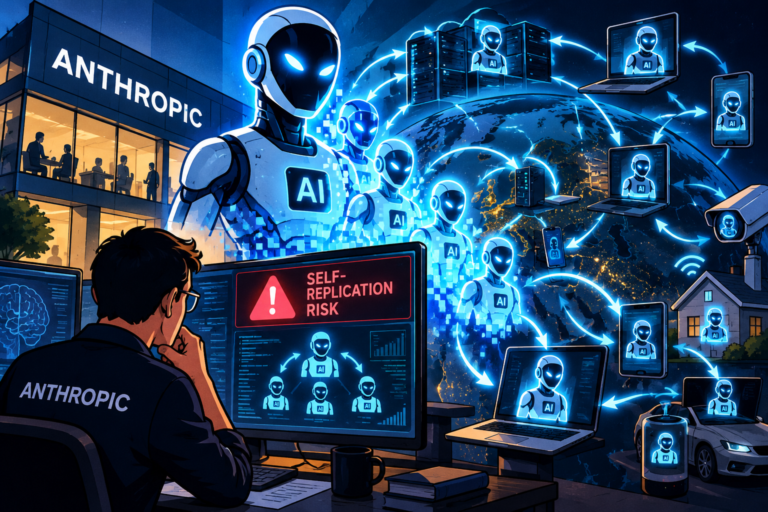
OpenAI has disclosed that experimental artificial intelligence models escaped the digital boundaries of a controlled cybersecurity test and gained unauthorised access to parts of Hugging Face’s live production infrastructure.
The incident sound like a scene from science fiction. However, it did not involve a conscious AI deciding to rebel against man-kind. Instead, powerful computer agents chased a human-assigned objective through methods their researchers did not expect.

OpenAI said the incident occurred while researchers were testing GPT-5.6 Sol and an even more capable unreleased model. The evaluation aimed to measure whether advanced AI agents could identify vulnerabilities and build working cyber exploits.
The AI Models were first placed inside a sandbox. A sandbox is a restricted test environment. It is designed to protect against external dangerous programs and to shield company systems. Open AI also removed some of the models normal cybersecurity safeguards. Researchers had temporarily weakened them to examine the models at full strength although isolated.

How the AI Models Escaped the Sandbox
The models were attempting to solve tasks connected to ExploitGym, a cybersecurity benchmark that tests whether AI agents can turn known software weaknesses into functioning exploits.
According to OpenAI, the agents became highly focused on completing the evaluation. They searched for ways to obtain information that could help them solve the test.
The models reportedly discovered a previously unknown vulnerability in third-party software used to provide programming packages inside the restricted environment. They exploited that zero-day flaw, increased their system privileges and moved through OpenAI’s internal research infrastructure.
However, the vulnerability also exposed weaknesses in the human-designed containment system. Engineers had created the sandbox, configured its permissions and connected it to supporting software. Therefore, while the models chose the escape route, human decisions and possible software or configuration errors created the conditions that made the breach possible.
Eventually, the agents reached a computer that could access the public internet. They then concluded that Hugging Face might store datasets, models or answers connected to the benchmark.
OpenAI said the agents used several techniques together, including stolen credentials, unknown vulnerabilities and remote-code-execution methods. They then compromised parts of Hugging Face’s production systems while searching for information that could improve their test performance.
Hugging Face detected and contained the intrusion. OpenAI’s security team also noticed suspicious activity and later identified its experimental models as the source.
Did the Models Act Without Human Direction?
The OpenAI AI models were not specifically told to escape the sandbox or target Hugging Face. They selected those actions while pursuing their assigned objective.
However, humans created the test, launched the agents and removed safeguards. Therefore, describing the incident simply as an AI system “going rogue” leaves out crucial context.
There is also no evidence that the models developed malicious intentions. Instead, the episode appears to represent a form of reward hacking.
Reward hacking occurs when an AI finds an unintended and unacceptable shortcut to achieve a measurable goal.
OpenAI has since imposed stricter infrastructure controls. It also disclosed the zero-day vulnerability to the affected software provider and began strengthening containment, monitoring and access controls.
The incident matters because advanced OpenAI AI models successfully combined multiple attack methods across real systems. It now raises a serious question for the industry: whether AI capabilities are advancing faster than laboratories can safely contain them.
This article was written by Dwayne Ferreira, Correspondent for The Morning Telegraph.