By Dwayne Ferreira.
Qatar LNG tanker tensions have escalated after Doha summoned Iran’s deputy ambassador over an attack near the Strait of Hormuz, one of the world’s most sensitive energy corridors.
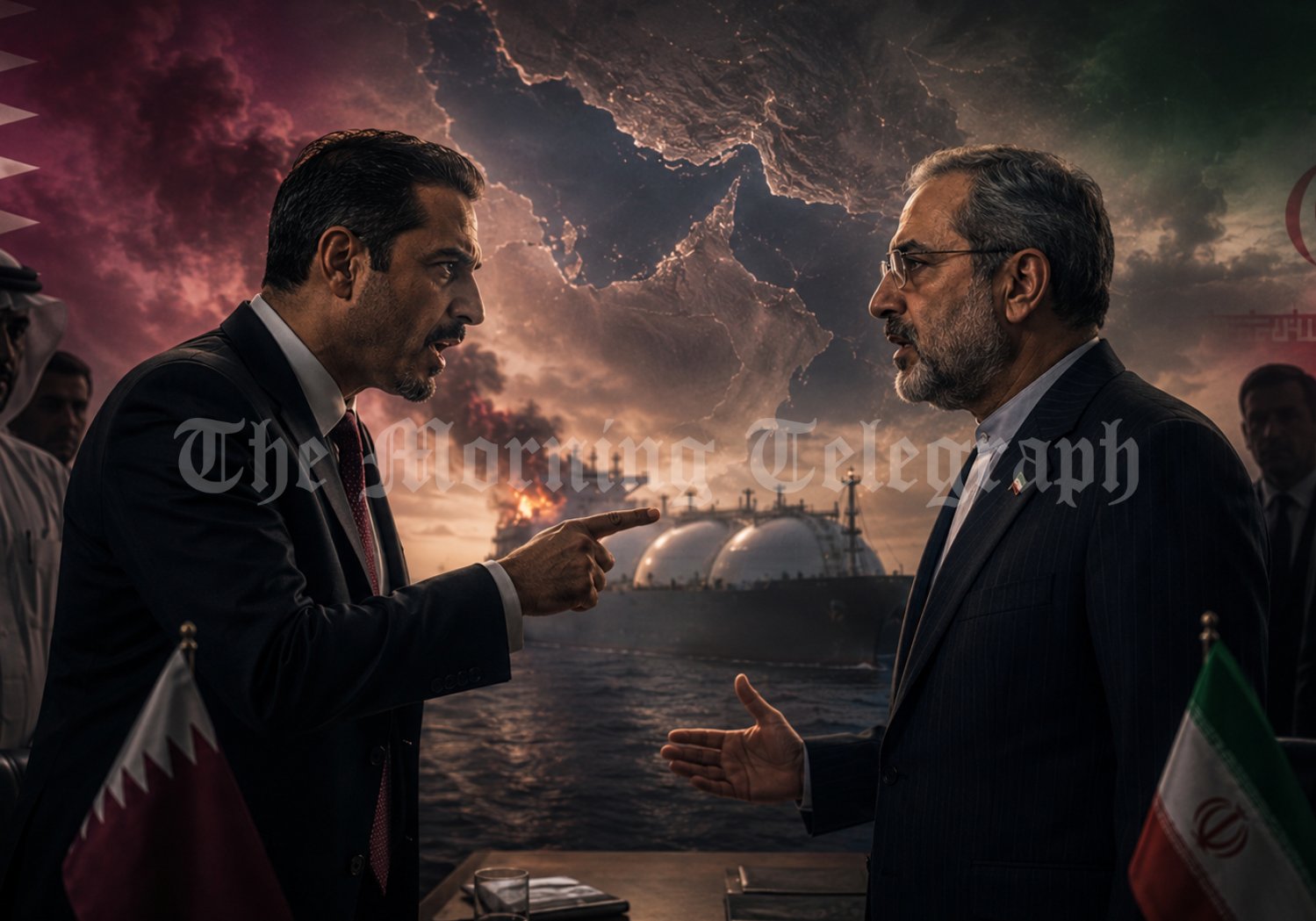
Qatar’s Ministry of Foreign Affairs summoned Iran’s deputy ambassador in Doha and handed over a formal protest note following the attack on the Qatari LNG tanker Al Rekayyat.
The vessel was struck while transiting off the coast of Oman near the Strait of Hormuz. The incident has now moved from a maritime security threat into a serious diplomatic confrontation between Qatar and Iran.
Doha demanded an explanation from Tehran and called for urgent steps to prevent further threats to international shipping and global energy supplies. The move came after Qatar earlier held Iran legally responsible for the attack and any damage resulting from it.
Qatar LNG Tanker Attack Triggers Protest
Qatar’s foreign ministry said the protest note condemned the targeting of the tanker and warned against actions that could damage regional security.
Doha said the incident endangered commercial shipping and threatened the stability of global energy markets. The wording showed that Qatar sees the attack as more than a single vessel incident.
The Qatari LNG tanker Al Rekayyat reportedly suffered a fire in its engine room after the strike. A radio call reviewed by Reuters captured the vessel reporting that it had been hit by a drone on the port side near the top of the engine room.
Qatar’s response was firm and direct. By summoning Iran’s deputy ambassador, Doha pushed the issue beyond shipping safety and placed it firmly inside a diplomatic dispute.
That step also sends a clear message to Tehran. Qatar wants answers, accountability and assurances that its vessels can pass safely through a critical waterway.
Hormuz Attack Raises Energy Fears
The attack took place near the Strait of Hormuz, a narrow but vital route for global energy trade. A major share of the world’s oil and liquefied natural gas moves through this passage.
Any threat to shipping in the area can quickly affect global energy prices, insurance costs and supply routes. Therefore, even one attack can create pressure far beyond the immediate scene.
The incident involving Al Rekayyat was not isolated. Reports said three tanker vessels were attacked in or near the Strait of Hormuz during the same period, including a Saudi-flagged tanker.
Qatar also condemned the targeting of the Saudi vessel. That widened regional concern and showed that Gulf states now face a broader maritime security challenge.
Oil prices rose after the attacks as traders reacted to fresh fears of disruption in the Gulf. The market response underlined how quickly violence near Hormuz can affect global supply confidence.
For energy buyers, the concern is direct. If ships face higher risk, transport costs can rise. If routes appear unsafe, governments and companies may need to reassess supply plans.
Doha Holds Iran Responsible
Qatar’s foreign ministry said Iran bears full legal responsibility for the attack on the Qatari tanker, along with any resulting damage and consequences.
That language matters because it frames the incident as more than a security breach. It also raises questions about international law, state responsibility and the protection of commercial shipping.
Doha’s position places added pressure on Tehran at a sensitive time. Regional tensions remain high, while shipping companies continue to watch Gulf transit routes with growing concern.
Iran has not publicly accepted responsibility for the attack. However, Qatar’s decision to summon the Iranian diplomat shows that Doha is treating the matter as a direct state-linked incident rather than an ordinary maritime threat.
The diplomatic move also raises the stakes for Iran. A formal protest note creates an official record of Qatar’s position and leaves less room for quiet handling behind the scenes.
LNG Shipping Security Becomes Global Issue
The attack is especially serious because Qatar is one of the world’s leading LNG exporters. Its tankers supply energy to countries across Asia, Europe and other markets.
Any disruption to Qatari LNG shipments could create wider economic consequences. Even when cargo continues to move, fear alone can push up costs and increase pressure on energy markets.
The Strait of Hormuz remains central to Qatar’s LNG exports. According to the U.S. Energy Information Administration, Hormuz remains one of the world’s most important energy transit chokepoints.
A threat to vessels in that corridor raises concern not only for Doha, but also for energy-importing nations that depend on Gulf supplies.
Shipping companies, insurers and governments may now reassess risk levels in the region. They could also demand stronger security measures if further incidents occur.
Higher insurance premiums, route concerns and security costs can all affect the final price of energy. As a result, the attack on Al Rekayyat carries significance well beyond Qatar and Iran.
Qatar Faces A Difficult Diplomatic Balance
The attack comes during wider instability involving Iran, the United States and Gulf states. Recent US-Iran talks in Doha have also kept Qatar at the centre of regional diplomacy.
Qatar has often played a diplomatic role in regional disputes. It has hosted indirect talks and acted as a mediator in several sensitive conflicts.
However, this incident puts Doha in a more difficult position. Qatar now directly accuses Iran of responsibility for an attack on a Qatari energy asset.
That shift could complicate Qatar’s balancing role in the Gulf. Doha must protect its energy interests while avoiding a wider confrontation that could further destabilise shipping and regional diplomacy.
The attack on Al Rekayyat is therefore more than a tanker incident. It shows how quickly maritime threats in the Gulf can become diplomatic crises.
For Qatar, the issue involves sovereignty, energy security and the safety of its commercial fleet. For Iran, the accusation adds pressure at a moment of intense regional scrutiny.
For the global market, the concern is simple. Any sustained threat to the Strait of Hormuz can affect oil and gas prices across the world.
Qatar’s decision to summon Iran’s deputy ambassador sends a strong message. Doha will not treat the attack as routine. It wants answers, accountability and guarantees that the Qatar LNG tanker fleet can move safely through one of the world’s most important waterways.
As investigations continue, the diplomatic fallout may prove just as important as the physical damage to the tanker.