By Dwayne Ferreira.
Iran MoU collapse deepens Gulf tensions as Trump declares the framework over and fresh US strikes raise fears of wider conflict.
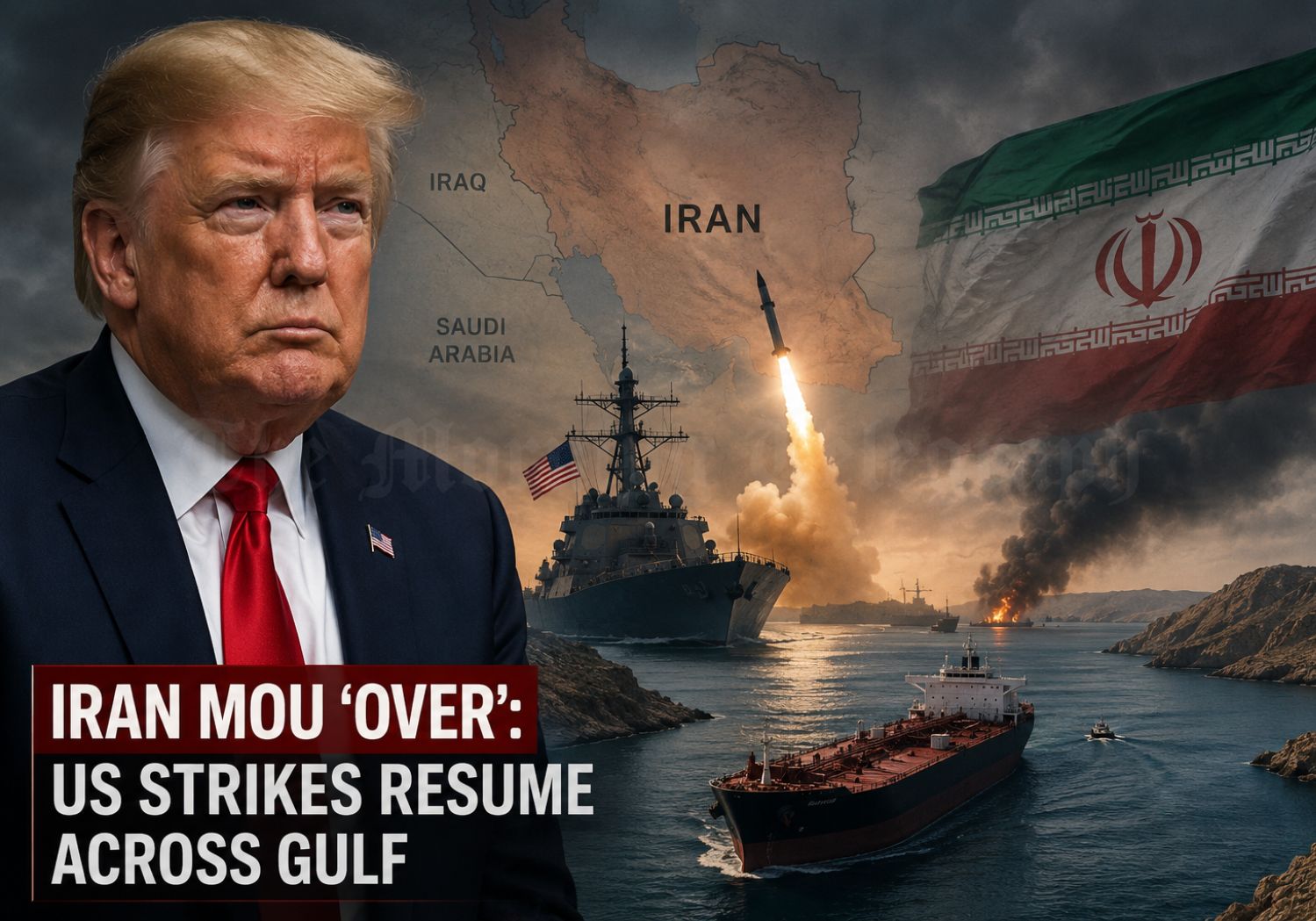
The Iran MoU collapse has pushed Washington and Tehran back toward confrontation after US President Donald Trump declared the interim memorandum of understanding “over” as American forces resumed strikes against Iranian targets.
His declaration marks a dramatic breakdown in efforts to turn a temporary pause in fighting into a longer-term settlement. The agreement, brokered with Pakistani mediation, had created a 60-day ceasefire window for negotiations between Washington and Tehran.
However, indirect talks in Qatar failed to deliver progress. Meanwhile, the renewed military confrontation has placed the future of diplomacy in serious doubt.

Speaking ahead of the NATO summit in Ankara, Trump made clear that he no longer considered the interim understanding to be in force.
“I think the MOU is over,” Trump said, referring to the memorandum of understanding that formed the basis of the temporary diplomatic process.
The US president also delivered a fierce verbal attack on Iran’s leadership. At the same time, he signalled that Washington had little confidence in further engagement under the existing framework.
Iran MoU Collapse Followed by Fresh US Strikes
The diplomatic breakdown was followed by renewed US military action against Iran.
The US military confirmed a new wave of strikes as the ceasefire faltered. The confrontation has increasingly focused on security in the Strait of Hormuz and the movement of commercial shipping through the strategically vital waterway.
The latest escalation comes amid attacks on oil tankers in the Strait of Hormuz. As a result, fears are growing that the conflict could again disrupt one of the world’s most important energy corridors.
The strait carries roughly one-fifth of global energy trade. Therefore, any sustained disruption threatens not only Gulf security but also oil markets, shipping costs and the wider global economy.
Washington has increasingly framed its military operations around protecting freedom of navigation. It also wants to prevent Iran from exerting control over international shipping routes.
Tehran, however, has increasingly treated the Strait of Hormuz as one of its most powerful strategic tools in its confrontation with the United States and its regional allies.
Hormuz Dispute Deepens US-Iran Divide
The status of the Strait of Hormuz has become one of the most difficult issues separating Washington and Tehran.
Iran views its ability to influence passage through the waterway as essential leverage against Western pressure. However, the United States and Gulf states reject any Iranian claim to control international navigation through the strait.
That fundamental disagreement has complicated attempts to build a lasting peace agreement.
According to recent reporting, Tehran increasingly views control of Hormuz as a strategic “golden weapon.” Iran has also resisted separating the issue from broader negotiations involving sanctions, security guarantees and its nuclear programme.
The interim agreement was supposed to give negotiators enough time to move beyond immediate military de-escalation. The goal was to work toward a permanent settlement.
Instead, the negotiating process failed to bridge the deep divisions between the two sides.
Sixty-Day Negotiating Window Ends Without Breakthrough
The memorandum of understanding established a 60-day period for negotiations toward a longer-term resolution of the conflict.
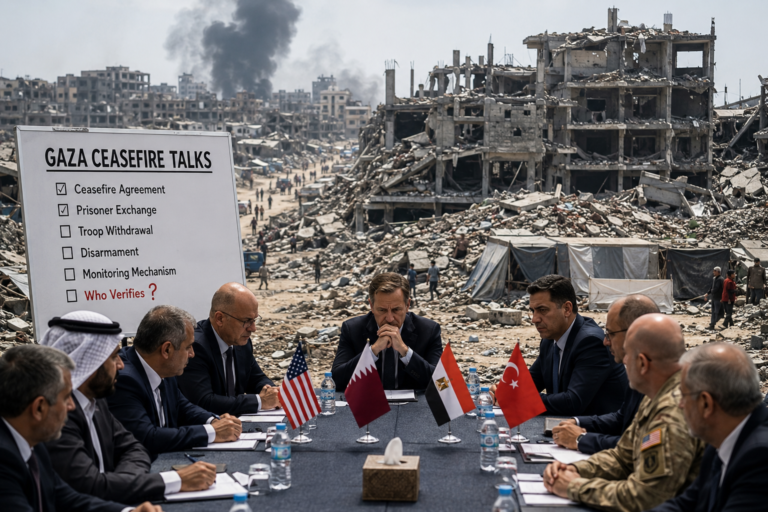
Pakistan played a central role in brokering the framework. Subsequent indirect talks then took place in Qatar.
Those negotiations ended without meaningful progress, according to reporting on the Iran MoU collapse. Trump’s declaration that the framework was finished was followed by another round of American military strikes.
The breakdown demonstrates the scale of mistrust between Washington and Tehran.
Both sides remain divided over the Strait of Hormuz, sanctions, Iran’s nuclear activities and regional military operations. They also disagree over the conditions required for a permanent end to hostilities.
The return to military action now raises questions about whether another diplomatic channel can emerge while strikes continue.
Trump Leaves Narrow Opening for Future Negotiations
Despite declaring the interim MoU over, Trump has not completely ruled out the possibility of a future settlement.
Reports on the latest escalation indicate that the US president continues to suggest that talks toward lasting peace could remain possible. However, American forces are carrying out renewed military operations at the same time.
That creates an increasingly complicated diplomatic picture.
The existing framework appears to have collapsed. However, Washington may still be trying to use military and economic pressure to push Tehran toward a different agreement.
At the same time, renewed strikes risk triggering further Iranian retaliation. They could also make another round of negotiations politically more difficult for both sides.
Washington Increases Economic Pressure on Tehran
The United States is also increasing economic pressure on Iran.
Washington revoked a key Treasury authorisation that had allowed certain Iranian oil and petrochemical transactions to continue until August 21.
Following attacks on three oil tankers in the Strait of Hormuz, the change means affected transactions must now conclude by July 17.
The move adds another layer of pressure on Tehran while military tensions are already rising.
It also increases uncertainty across energy markets. Traders are closely watching the security situation in and around the Strait of Hormuz.
Any prolonged disruption to tanker movements could have consequences far beyond the immediate conflict zone.
Gulf Faces Growing Threat of Wider Conflict
The Iran MoU collapse comes at a dangerous moment for the Gulf.
Fresh US strikes, attacks on commercial shipping and the growing strategic struggle over Hormuz have created volatile conditions. A single major incident could trigger another cycle of retaliation.
The renewed American campaign has already come alongside reports of wider regional security threats. The confrontation has also placed US partners and military installations across the Gulf under increased pressure.
For governments across the region, the central concern is that direct fighting between the United States and Iran could spread beyond Iranian territory and the Strait of Hormuz.
The Gulf hosts major American military facilities, vital energy infrastructure and some of the world’s busiest commercial shipping routes.
Therefore, a prolonged conflict would carry significant consequences for regional security and the wider regional conflict.
Fragile Diplomatic Window Gives Way to Conflict
The collapse of the interim memorandum represents a major setback for diplomatic efforts to end the conflict.
For 60 days, the framework offered at least the possibility that negotiations could replace military confrontation.
That possibility has now sharply diminished.
Trump’s declaration that the MoU is “over,” combined with renewed US strikes and continuing tensions around commercial shipping, signals a return to direct military pressure.
Whether that pressure eventually produces a new negotiating framework or leads to a wider regional conflict remains uncertain.
For now, however, the fragile diplomatic window that briefly separated the United States and Iran from another phase of open confrontation appears to have closed.