By Dwayne Ferreira
Ben Duckett’s magnificent 167 powers England to 386 as Liam Dawson’s four-wicket haul ends Sri Lanka’s hopes of another extraordinary run chase ahead of the Pakistan ODI Tri-Series final.
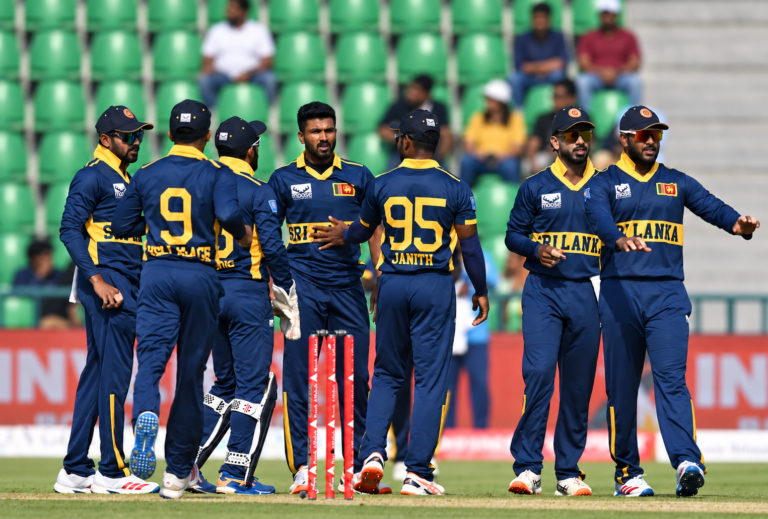
Lahore, Pakistan – England secured a 55-run victory over Sri Lanka in the sixth match of the Pakistan ODI Tri-Nation Series at Gaddafi Stadium in Lahore on Thursday, October 29, 2026, overcoming another determined Sri Lankan run chase to register their first victory of the competition.
The result saw Sri Lanka dismissed for 331 in 45.1 overs while pursuing England’s formidable total of 386 for 5, bringing an end to their hopes of repeating the historic 430-run chase that had stunned the same opposition just seven days earlier.
Ben Duckett emerged as the architect of England’s victory, producing a magnificent 167 from 132 deliveries, including 24 boundaries, while Tom Banton contributed 74 from 75 balls in a commanding opening partnership.

However, Sri Lanka refused to surrender without a fight.
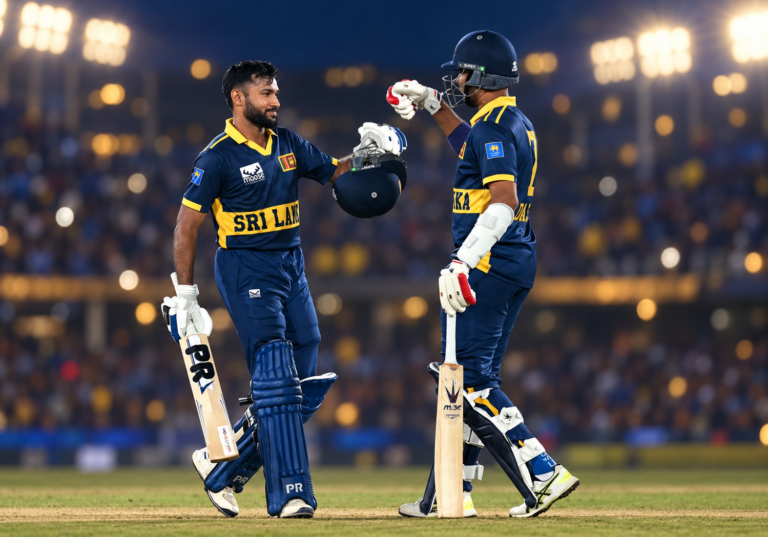
Captain Kusal Mendis scored an aggressive 89 from 71 deliveries before Pavan Rathnayake produced another outstanding century, keeping Sri Lanka’s hopes alive deep into the innings.
England eventually regained control through disciplined bowling and crucial breakthroughs, with left-arm spinner Liam Dawson claiming four wickets for 49 runs.
The defeat came just two days after Sri Lanka had demolished Pakistan by eight wickets, highlighting the considerable inconsistency that remains a concern ahead of Saturday’s tournament final.
Ben Duckett Destroys Sri Lankan Bowling With Magnificent 167
Sri Lankan captain Kusal Mendis won the toss and elected to field first, hoping his bowling attack would reproduce the devastating performance that had dismissed Pakistan for just 110 runs on October 27.
However, England’s opening batsmen had entirely different intentions.
Ben Duckett and Tom Banton immediately established control, exploiting a batting-friendly surface that offered Sri Lanka’s bowlers little assistance.
Duckett demonstrated exceptional timing and placement, repeatedly punishing deliveries that offered width while finding gaps in the field with remarkable consistency.
Banton provided equally valuable support, allowing England to build momentum without exposing their middle order to unnecessary pressure.
Together, the pair established a commanding 160-run opening partnership.
Duckett eventually reached his sixth ODI century from just 89 deliveries, his second successive hundred in the tournament.
Rather than slowing down after reaching three figures, he continued attacking Sri Lanka’s increasingly frustrated bowling attack.
His innings eventually ended on 167 from 132 balls, featuring 24 fours and a strike rate of 126.52.
It was a performance that placed England in a commanding position.
Tom Banton’s 74 Establishes England’s Dominance
Although Duckett dominated the headlines, Banton’s contribution was instrumental in establishing England’s imposing total.
The opening batsman struck 74 from 75 deliveries, including eight fours and two sixes.
His partnership with Duckett effectively neutralised Sri Lanka’s attempts to establish early pressure.
Dilshan Madushanka, who had claimed five wickets for 34 runs against Pakistan just 48 hours earlier, found himself facing significantly more aggressive opposition.
England consistently punished loose deliveries and prevented Sri Lanka from establishing the sustained pressure that had dismantled Pakistan’s batting lineup.
Sri Lanka eventually secured their first breakthrough when Dasun Shanaka dismissed Banton in the 25th over.
Banton dragged the delivery onto his stumps, leaving England at 163 for 1.
However, the opening partnership had already established the foundation for another enormous total.
Harry Brook and England’s Middle Order Continue the Assault
England captain Harry Brook entered the contest having already produced one of the tournament’s most extraordinary individual performances.
On October 22, Brook smashed 202 from just 116 deliveries against Sri Lanka, helping England accumulate 429 for 4.
However, even that remarkable innings had proved insufficient to secure victory.
Sri Lanka responded by reaching 430 for 8 with one delivery remaining, completing the second-highest successful run chase in men’s ODI history.
In Thursday’s encounter, Brook once again attempted to accelerate the scoring.
He contributed 44 from 34 deliveries, including three fours and two sixes, before being caught and bowled by Asitha Fernando.
Will Jacks added 30 from 21 deliveries, while Jordan Cox produced a valuable 43 from 27 balls.
Sam Curran finished unbeaten on 21 from just 12 deliveries.
The contributions enabled England to reach 386 for 5 from their allotted 50 overs, maintaining an impressive scoring rate of 7.72 runs per over.
England had once again demonstrated their ability to construct an enormous ODI total.
This time, however, their bowlers would ensure that the effort did not go to waste.
Sri Lanka’s Bowling Attack Struggles After Pakistan Demolition
The contrast between Sri Lanka’s performances against Pakistan and England could hardly have been more dramatic.
Against Pakistan on October 27, Sri Lanka dismissed the hosts for just 110 in 25.3 overs.
Madushanka produced a devastating spell of 5 for 34, while the remaining bowlers combined to complete an extraordinary team performance.
Against England, however, Sri Lanka struggled to establish control.
Asitha Fernando emerged as the leading wicket-taker, claiming two wickets for 63 runs from ten overs.
Shanaka claimed one wicket for 49 runs from seven overs, while Madushanka finished with one for 64 from nine.
Eshan Malinga endured a particularly difficult afternoon, conceding 101 runs from ten overs while dismissing Duckett.
Dunith Wellalage also struggled to restrict the English batsmen, finishing with figures of 0 for 75 from ten overs.
The performance exposed Sri Lanka’s difficulties when opponents successfully negotiate the opening overs and establish substantial partnerships.
It also provided a timely warning ahead of the tournament final.
Pakistan will undoubtedly be seeking revenge for Tuesday’s humiliating defeat, and Sri Lanka cannot assume that their opponents will collapse so dramatically again.
Kusal Mendis Leads Sri Lanka’s Response With Aggressive 89
Sri Lanka began their run chase requiring 387 runs to secure another extraordinary victory.
However, the innings suffered an early setback when Kamindu Mendis was bowled by Sonny Baker for just four runs.
The dismissal left Sri Lanka at 13 for 1.
Avishka Fernando and captain Kusal Mendis subsequently combined to rebuild the innings.
Avishka contributed 48 from 50 deliveries, striking eight fours and one six.
Kusal adopted a more aggressive approach, attacking England’s bowlers whenever an opportunity presented itself.
His innings featured eight fours and five sixes, demonstrating considerable determination to keep Sri Lanka in contention.
The Sri Lankan captain appeared particularly confident against the slower bowlers, using his feet effectively and repeatedly clearing the boundary.
However, England secured an important breakthrough when Joe Root dismissed Kusal for 89.
Attempting a sweep, the Sri Lankan captain edged the delivery to wicketkeeper Jordan Cox.
Sri Lanka were 177 for 3.
The dismissal represented a significant turning point.
Kusal had been instrumental in maintaining Sri Lanka’s scoring rate, and his departure placed additional responsibility upon the remaining batsmen.
Pavan Rathnayake Produces Another Outstanding Century
Pavan Rathnayake once again emerged as the central figure in Sri Lanka’s efforts to overcome an enormous target.
The young batsman had already established himself as one of the tournament’s standout performers after scoring 130 during Sri Lanka’s historic victory over England on October 22.
Seven days later, he faced a remarkably similar challenge.
England had again established an imposing total.
Sri Lanka had again lost important wickets.
And Rathnayake was once again required to rescue the innings.
He demonstrated exceptional composure, combining calculated aggression with intelligent shot selection.
Following Kusal Mendis’s dismissal, Rathnayake continued to attack while attempting to maintain the required scoring rate.
His partnership with Janith Liyanage provided renewed hope.
Liyanage contributed 27 before being caught by England captain Harry Brook off Sonny Baker, ending a valuable 72-run partnership.
Sri Lanka had reached 258 for 5 in the 36th over.
Despite the setback, Rathnayake continued attacking.
He subsequently combined with Sahan Arachchige to take Sri Lanka beyond 300, reaching another magnificent century during the 42nd over.
The achievement underlined his growing importance to Sri Lanka’s batting lineup.
However, the task remained considerable.
Sri Lanka required 77 runs from the final eight overs when Rathnayake reached his hundred.
Although the target was still mathematically achievable, England increasingly controlled the contest through timely wickets.
Sri Lanka Lose Momentum as England Strike Late
Sri Lanka reached 315 for 5 after 43 overs, with Rathnayake continuing to threaten another extraordinary finish.
However, England’s bowlers maintained their composure.
The dismissal of Sahan Arachchige and the subsequent run-out of Dunith Wellalage significantly weakened Sri Lanka’s chances.
Wellalage’s dismissal came with the score on 320, leaving Sri Lanka requiring another 67 runs from 42 deliveries.
With the recognised batting resources rapidly diminishing, England were firmly in control.
The remaining Sri Lankan batsmen were unable to provide the support required to sustain the chase.
Dawson completed an outstanding bowling performance, claiming four wickets for 49 runs from his ten overs.
Sam Curran also contributed an important wicket as England completed the final stages of the innings.
Sri Lanka were eventually dismissed for 331 in 45.1 overs.
England secured victory by 55 runs.
For Sri Lanka, the result was particularly disappointing because another remarkable run chase had appeared possible during significant periods of the innings.
However, the loss of wickets at crucial moments ultimately prevented the team from maintaining the momentum required.
Liam Dawson’s Four Wickets Prove Decisive
While Duckett’s magnificent century established England’s imposing total, Liam Dawson played an equally important role in ensuring that the effort resulted in victory.
The left-arm spinner finished with outstanding figures of 4 for 49 from ten overs.
His disciplined bowling proved particularly valuable during the middle and closing stages of Sri Lanka’s innings.
Dawson dismissed Avishka Fernando for 48 and subsequently removed Dasun Shanaka for just four runs.
Shanaka’s dismissal carried particular significance.
The experienced all-rounder had produced an explosive 97 from just 50 deliveries during Sri Lanka’s previous encounter against England.
On that occasion, his innings had played a decisive role in overturning England’s enormous total.
This time, however, Dawson prevented Shanaka from producing another match-changing performance.
The dismissal removed one of Sri Lanka’s most dangerous attacking batsmen at a crucial stage.
Dawson’s four-wicket haul ultimately proved one of the defining performances of the encounter.
England’s success also highlighted the importance of taking wickets regularly when defending a substantial total.
Although Sri Lanka maintained a threatening scoring rate for considerable periods, England repeatedly found ways to break important partnerships.
England Finally Register Their First Tournament Victory
England entered Thursday’s contest having already been eliminated from contention for the tournament final.
Their campaign had been marked by several extraordinary defeats.
Against Sri Lanka on October 22, England posted 429 for 4, only to witness the opposition complete one of the greatest run chases in ODI history.
Against Pakistan on October 25, England suffered another devastating defeat.
Pakistan recovered from 154 for 9 to secure a remarkable one-wicket victory, with Shadab Khan producing an unbeaten century and combining with Haris Rauf in an extraordinary final-wicket partnership.
Those results left England searching for their first victory of the competition.
Thursday’s performance therefore represented an important opportunity to restore confidence.
Duckett’s magnificent century, supported by Banton and the middle order, established a strong foundation.
Unlike their previous encounters, England successfully defended the total.
Although the victory came too late to influence qualification for the final, it provided a positive conclusion to an otherwise disappointing campaign.
Sri Lanka’s Inconsistency Raises Concerns Ahead of Pakistan Final
Sri Lanka’s defeat raises important questions about the team’s consistency ahead of Saturday’s championship decider.
Just 48 hours earlier, Sri Lanka had produced an extraordinary performance against Pakistan.
Madushanka’s five-wicket haul helped dismiss the hosts for 110 before Kamindu Mendis guided Sri Lanka to an eight-wicket victory with 191 deliveries remaining.
However, England exposed significant vulnerabilities in Sri Lanka’s bowling attack.
The inability to dismiss England’s opening batsmen early allowed Duckett and Banton to establish complete control.
By the time Sri Lanka secured their first breakthrough, England had already accumulated 163 runs.
The performance demonstrated how quickly pressure can shift when the opposition successfully negotiates the opening overs.
Sri Lanka’s batting also displayed considerable strengths.
Kusal Mendis and Rathnayake produced outstanding individual performances, while Liyanage and Arachchige provided valuable support.
However, the team was unable to maintain sufficient momentum once important wickets began falling.
For Sri Lanka, the lesson is clear.
Extraordinary individual performances can produce remarkable victories, but consistent team performances remain essential for success in major tournaments.
Pakistan Await Sri Lanka in October 31 Final
Despite Thursday’s defeat, Sri Lanka’s qualification for the tournament final remains unaffected.
The team secured its place in the championship decider after defeating Pakistan by eight wickets on October 27.
Pakistan had previously defeated Sri Lanka by 37 runs in their opening encounter on October 18.
The two finalists have therefore each recorded a victory against the other during the competition.
Saturday’s encounter offers both teams an opportunity to settle the contest.
Pakistan will be determined to avenge their humiliating dismissal for 110.
Sri Lanka will attempt to reproduce the clinical bowling and controlled batting that secured their comprehensive victory earlier in the week.
The final also presents an opportunity for Sri Lanka to demonstrate that Thursday’s defeat was merely a temporary setback.
However, the team must address several concerns if it hopes to overcome the hosts.
The bowlers will need to establish pressure early.
The batsmen must construct substantial partnerships.
And Sri Lanka must demonstrate the discipline necessary to convert promising positions into match-winning performances.
From Chasing 430 to Falling 55 Runs Short: Sri Lanka’s Extraordinary Campaign Continues
Sri Lanka’s performances during the Pakistan ODI Tri-Nation Series have demonstrated both the team’s remarkable potential and its continuing vulnerabilities.
Against England on October 22, Sri Lanka produced one of the greatest run chases in ODI history.
Against Pakistan on October 27, the bowlers delivered a devastating performance that secured an eight-wicket victory.
However, Thursday’s defeat demonstrated that maintaining such exceptional standards remains a considerable challenge.
England’s batsmen exposed weaknesses in Sri Lanka’s bowling attack, while Dawson’s disciplined performance prevented another remarkable run chase.
Nevertheless, Rathnayake’s second century against England in the space of seven days represents an encouraging development for Sri Lankan cricket.
His ability to perform under pressure against international opposition has been one of the defining features of the tournament.
Kusal Mendis’s aggressive 89 also demonstrated the considerable batting talent available to the team.
However, individual brilliance was ultimately insufficient.
England’s 386 proved beyond Sri Lanka’s reach, and the visitors secured a deserved 55-run victory.
For Sri Lanka, there is little time to dwell on the disappointment.
Pakistan await in the tournament final on Saturday.
Having already demonstrated their ability to defeat the hosts comprehensively, Sri Lanka now have an opportunity to convert an extraordinary tournament campaign into championship success.
The challenge will be ensuring that the team which arrives for Saturday’s final resembles the side that demolished Pakistan for 110, rather than the one that allowed England to accumulate 386.
One more victory will secure the tournament title.
But to achieve it, Sri Lanka must rediscover the discipline, consistency and determination that brought them this far.
Match Summary
Result: England won by 55 runs.
England: 386/5 (50 overs)
Sri Lanka: 331 all out (45.1 overs)
Best Batting – England
- Ben Duckett — 167 (132 balls)
- Tom Banton — 74 (75 balls)
- Harry Brook — 44 (34 balls)
- Jordan Cox — 43 (27 balls)
- Will Jacks — 30 (21 balls)
- Sam Curran — 21* (12 balls)
Best Batting – Sri Lanka
- Pavan Rathnayake — Century
- Kusal Mendis — 89 (71 balls)
- Avishka Fernando — 48 (50 balls)
- Janith Liyanage — 27
- Kamindu Mendis — 4 (11 balls)
- Dasun Shanaka — 4 (11 balls)
Best Bowling – England
- Liam Dawson — 4/49 (10 overs)
- Sam Curran — 1/44 (7.1 overs)
- Other bowling figures: See complete scorecard
Best Bowling – Sri Lanka
- Asitha Fernando — 2/63 (10 overs)
- Dasun Shanaka — 1/49 (7 overs)
- Dilshan Madushanka — 1/64 (9 overs)
- Eshan Malinga — 1/101 (10 overs)
- Dunith Wellalage — 0/75 (10 overs)
Venue: Gaddafi Stadium, Lahore, Pakistan
Date: October 29, 2026
Tournament: Pakistan ODI Tri-Nation Series 2026
Match: Sixth ODI
Toss: Sri Lanka won the toss and elected to bowl.
Tournament significance: England finished their campaign with a victory but did not qualify for the final.
Next match: Pakistan vs Sri Lanka – October 31, 2026.
Final venue: Gaddafi Stadium, Lahore.