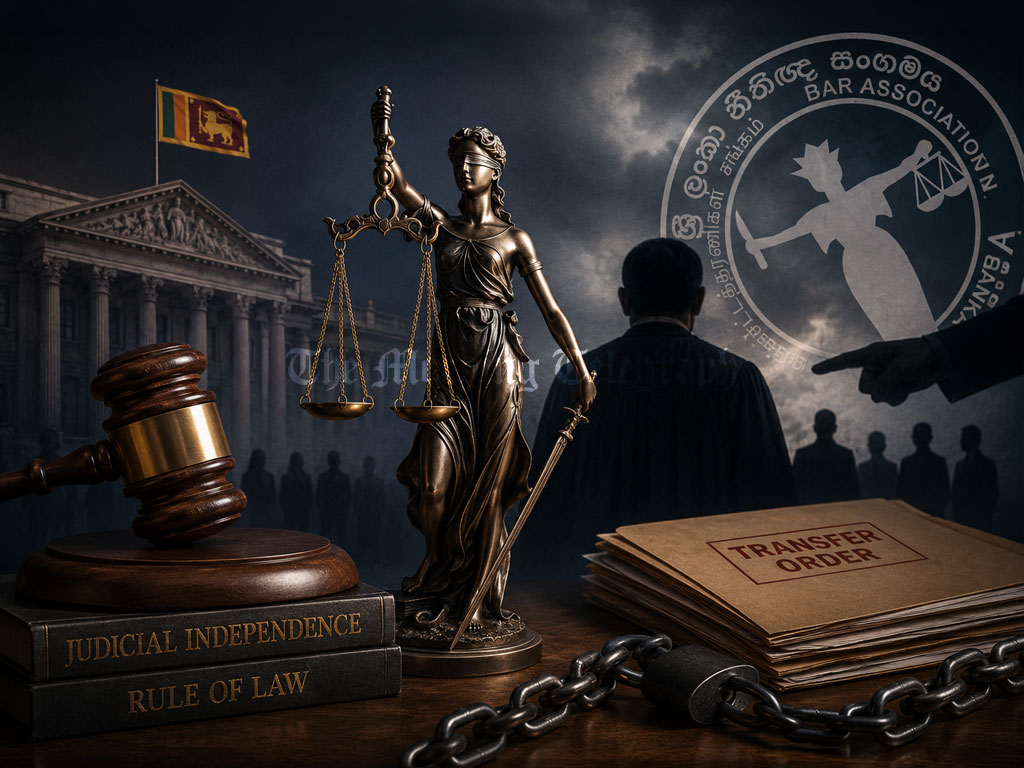
Sri Lanka judicial independence faces scrutiny amid claims of threats, transfers and efforts to disrupt a special judges’ meeting.
Concerns over Sri Lanka judicial independence have intensified amid reports of threats, disputed judicial transfers and alleged efforts to disrupt a special meeting of judicial officers.
The developments have raised questions about the rule of law and judicial independence promised by the National People’s Power government led by President Anura Kumara Dissanayake.
According to journalist Saroj Pathirana, the controversy centres on a constitutional amendment that the government is reportedly preparing to introduce. The proposal would extend the tenure of current Chief Justice Priyasath Padman Surasena.
The issue has now moved beyond a debate over retirement ages. Reports of disrupted meeting arrangements and alleged disciplinary threats have fuelled fears about whether judicial officers can freely discuss matters affecting their own institution.

Sri Lanka Judicial Independence Debate Deepens
The NPP government appears determined to proceed with the proposal despite strong opposition, according to the claims outlined in the report.
The opposition reportedly includes the Bar Association of Sri Lanka, international legal organisations and leading legal scholars. Professor Savithri Gunasekara and Professor Deepika Udagama are among those cited as opposing the move.
The NPP’s policy statement did not mention such a constitutional amendment. Critics also argue that extending judicial tenure is not among the country’s most urgent current priorities.
The government has the parliamentary strength to pass a constitutional amendment using its two-thirds majority. However, critics insist that constitutional changes in a democratic country must follow transparent and lawful procedures.
The Judicial Service Association had called a special general meeting for Saturday, July 11. Judicial officers were expected to discuss the proposed constitutional amendment and express their views democratically.
However, reliable sources cited in the report claim that officials backed by the government and judicial authorities have attempted to disrupt the meeting.
The Colombo District Court hall, traditionally used for such gatherings, was suddenly declared unavailable.
Organisers then secured the Kaduwela Magistrate’s Court premises. However, reports claim that the relevant official subsequently faced verbal threats of disciplinary action over allegations that proper permission had not been obtained.
The controversy has created a central question. If the proposed amendment is lawful and beneficial, why should judicial officers face obstacles when discussing it openly?
Transfers Raise Questions Within Judicial Sector
Media reports have also linked the controversy to the immediate transfers of two senior judicial officers. Both reportedly opposed the constitutional amendment and the effort to extend the Chief Justice’s tenure.
Judge Isuru Nettikumar recently served as Colombo Fort Magistrate. During that period, he handled cases involving several high-profile political and security figures.
Those included former President Ranil Wickremesinghe, former Presidential Secretary Saman Ekanayake and Major General Suresh Sallay.
Nettikumar later received a promotion as a Senior Assistant Secretary to the Judicial Service Commission. However, he has now been transferred to the Hambantota District Court with immediate effect.
Senior Assistant Secretary Uddala Suwandurugoda has also been transferred from the Commission with immediate effect.
According to the allegations in the report, these actions appear aimed at intimidating judicial officers and discouraging attendance at the special general meeting scheduled for Saturday.
The reported developments have further intensified the wider Sri Lanka judicial independence debate. They have also placed renewed attention on the treatment of judicial officers who express opposition to major institutional changes.
Democratic Rhetoric Meets Questions Over Ground Reality
Critics argue that a widening gap has emerged between President Anura Kumara Dissanayake’s public democratic rhetoric and reported developments within the judicial sector.
They also question the reported effort to advance constitutional changes through discussions involving only a limited group of figures. The article identifies the Chief Justice, Justice Minister Harshana and Governor Wasantha Jinadasa in this context.
The report argues that neither ordinary citizens nor the broader legal community have received adequate consultation on the proposed changes.
The judiciary remains the final institutional fortress in the justice delivery process of any country. Therefore, the freedom of judges and judicial officers to discuss matters affecting their profession carries significance far beyond the courts themselves.
If judicial officers cannot freely express their views and instead face threats or intimidation, the controversy raises a deeper question. Can ordinary citizens remain confident that they will receive justice and fair treatment?
The growing controversy over Sri Lanka judicial independence now presents the government with a major test of its commitment to transparency, democratic governance and the rule of law.
The central question remains whether the current administration will address these concerns openly or follow the same authoritarian practices it once criticised. As the debate intensifies, public scrutiny of every step in the constitutional amendment process will remain essential.